Fruits and vegetables are part of daily life, so learning their names in English is very important. In this guide, you will learn 100 fruits and vegetables names in English with meanings and simple examples. This helps beginners and students improve daily English speaking.
CONTENT INDEX
Basic Fruits and Vegetables (1–20)
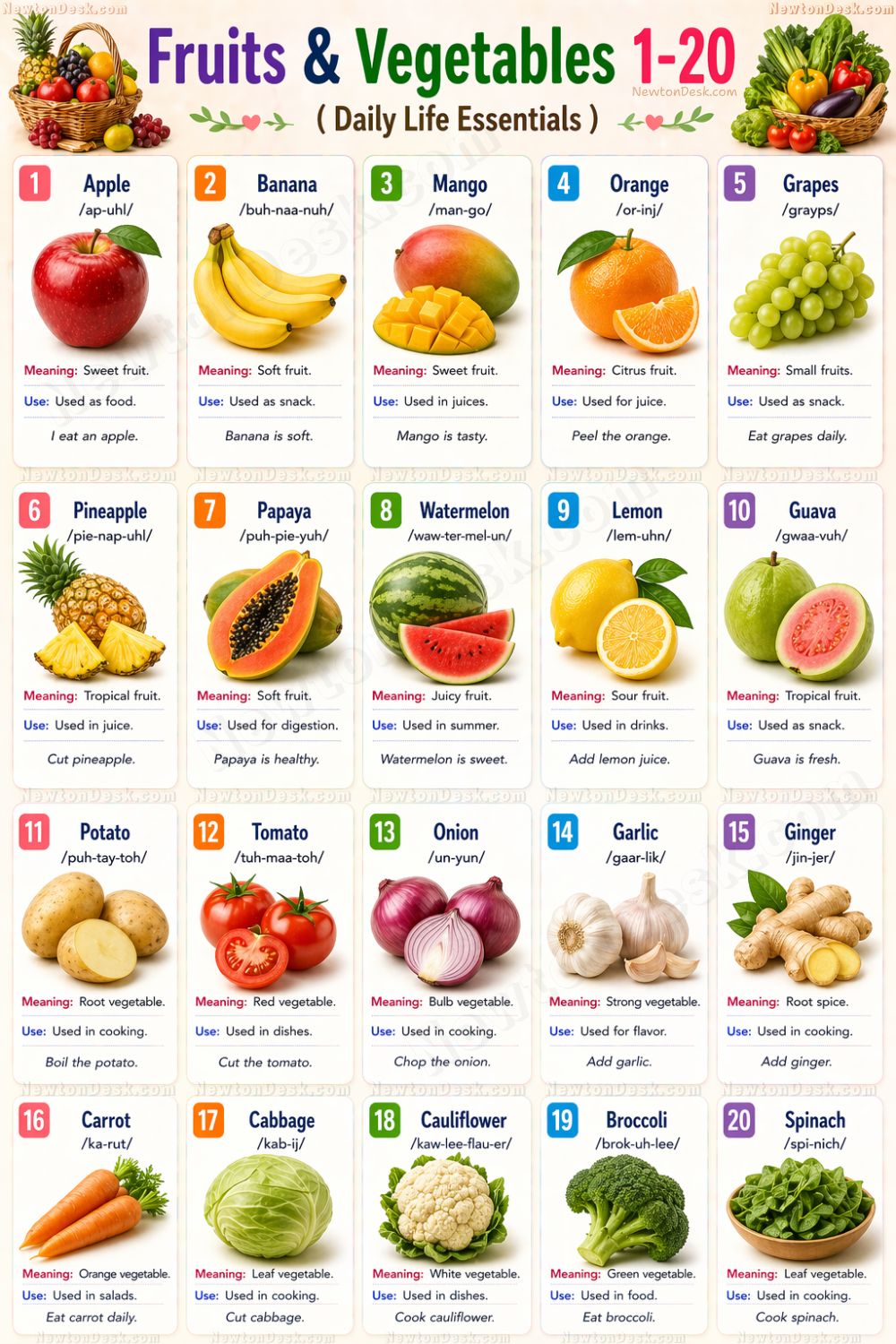
Explanation
Basic fruits like apple, banana, mango, and orange are sweet and easy to eat. Vegetables like potato, tomato, onion, and carrot are used in daily cooking. Garlic and ginger add flavor to food. Green vegetables like spinach and broccoli are healthy. These words are used daily, so learning them helps you speak English easily in real life.
Common Fruits and Vegetables (21–40)
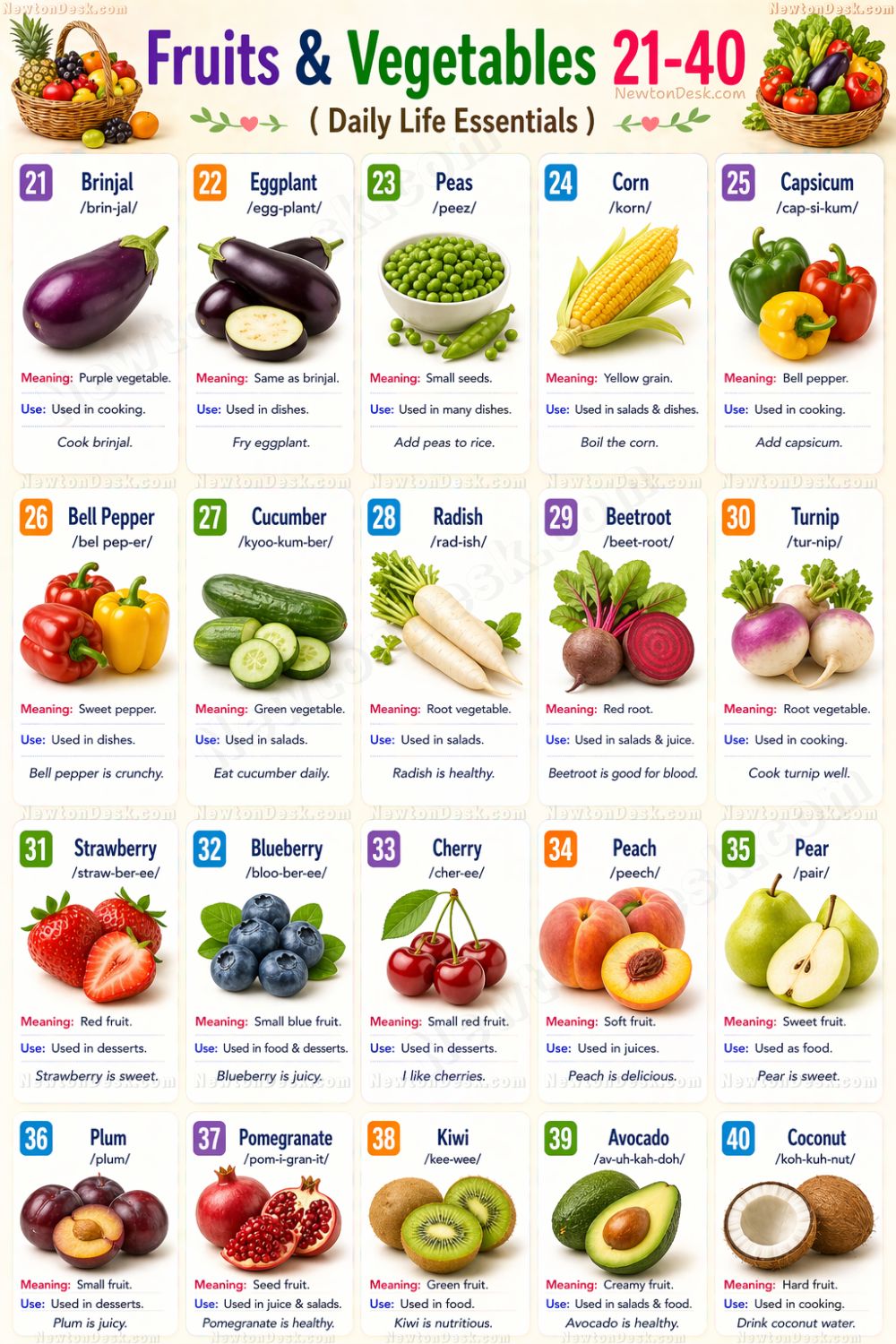
Usage in Daily Life
Vegetables like brinjal, peas, corn, and cucumber are used in cooking and salads. Fruits like strawberry, blueberry, cherry, and peach are used in desserts and juices. These items are common in markets and kitchens. You can use these words when talking about food, shopping, or cooking in English.
Intermediate Fruits and Vegetables (41–60)
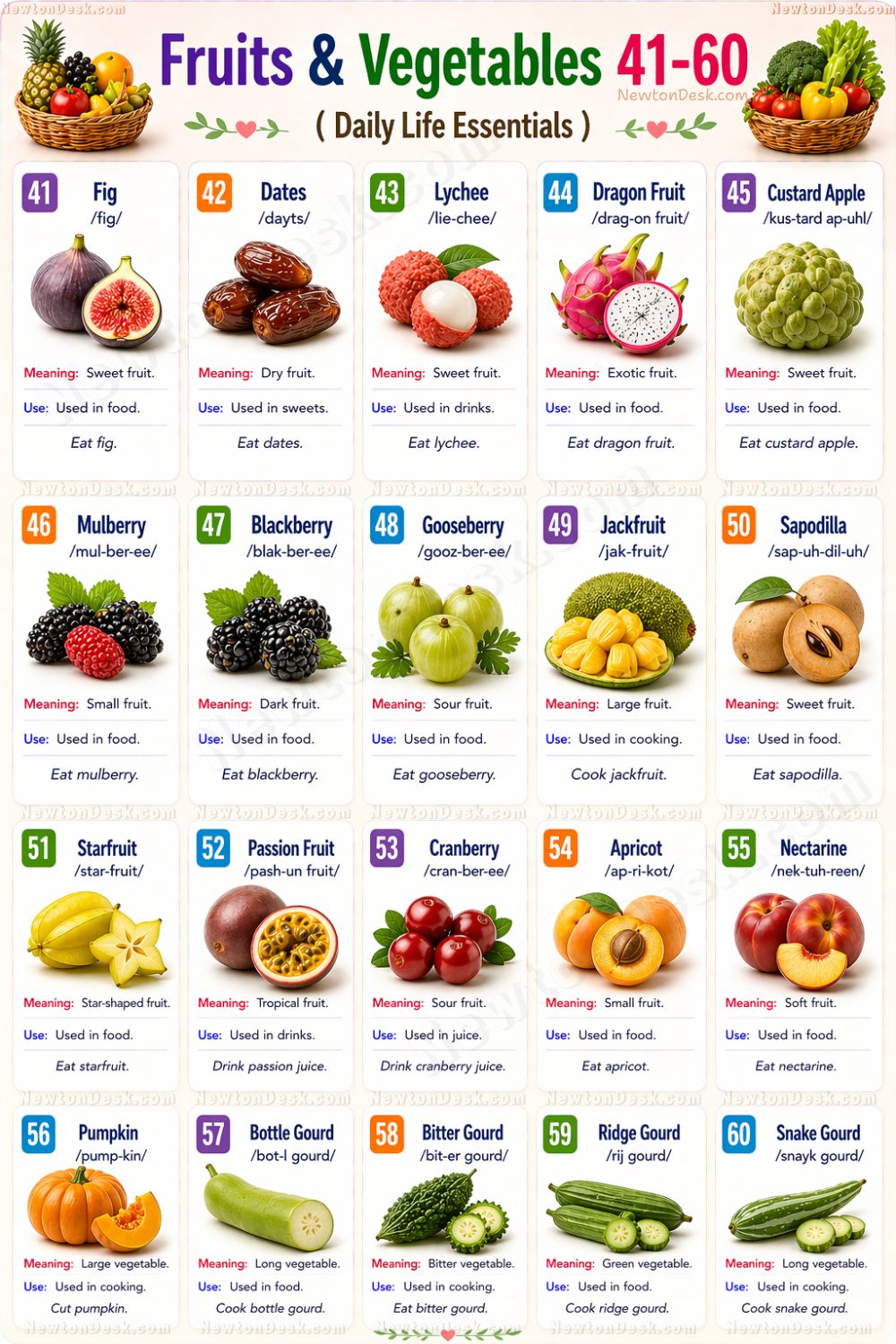
Learning Tip
Group similar items to learn faster. Keep fruits in one group and vegetables in another. You can also group by color or use. Practice speaking one group daily. This helps you remember words easily and improves your vocabulary step by step.
Advanced Vegetables and Food Items (61–80)
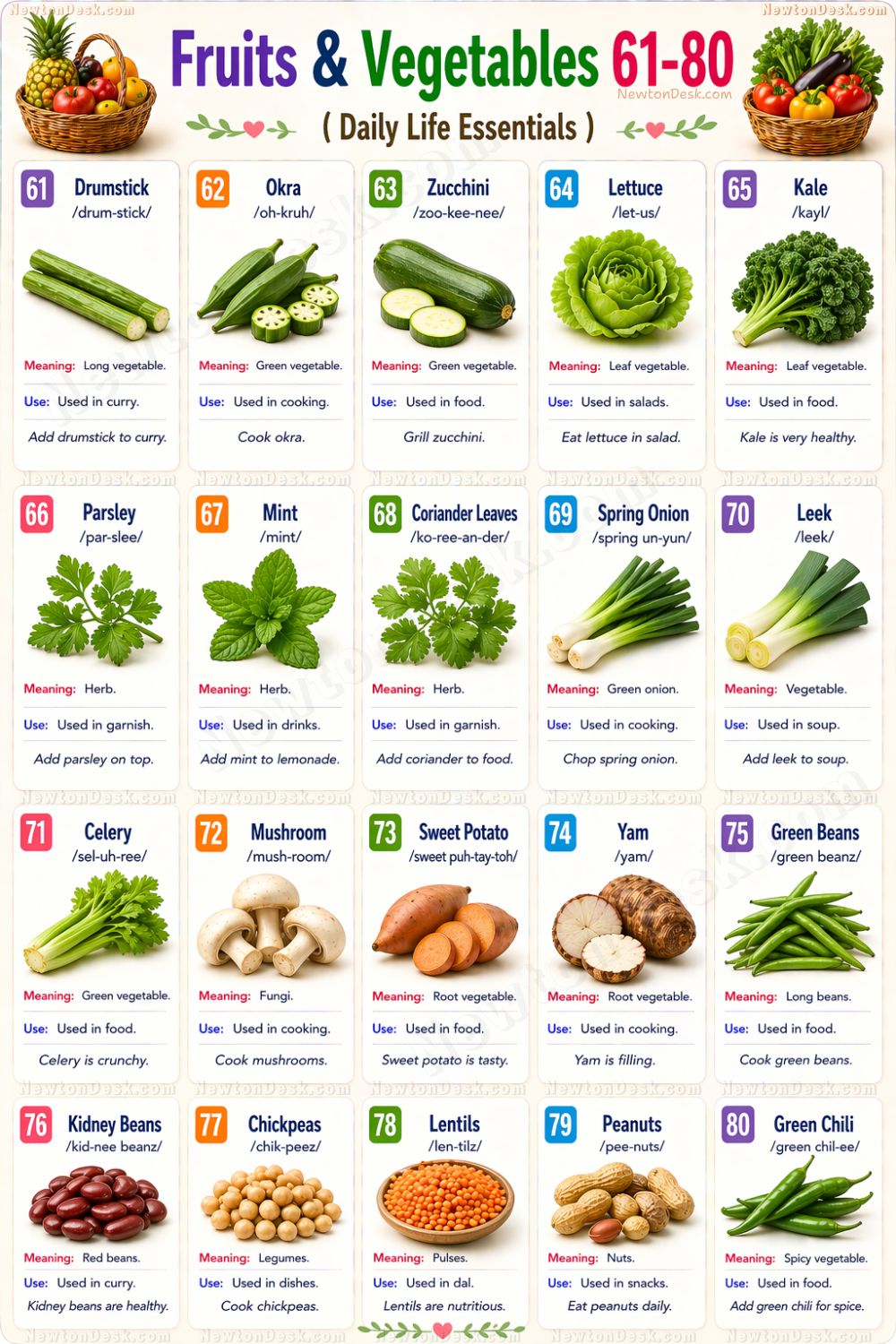
Speaking Practice
Make simple sentences using these words. For example: “I cook beans daily” or “Add green chili for spice.” Vegetables like zucchini, lettuce, and kale are used in modern cooking. Lentils, chickpeas, and peanuts are common food items. Speaking daily helps you remember words and improves your English fluency.
Exotic Fruits and Vegetables (81–100)
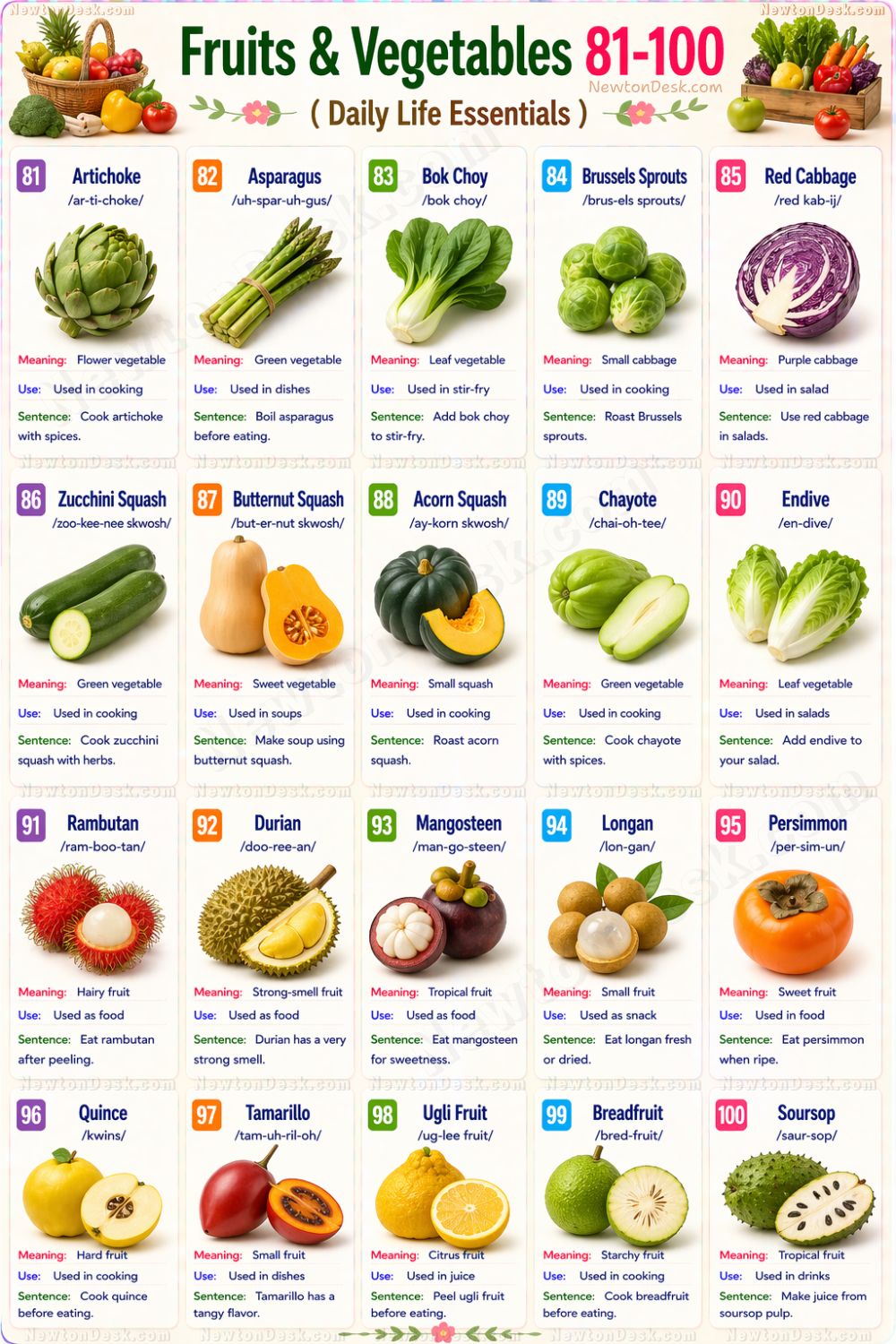
Vocabulary Expansion
Learn new and rare items like durian, rambutan, and artichoke. These words help you sound more advanced in English.
How to Remember Fruits and Vegetables Vocabulary Fast
Tips
Use real fruits and vegetables around you. Speak their names while eating or cooking. Practice daily using flashcards. Repeat words again and again to remember them easily.
Conclusion
Practice these words daily. Use them in real life while eating, cooking, or shopping. Save these infographics and share them to learn faster.