Learning body parts name in English is important for daily conversation, school learning, and general science knowledge. In this guide, you will learn 120 human body parts vocabulary words with pronunciation, meanings, uses, and example sentences. These infographic images make English learning easy for beginners, students, ESL learners, and children.
You will also understand how different body parts work and why they are important in daily life. Each section uses simple English and clear pictures to help you remember words faster.
CONTENT INDEX
Head and Face Body Parts Vocabulary
The head and face help us see, hear, smell, speak, and show emotions. Learning these words improves communication and helps learners describe people correctly in English.
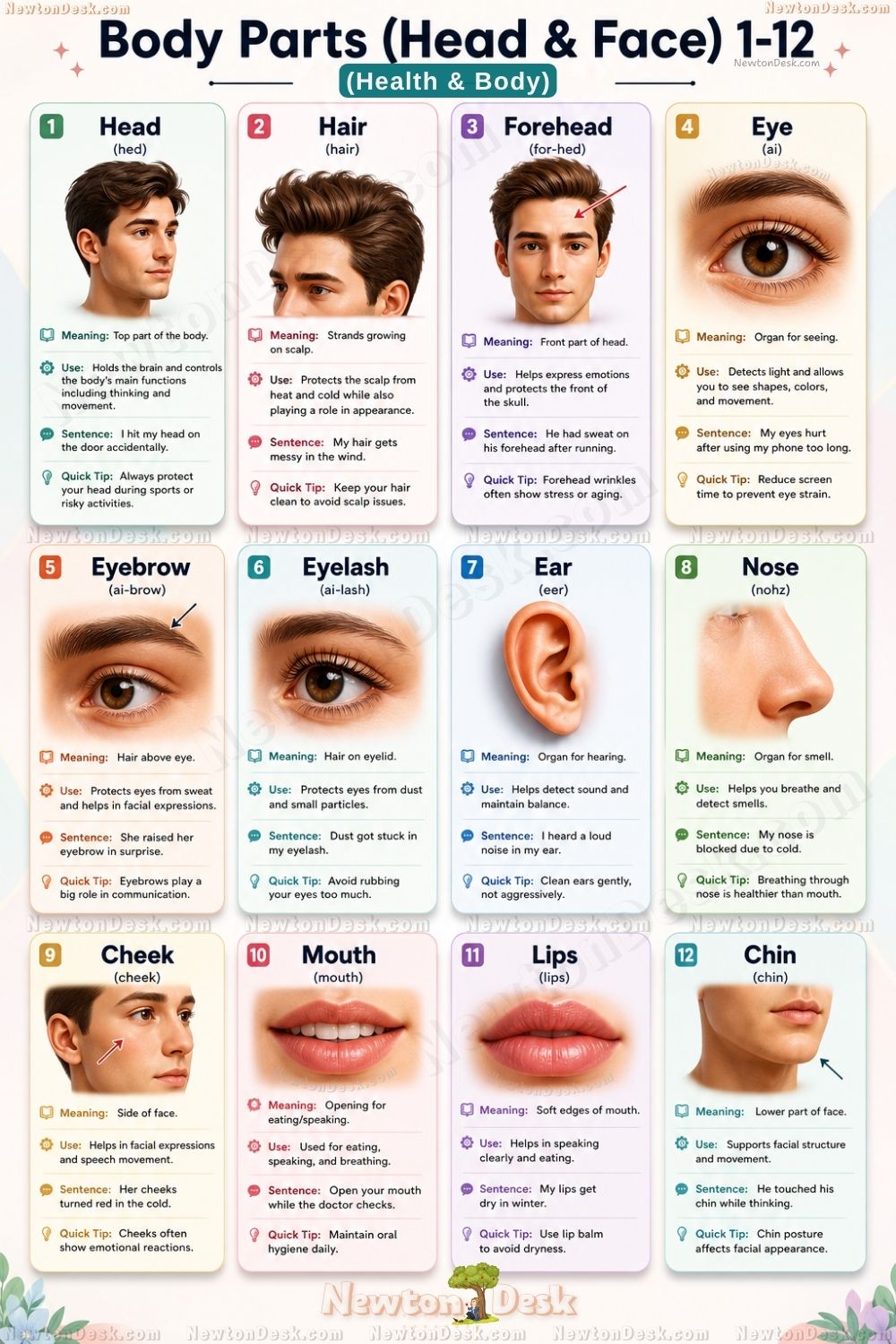
Words Included
Head, Hair, Forehead, Eye, Eyebrow, Eyelash, Ear, Nose, Cheek, Mouth, Lips, Chin
These common face vocabulary words are used every day in speaking, reading, and school science lessons. The infographic also explains pronunciation and simple example sentences for better understanding.
Upper Body Parts Names in English
The upper body supports movement, posture, breathing, and strength. Learning these words helps students understand anatomy and health topics more clearly.
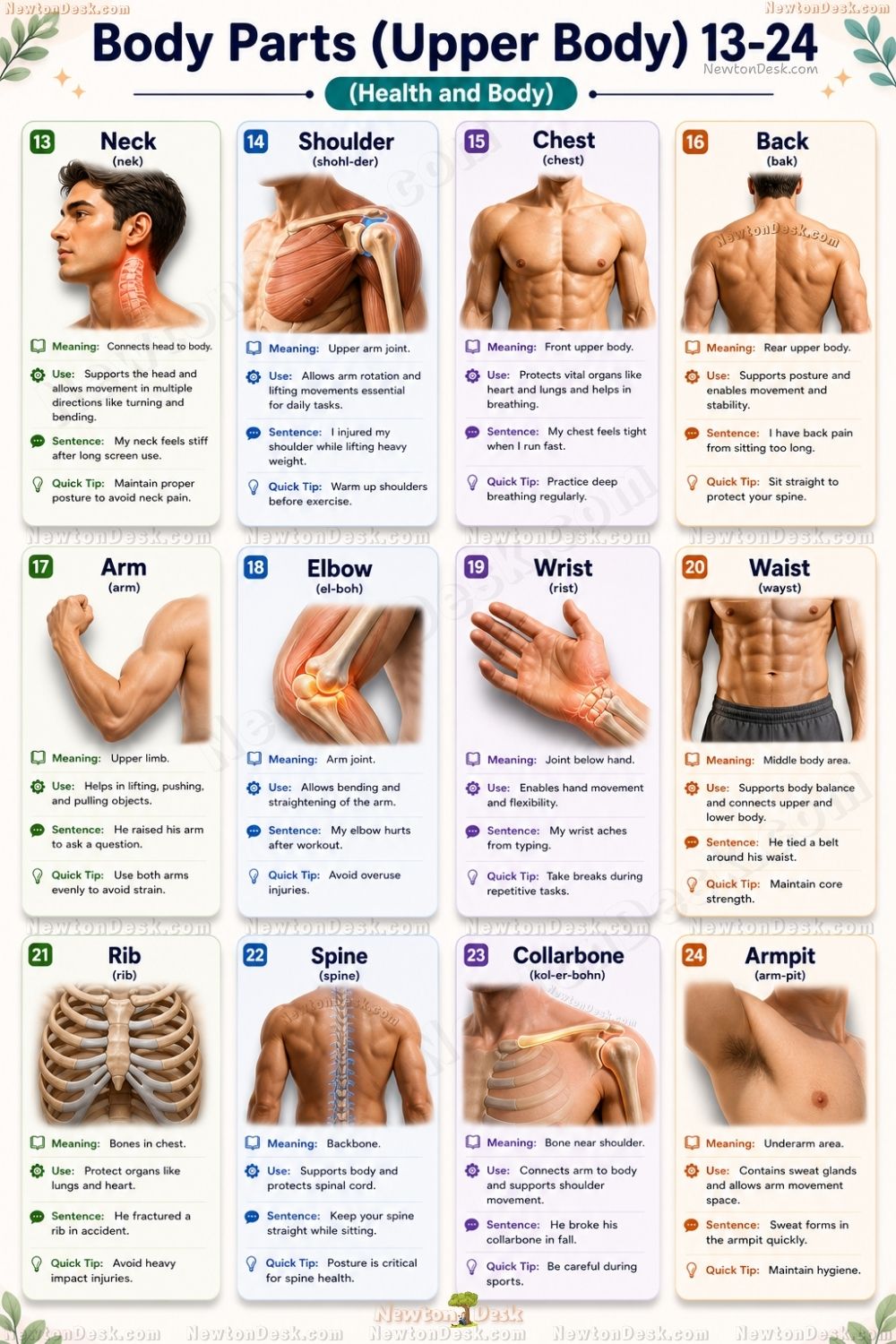
Words Included
Neck, Shoulder, Chest, Back, Arm, Elbow, Wrist, Waist, Rib, Spine, Collarbone, Armpit
These upper body vocabulary words are useful in fitness, health, sports, and daily conversation. Beginners can easily remember the names using visual learning.
Hands and Fingers Vocabulary
Hands and fingers help people hold, touch, write, and perform daily tasks. This section teaches important finger and hand vocabulary with easy explanations.
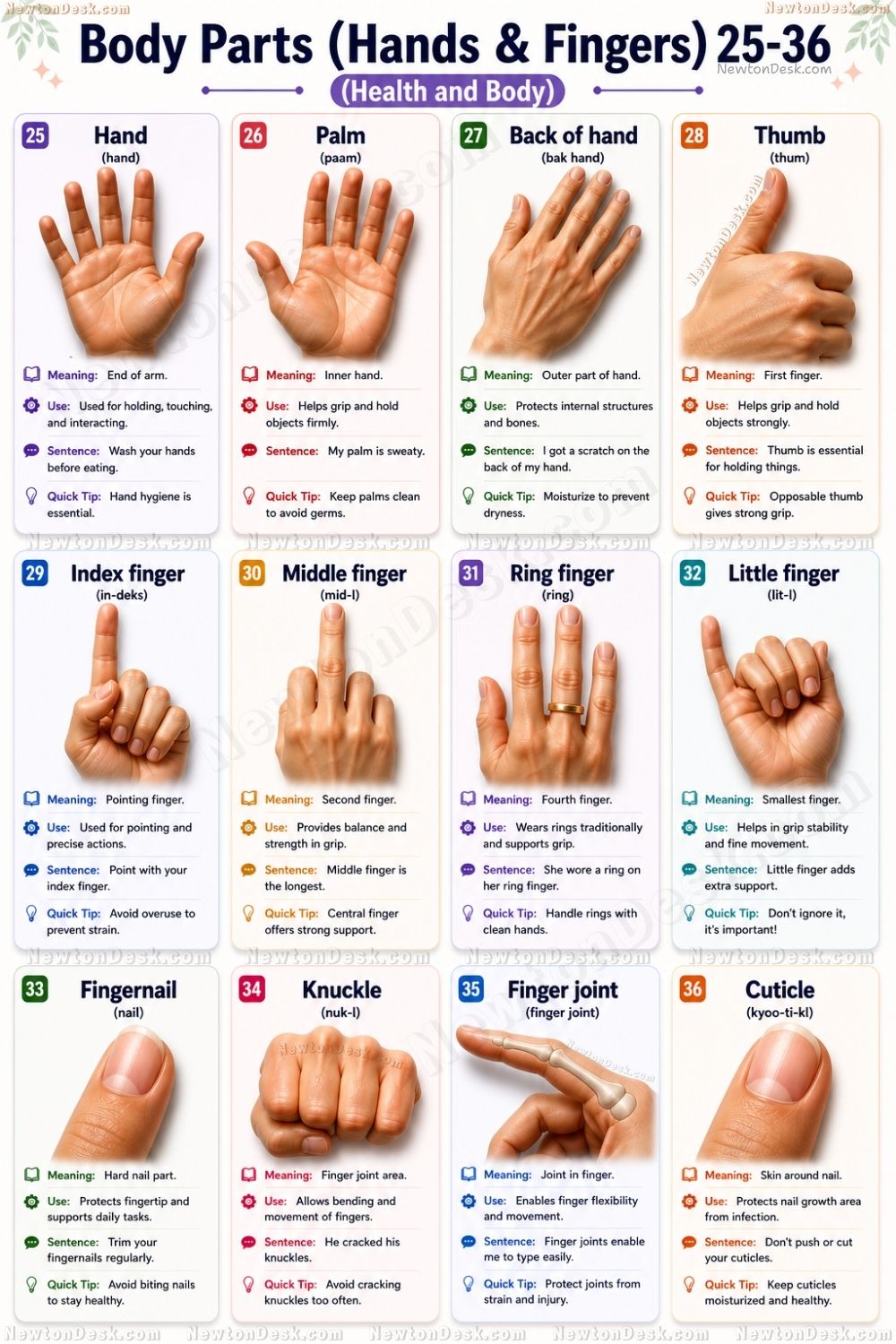
Words Included
Hand, Palm, Thumb, Index Finger, Middle Finger, Ring Finger, Little Finger, Fingernail, Knuckle, Finger Joint, Cuticle
Learning these hand anatomy words improves both English vocabulary and science understanding for students and kids.
Lower Body Parts Names
The lower body helps us walk, run, jump, stand, and balance. These words are commonly used in health and fitness topics.
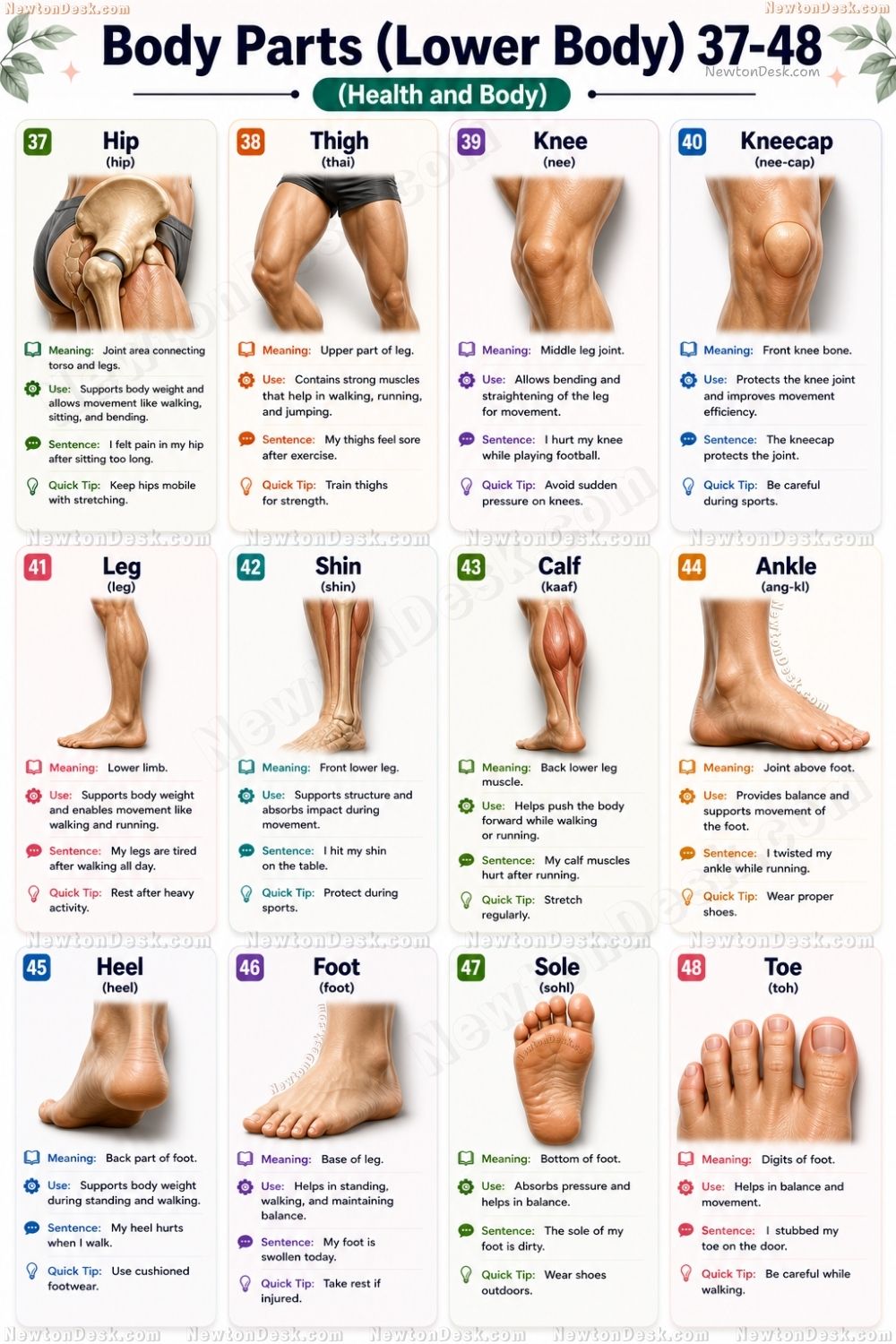
Words Included
Hip, Thigh, Knee, Kneecap, Leg, Shin, Calf, Ankle, Heel, Foot, Sole, Toe
This section helps learners understand movement and body support using simple English vocabulary and visual examples.
Internal Organs Names in English
Internal organs work together to keep the human body healthy and alive. Learning organ names helps students improve science vocabulary and health knowledge.
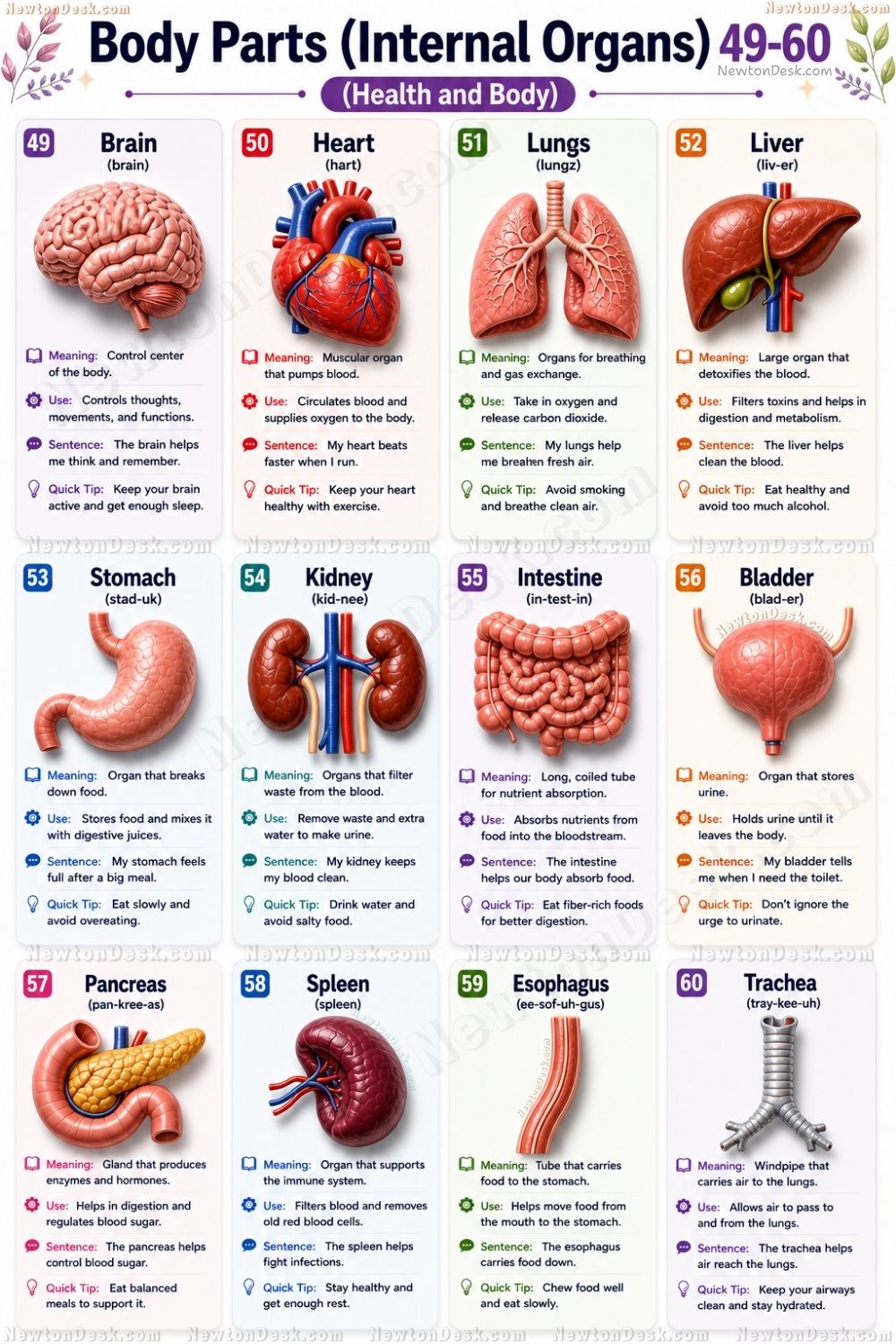
Words Included
Brain, Heart, Lungs, Liver, Stomach, Kidney, Intestine, Bladder, Pancreas, Spleen, Esophagus, Trachea
These human organ names are important for biology, medical vocabulary, and general education.
Skin and Body Features Vocabulary
Skin protects the body and helps control temperature. This section also explains common skin features and appearance-related vocabulary.
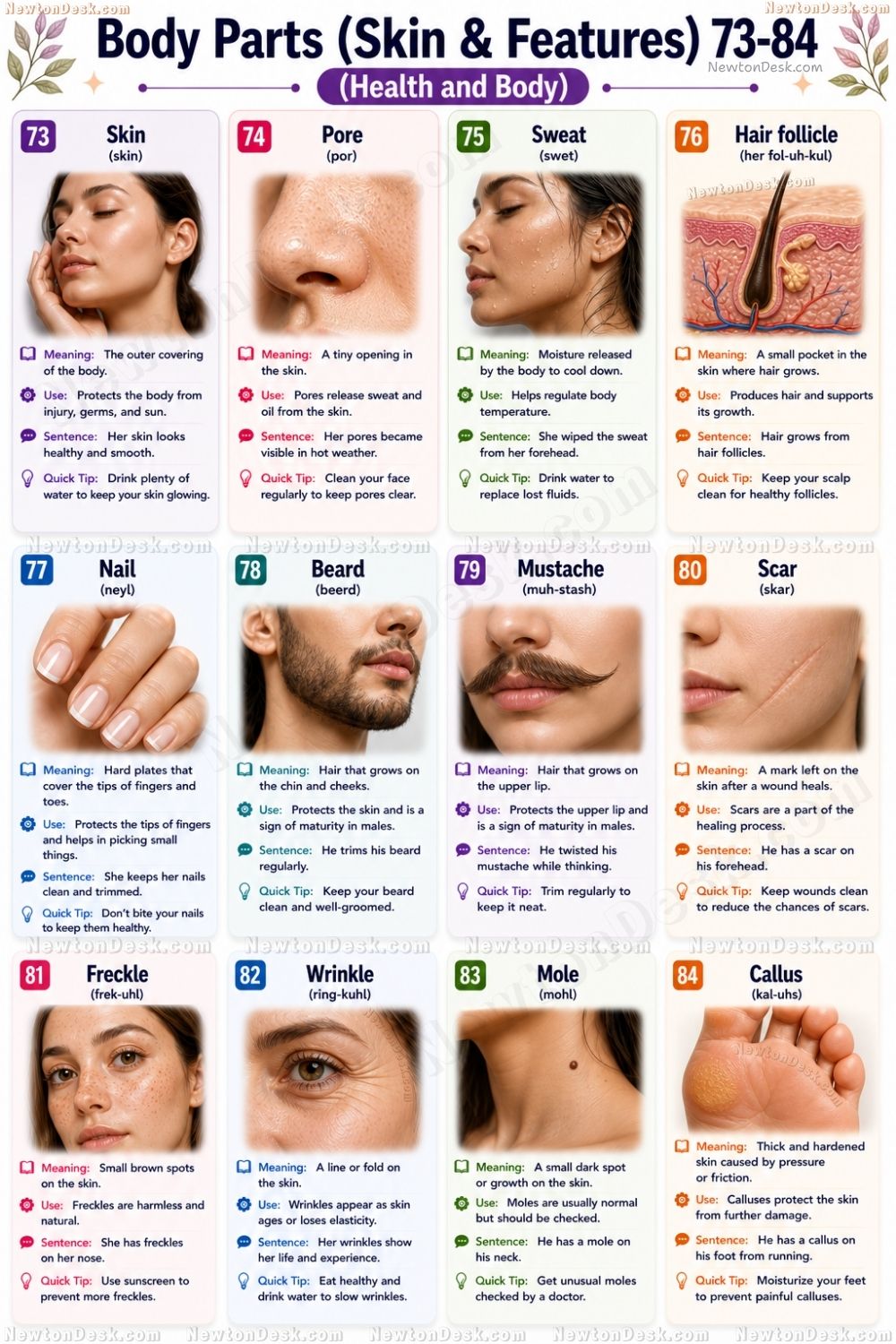
Words Included
Skin, Pore, Sweat, Hair Follicle, Nail, Beard, Mustache, Scar, Freckle, Wrinkle, Mole, Callus
These vocabulary words are useful for beauty, health, skincare, and everyday English conversations.
Male Reproductive System Vocabulary
This educational section explains important male reproductive system vocabulary in a respectful and beginner-friendly way for science and health learning.
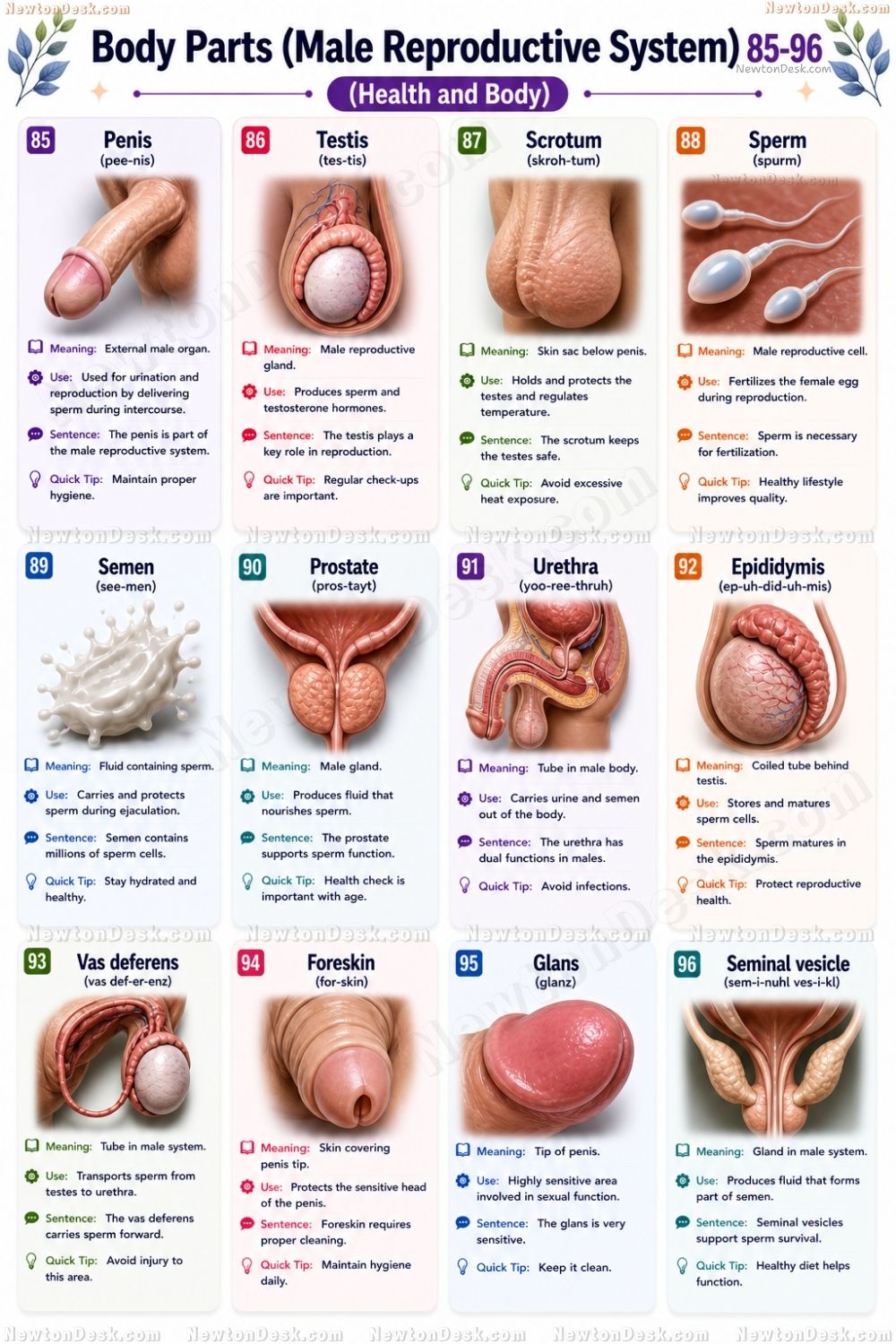
Words Included
Testis, Scrotum, Sperm, Semen, Prostate, Urethra, Epididymis, Vas Deferens, Foreskin, Glans, Seminal Vesicle
The infographic helps students understand reproductive health vocabulary with simple explanations and visual learning support.
Female Reproductive System Vocabulary
This section introduces important female reproductive system vocabulary using clear educational explanations and images.
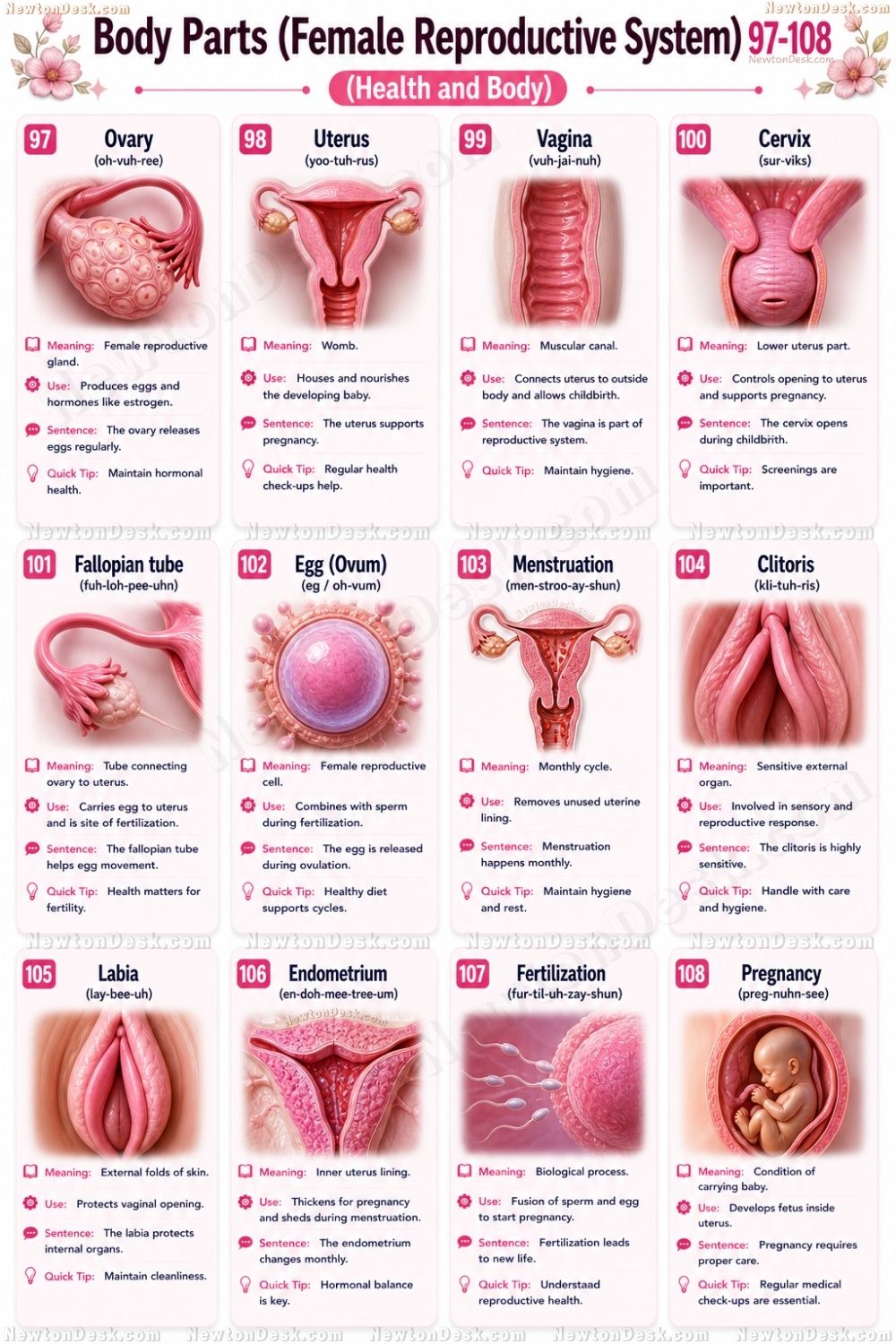
Words Included
Ovary, Uterus, Cervix, Fallopian Tube, Egg, Menstruation, Clitoris, Labia, Endometrium, Fertilization, Pregnancy
These anatomy words are useful for biology learning, school education, and health awareness.
Body Functions and Fluids Vocabulary
Body fluids and body functions help the human body work properly every day. Learning these words improves both science and English communication skills.
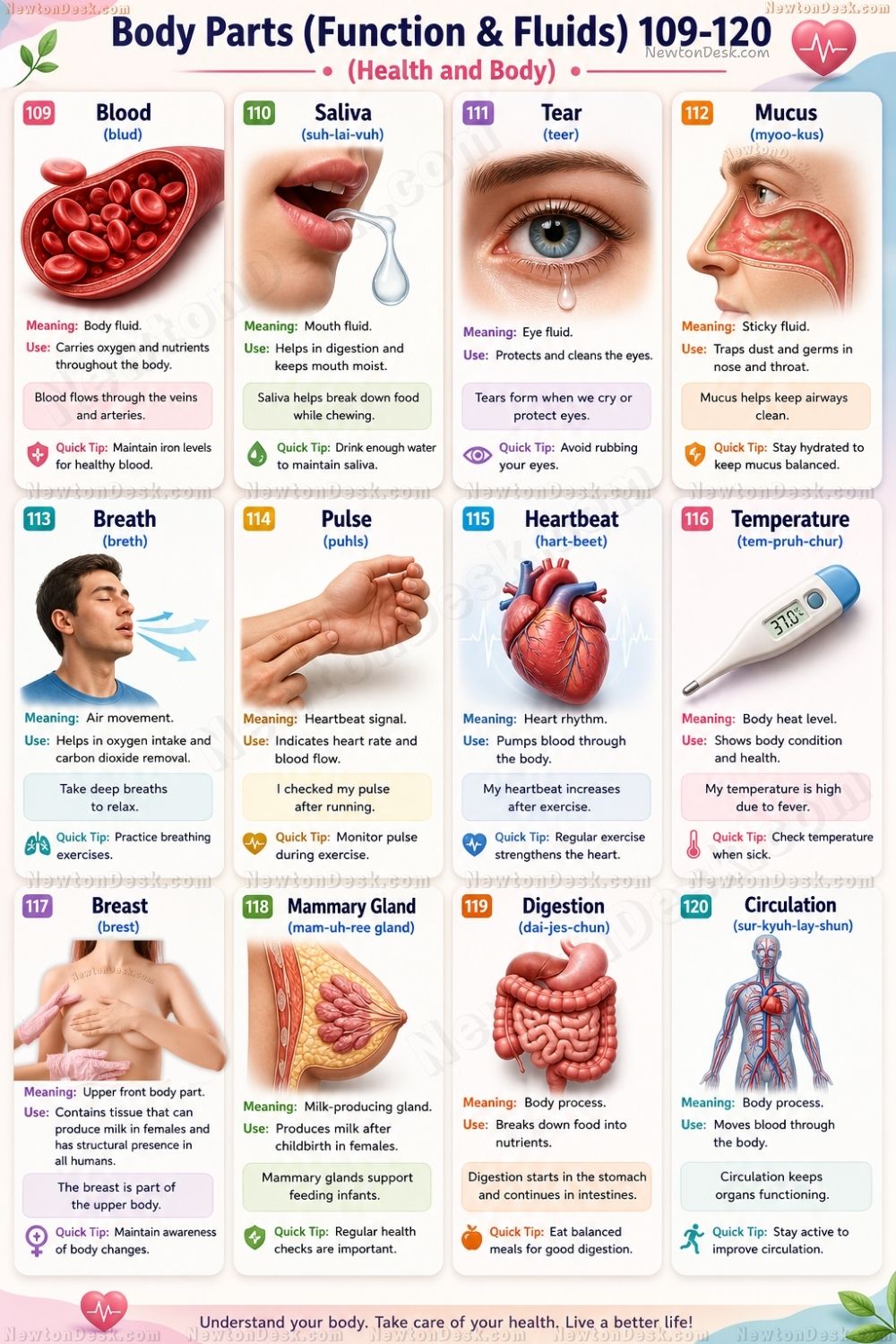
Words Included
Blood, Saliva, Tear, Mucus, Breath, Pulse, Heartbeat, Temperature, Breast, Mammary Gland, Digestion, Circulation
This section explains important health vocabulary in very easy English with useful examples for beginners and students.
Why Learning Body Parts Vocabulary is Important
Helps Improve English Speaking
Knowing body parts names in English helps learners speak clearly in daily life, school, travel, and healthcare situations.
Improves Science Knowledge
Students can better understand human anatomy, biology, and health education topics.
Better Visual Learning
Infographic images help learners remember vocabulary faster because pictures improve memory and understanding.
Final Thoughts
Learning human body parts vocabulary is useful for beginners, children, ESL learners, and students. These infographic images make English learning simple, visual, and engaging. Practice the words daily, read the example sentences, and use the pictures to remember meanings faster.