Waves and Sound Laws are very important topics in physics. These laws help students understand how sound travels, reflects, vibrates, and changes frequency. In this easy study guide, you will learn important sound laws with formulas, diagrams, and daily life examples. These notes are perfect for beginners, school students, and exam revision.
CONTENT INDEX
Law of Reflection of Sound
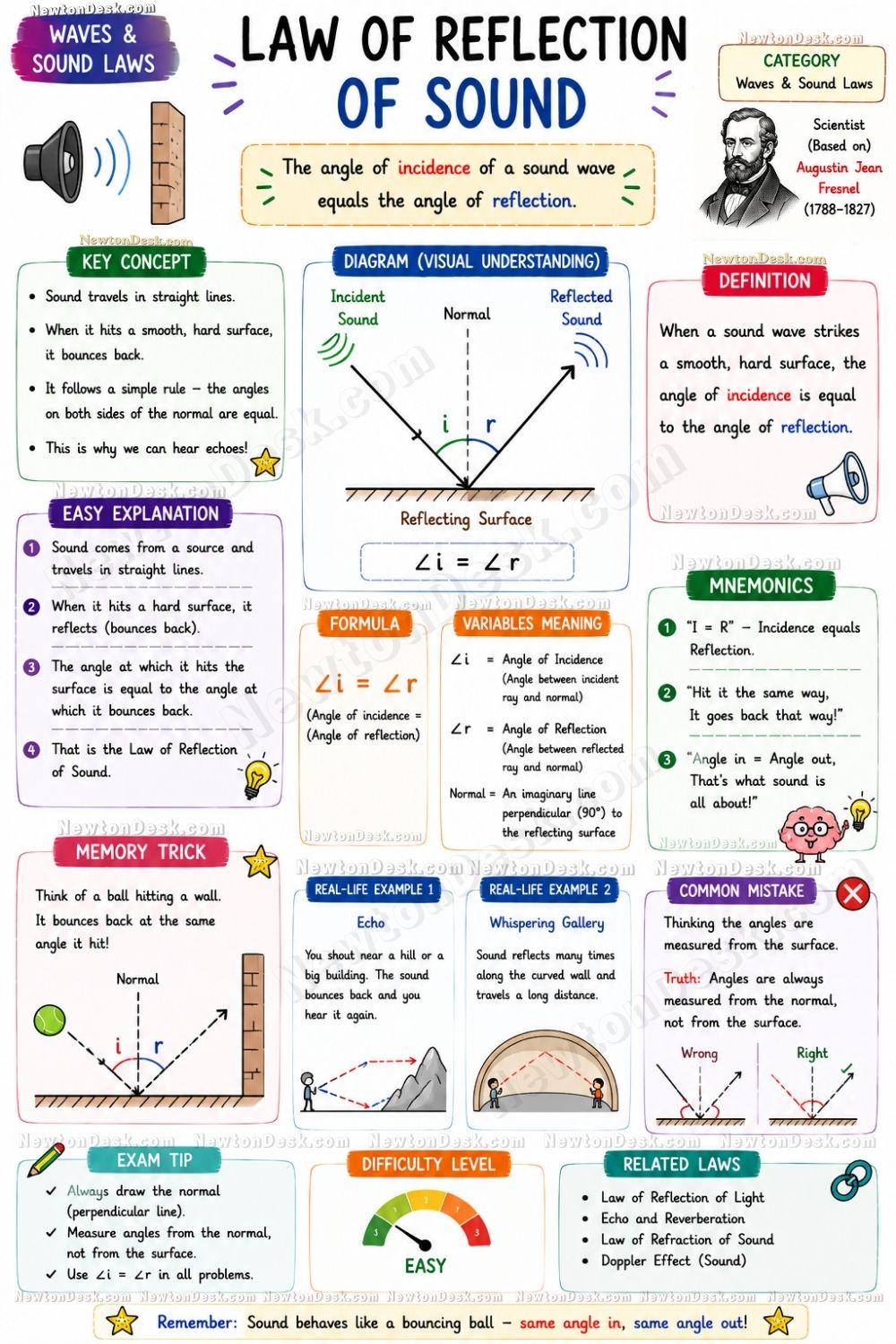
What is Reflection of Sound?
The Law of Reflection of Sound says that the angle at which sound hits a surface is equal to the angle at which it reflects back. This law works just like reflection of light. Hard and smooth surfaces reflect sound clearly and produce echoes.
Real-Life Examples
Echoes in mountains, whispering galleries, and sound bouncing from walls are common examples of sound reflection. This concept is widely used in halls and sound systems.
Doppler Effect Law
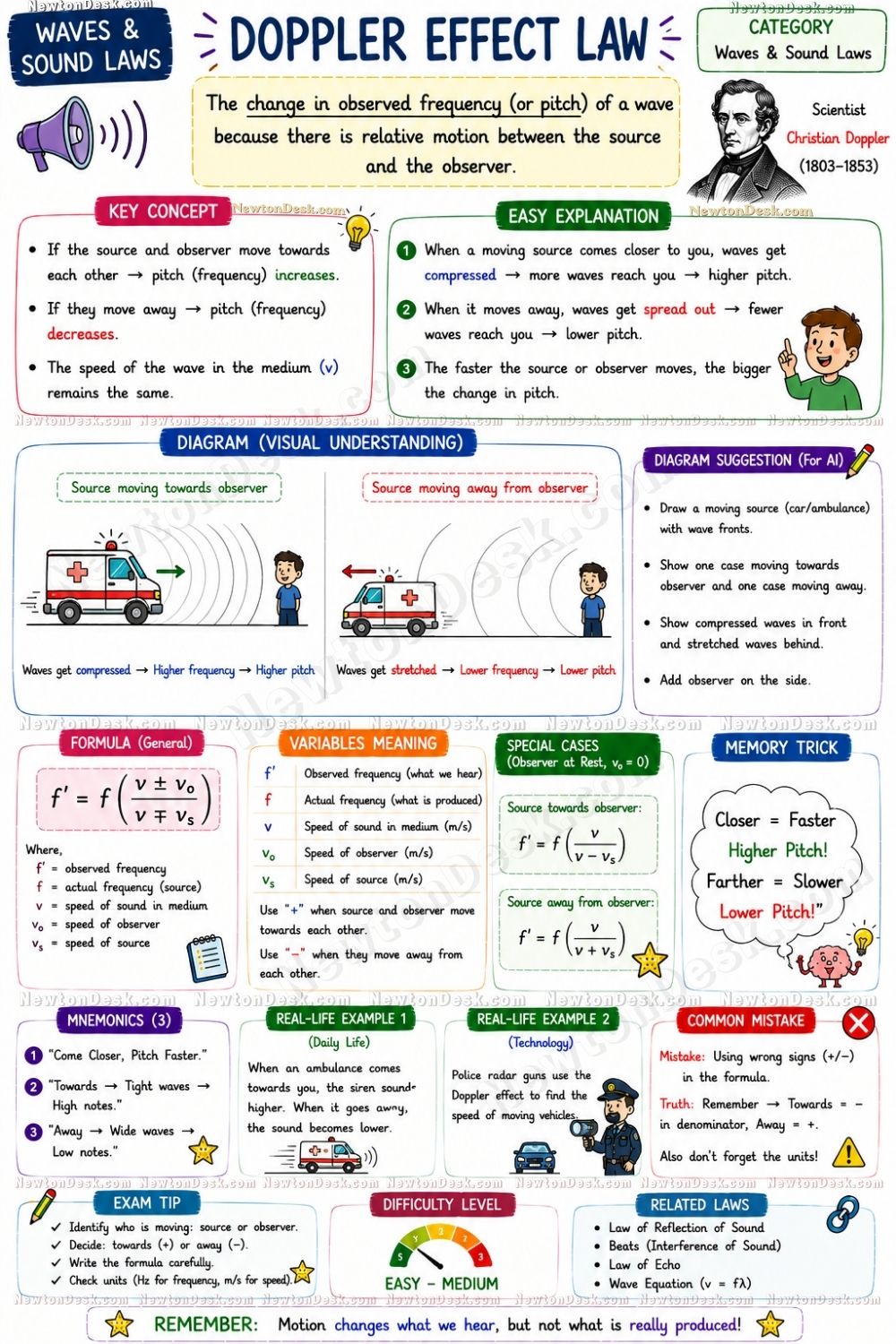
What is Doppler Effect?
The Doppler Effect Law explains how sound frequency changes because of motion between the source and observer. When the source comes closer, the sound becomes sharper and higher. When it moves away, the sound becomes lower.
Daily Life Example
An ambulance siren sounds louder and higher when it comes near you. As it moves away, the sound becomes softer and lower. This is the Doppler Effect.
Wave Speed Relation
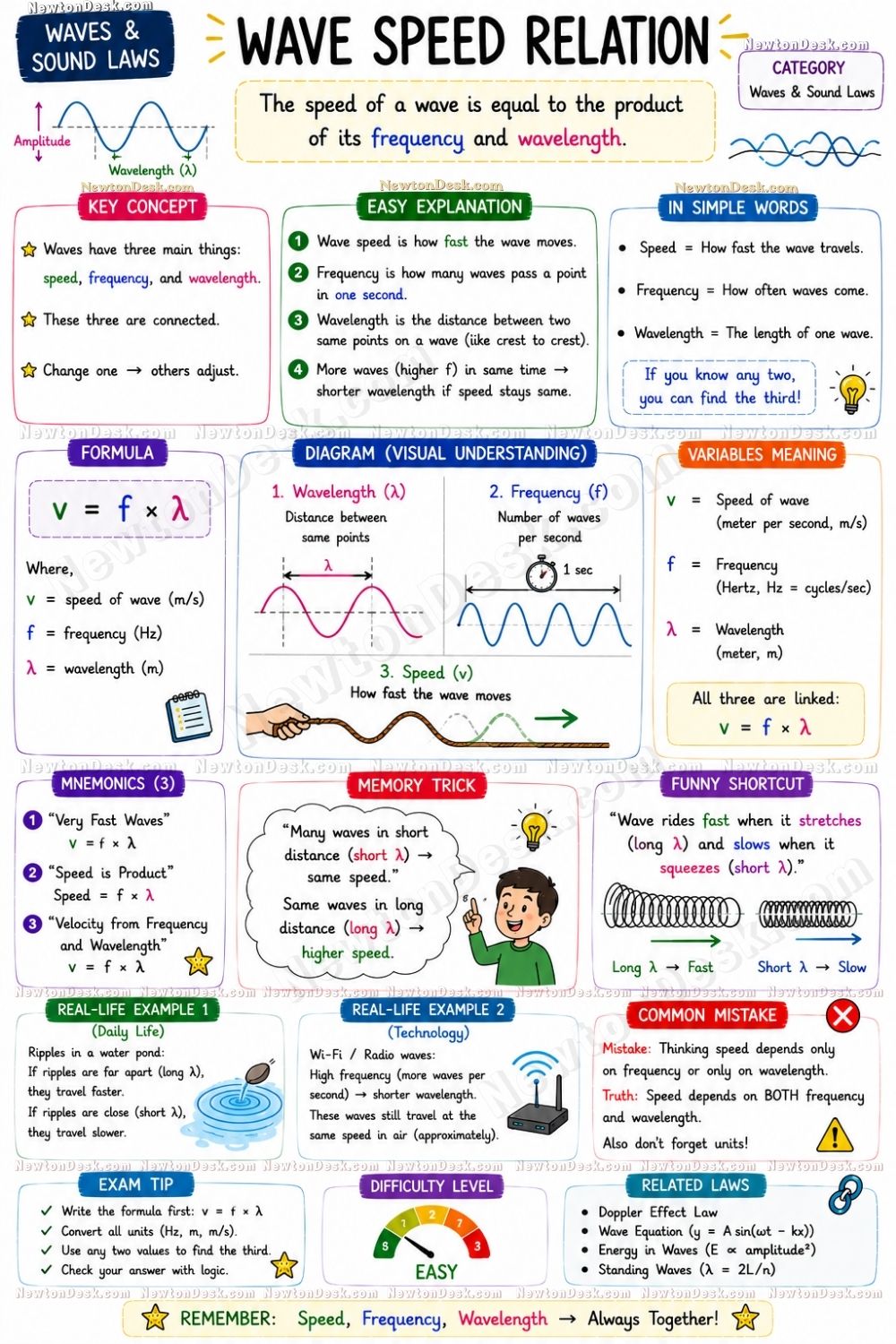
Wave Speed Formula
The speed of a wave depends on frequency and wavelength. The formula is:
This means wave speed equals frequency multiplied by wavelength.
Easy Understanding
If frequency increases while speed stays constant, wavelength becomes shorter. This law helps students understand radio waves, water waves, and sound waves easily.
Resonance Principle
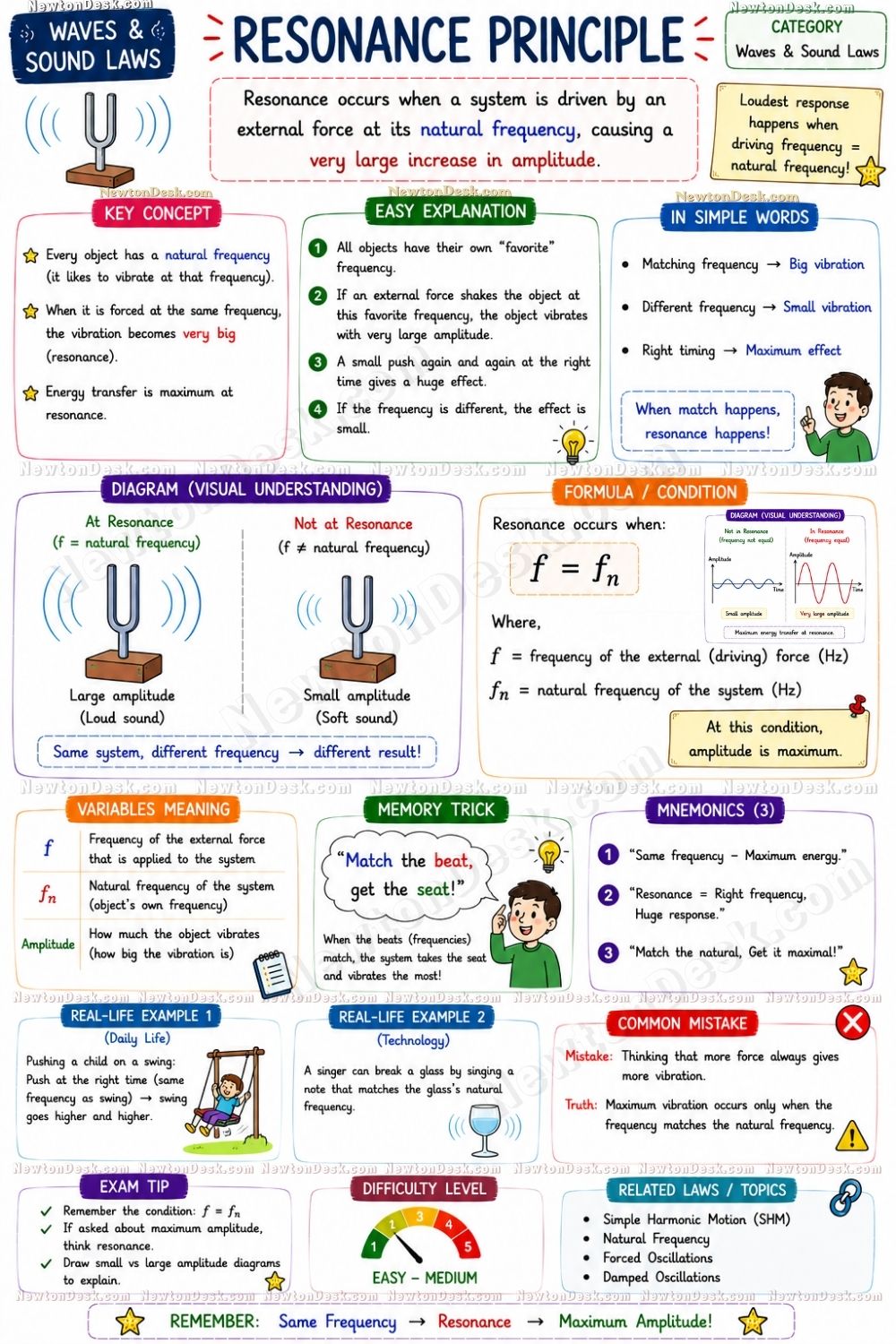
What is Resonance?
The Resonance Principle happens when an object vibrates strongly because the external force matches its natural frequency. At resonance, vibration becomes maximum and sound becomes louder.
Examples of Resonance
A swing moving higher with correct timing and tuning forks vibrating together are simple examples of resonance. Musical instruments also use resonance to produce louder sound.
Law of Vibrating Strings
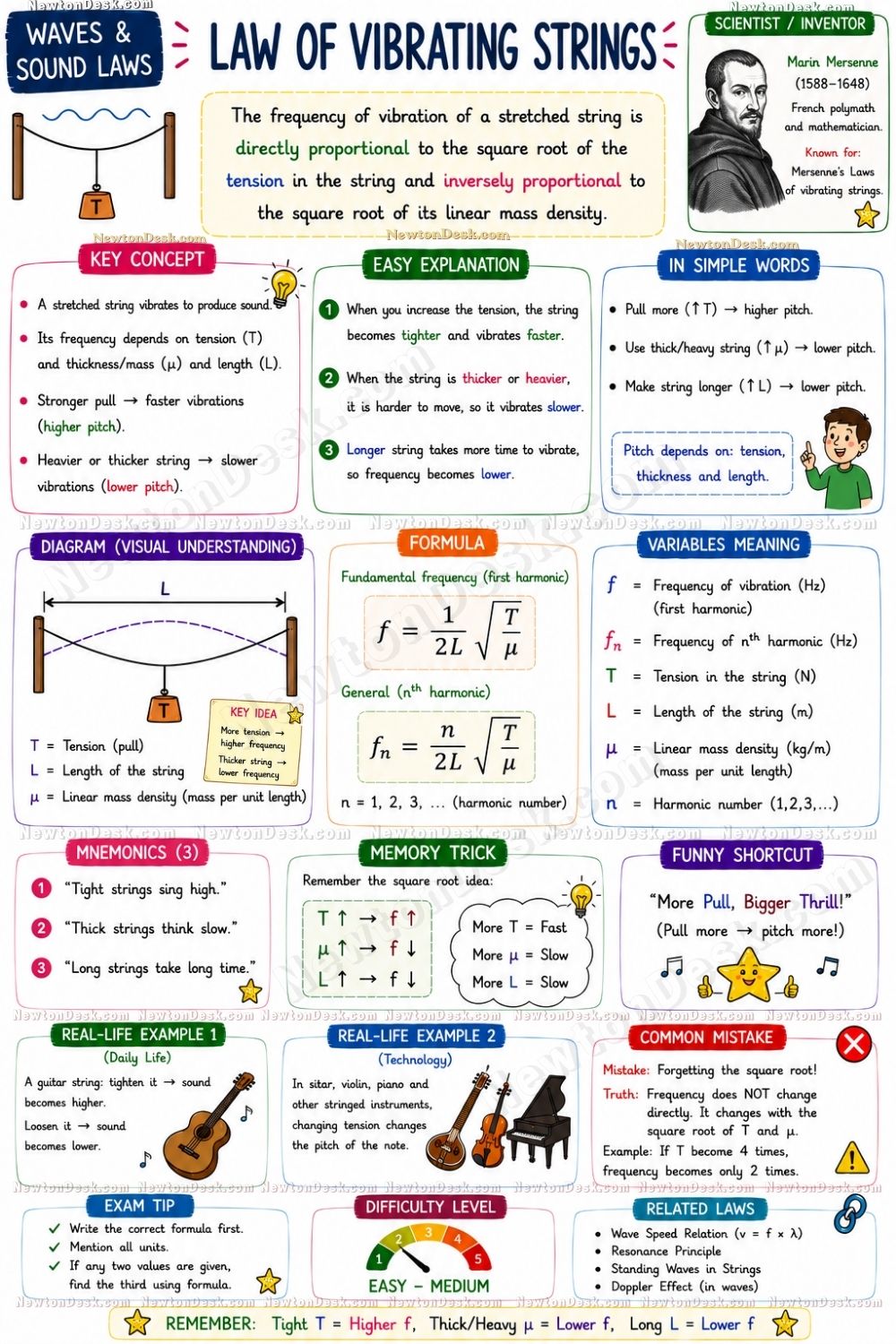
Vibrating String Formula
The frequency of a vibrating string depends on tension, length, and mass density. Tight strings produce higher sound while thicker strings produce lower sound.
Musical Instruments
Guitars, violins, and sitars use this law to create different musical notes. Changing string tension changes pitch and sound frequency.
Why Waves and Sound Laws are Important
Understanding Waves and Sound Laws helps students learn many important physics concepts. These laws are used in music, medical equipment, communication systems, engineering, and modern technology. They are also important for school exams and competitive exams.
Conclusion
These easy Waves and Sound Physics Notes make learning simple and fast. With formulas, memory tricks, examples, and diagrams, students can understand difficult topics in an easy way. Save these notes for quick revision and better exam preparation.