Understanding Mechanics Laws becomes much easier when concepts are explained using visuals and real-life examples. These study notes and infographics are specially designed for beginners, school students, and physics learners who want to learn Force and Motion Laws in a simple way. Every infographic includes easy definitions, formulas, memory tricks, examples, and exam tips.
CONTENT INDEX
What are Mechanics Laws in Physics?
Mechanics Laws are the rules that explain how objects move, stop, push, pull, rotate, and interact with forces. These laws help students understand motion, gravity, momentum, friction, elasticity, and planetary movement. Learning these concepts is important for school exams, competitive exams, and basic science understanding.
Important Force and Motion Laws Covered in This Guide
Law of Conservation of Momentum
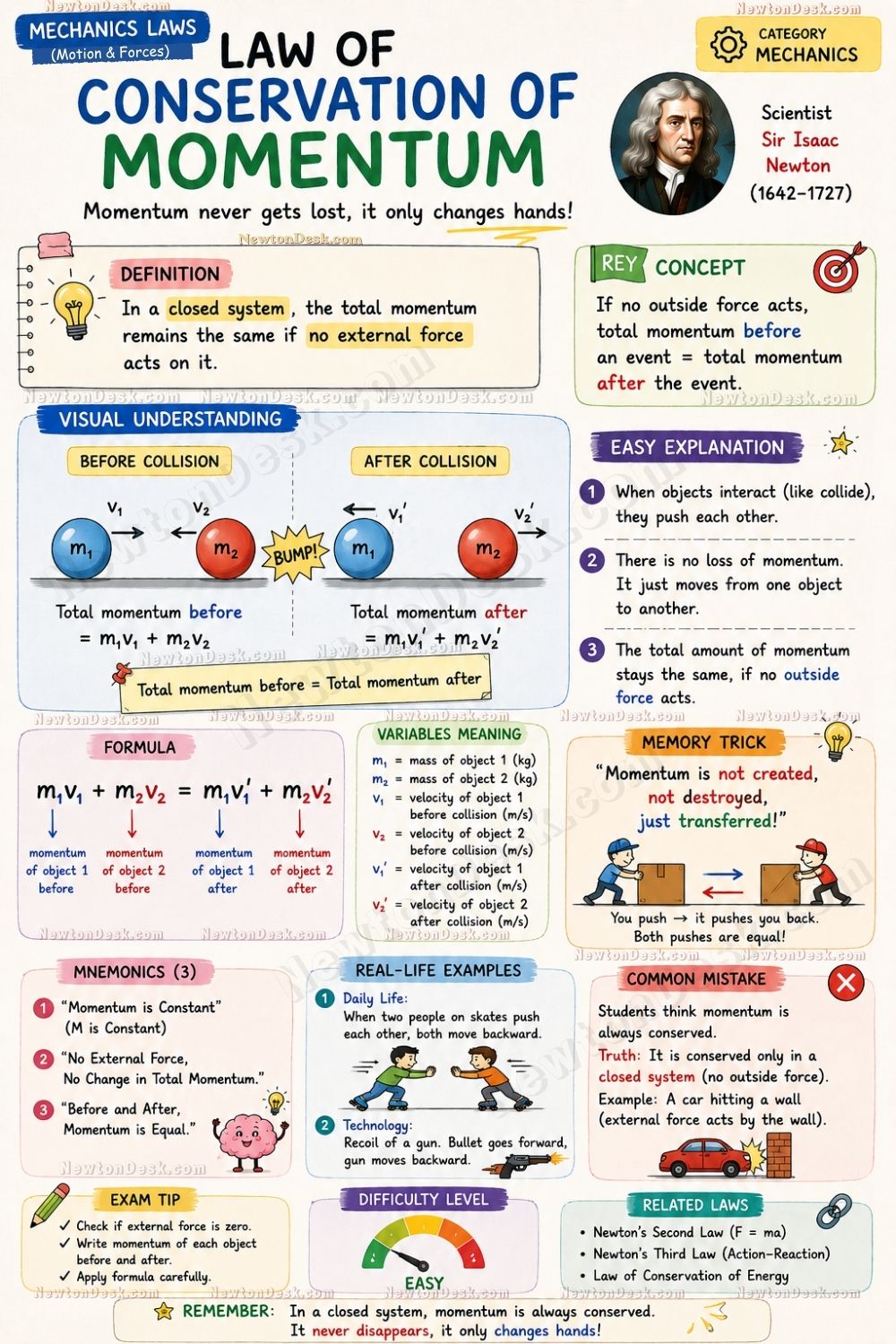
The Law of Conservation of Momentum explains that total momentum remains constant if no outside force acts on a system. This concept is important in collisions, rocket motion, and moving objects. The infographic uses easy collision examples and formulas to help beginners understand momentum transfer quickly.
Hooke’s Law
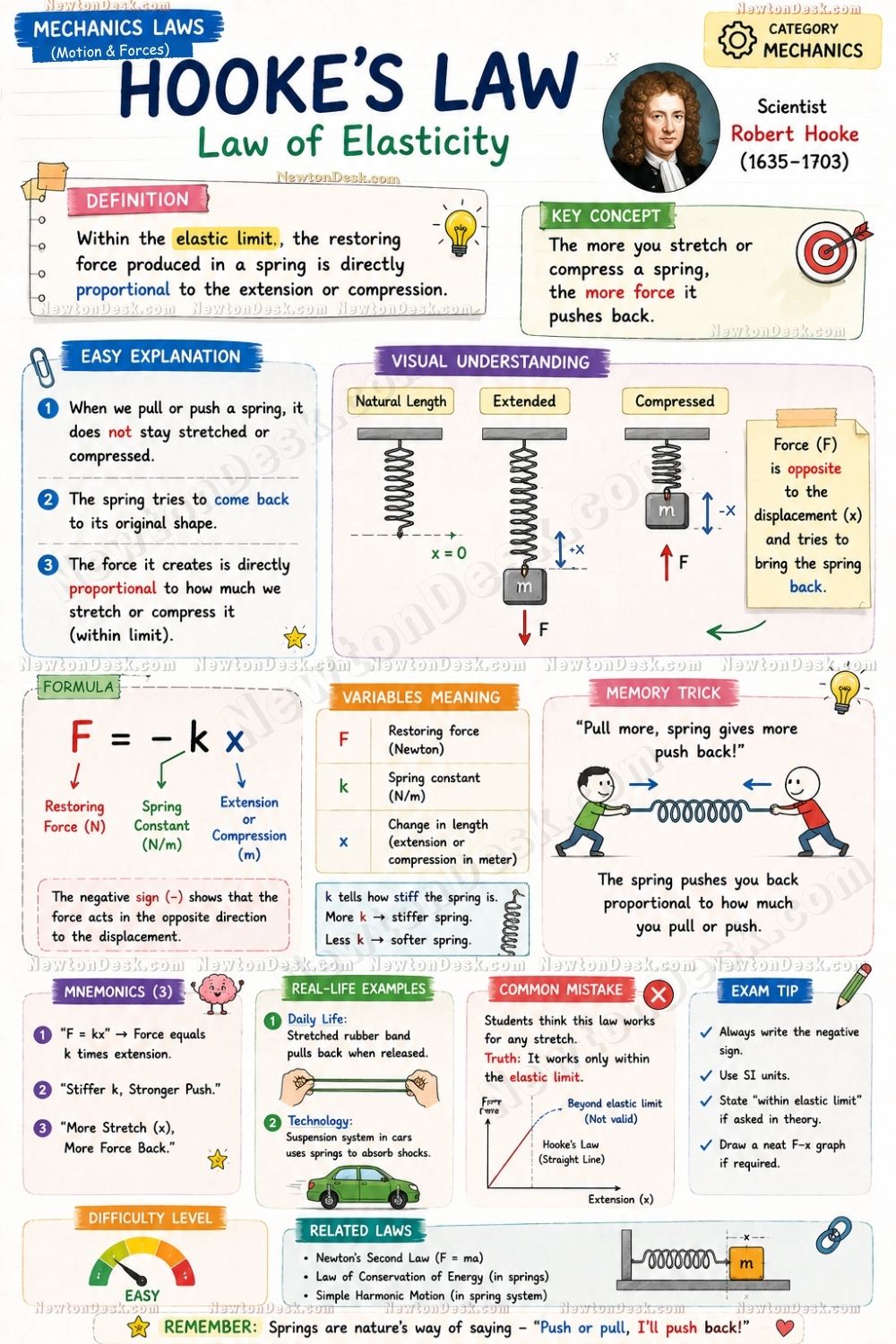
Hooke’s Law explains how springs stretch and compress. The restoring force of a spring is directly proportional to displacement within the elastic limit. This infographic makes elasticity simple using spring diagrams, formulas, and daily life examples.
Law of Gravitation
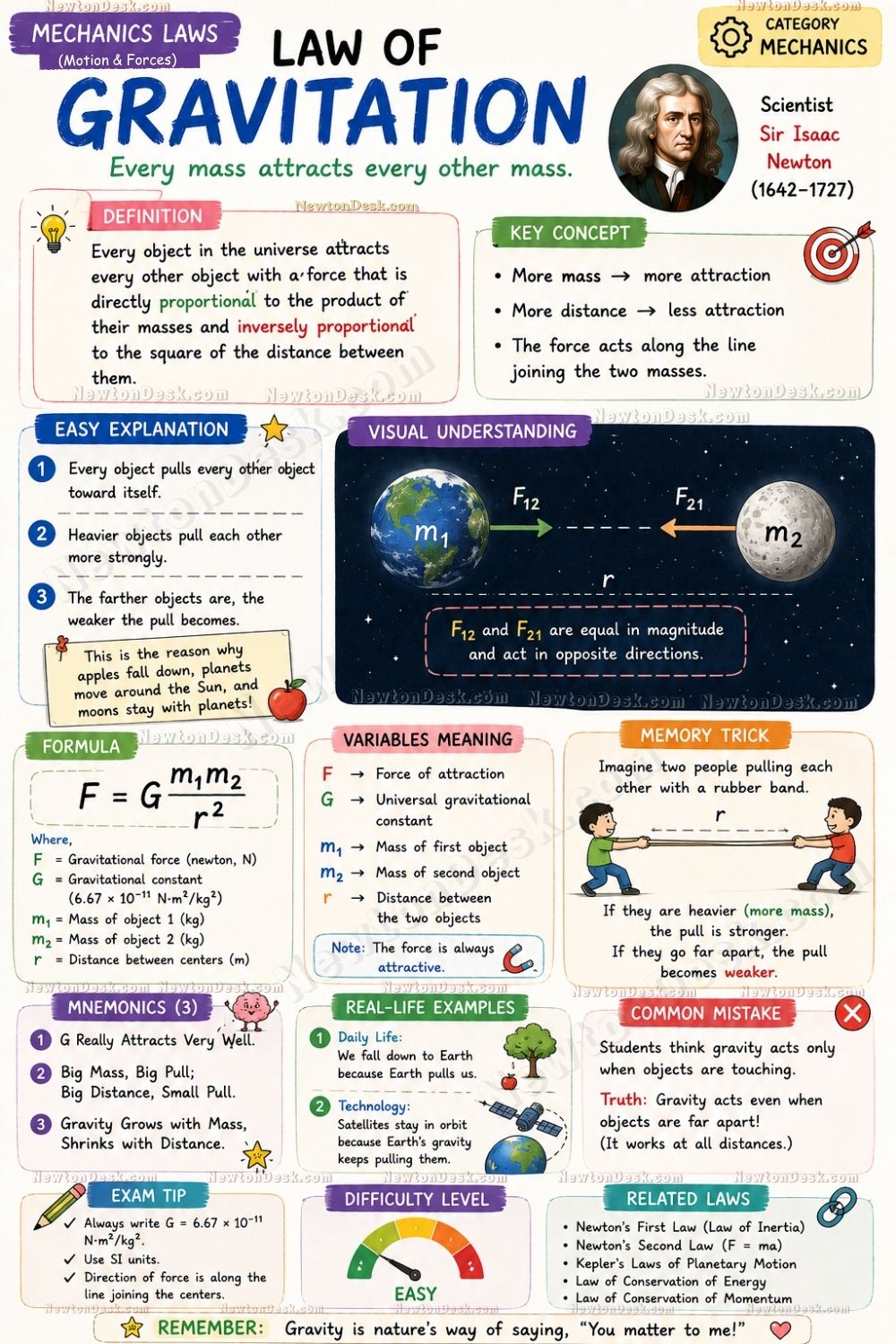
The Law of Gravitation explains how every object attracts another object with force. Students can understand gravity, planetary motion, and mass attraction using easy visuals and simple formulas shown in the infographic.
Kepler’s Laws of Planetary Motion
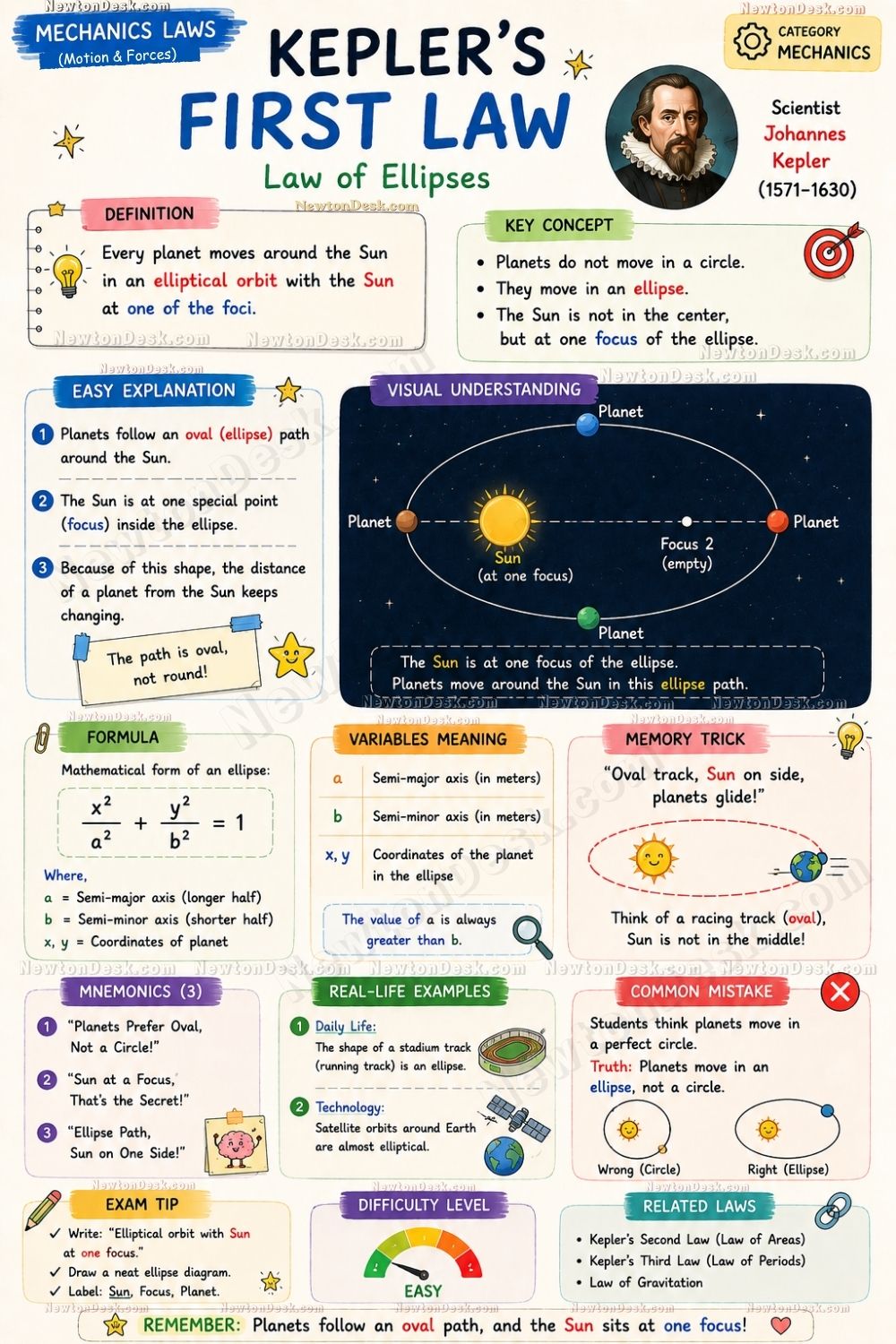
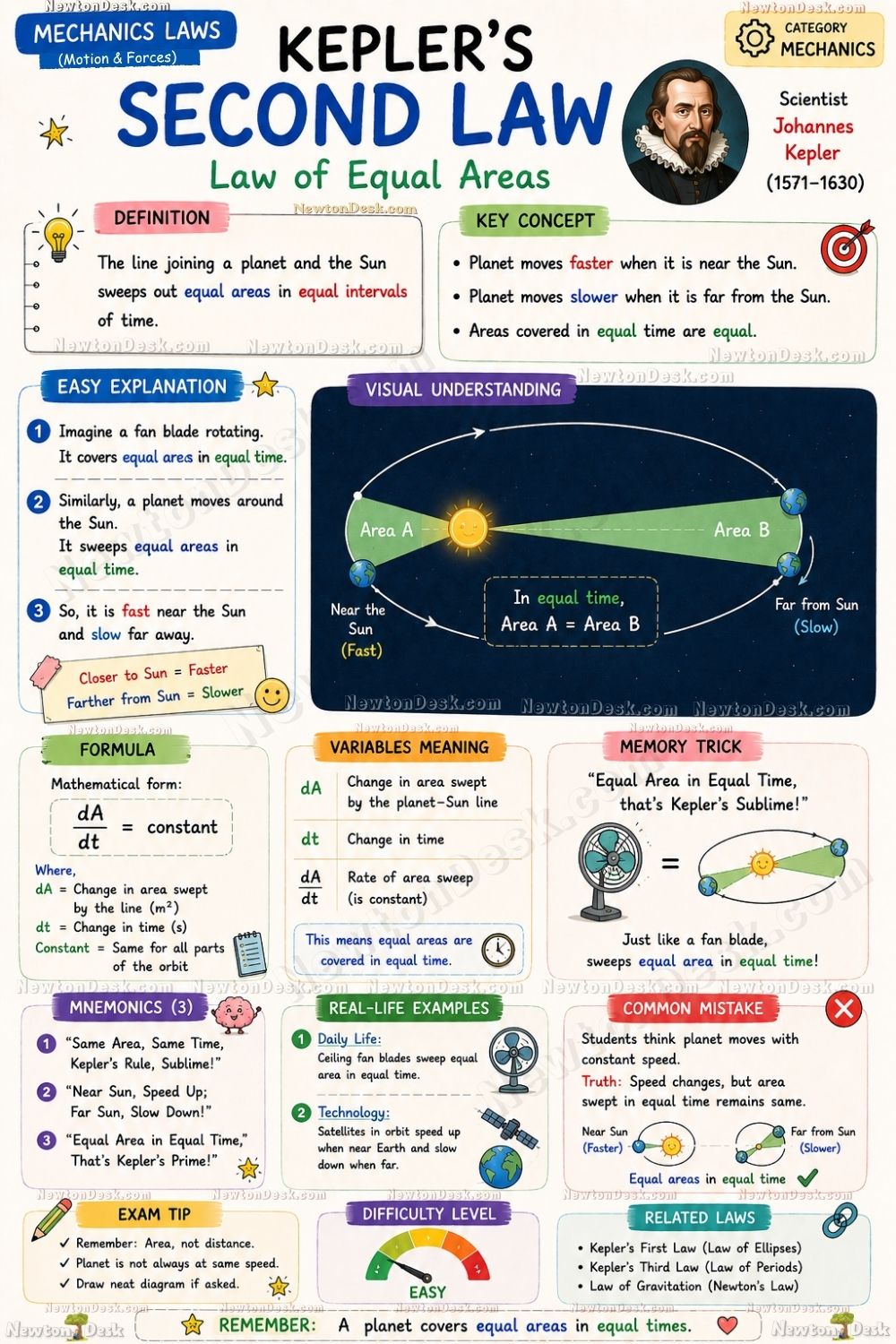
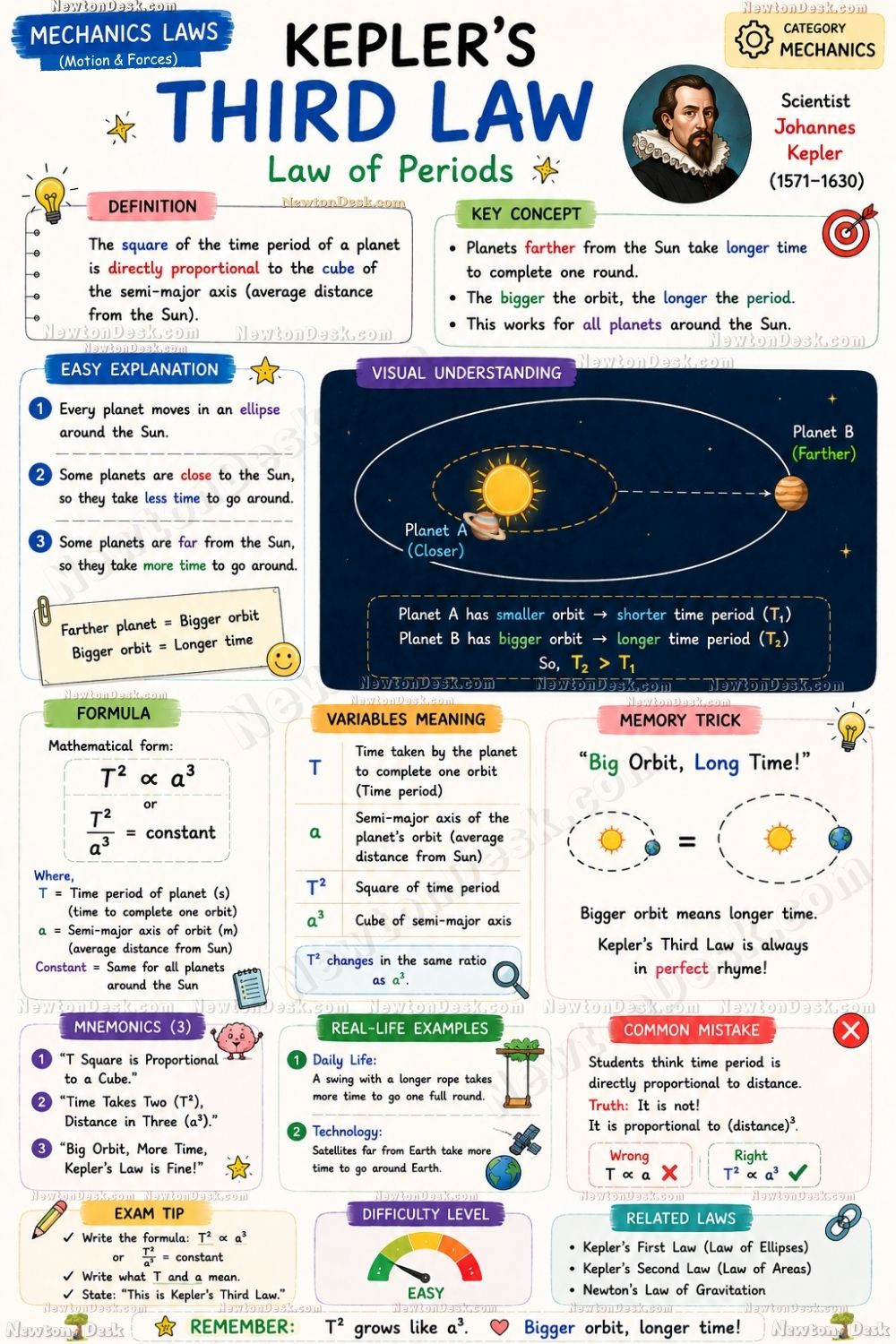
These infographics explain how planets move around the Sun. Students learn about elliptical orbits, equal areas in equal time, and orbital periods using very simple diagrams and beginner-friendly explanations.
Law of Inertia
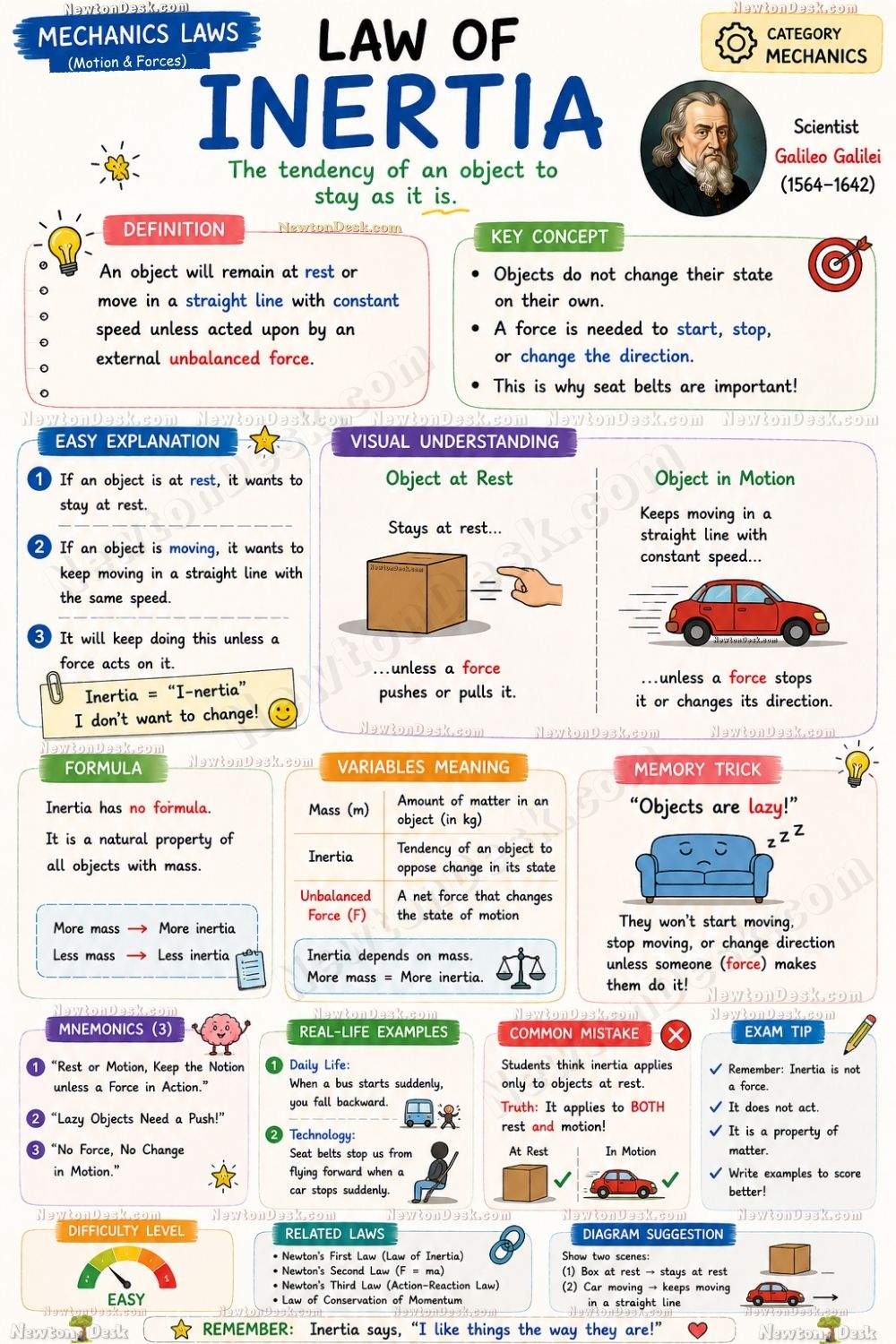
The Law of Inertia explains why objects resist changes in motion. This infographic uses moving cars, boxes, and real-life examples to help students easily understand inertia and force.
Parallelogram and Triangle Law of Forces
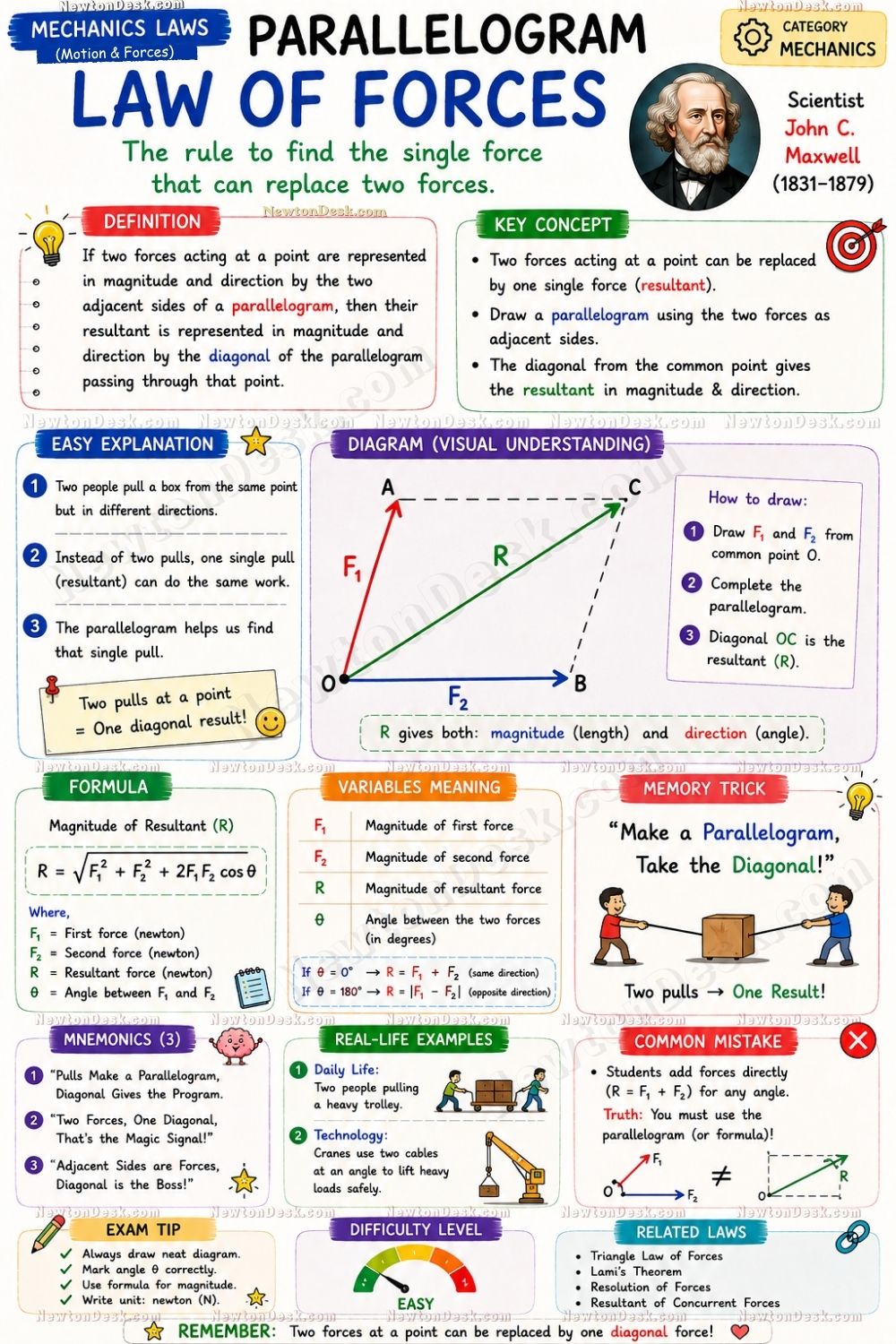
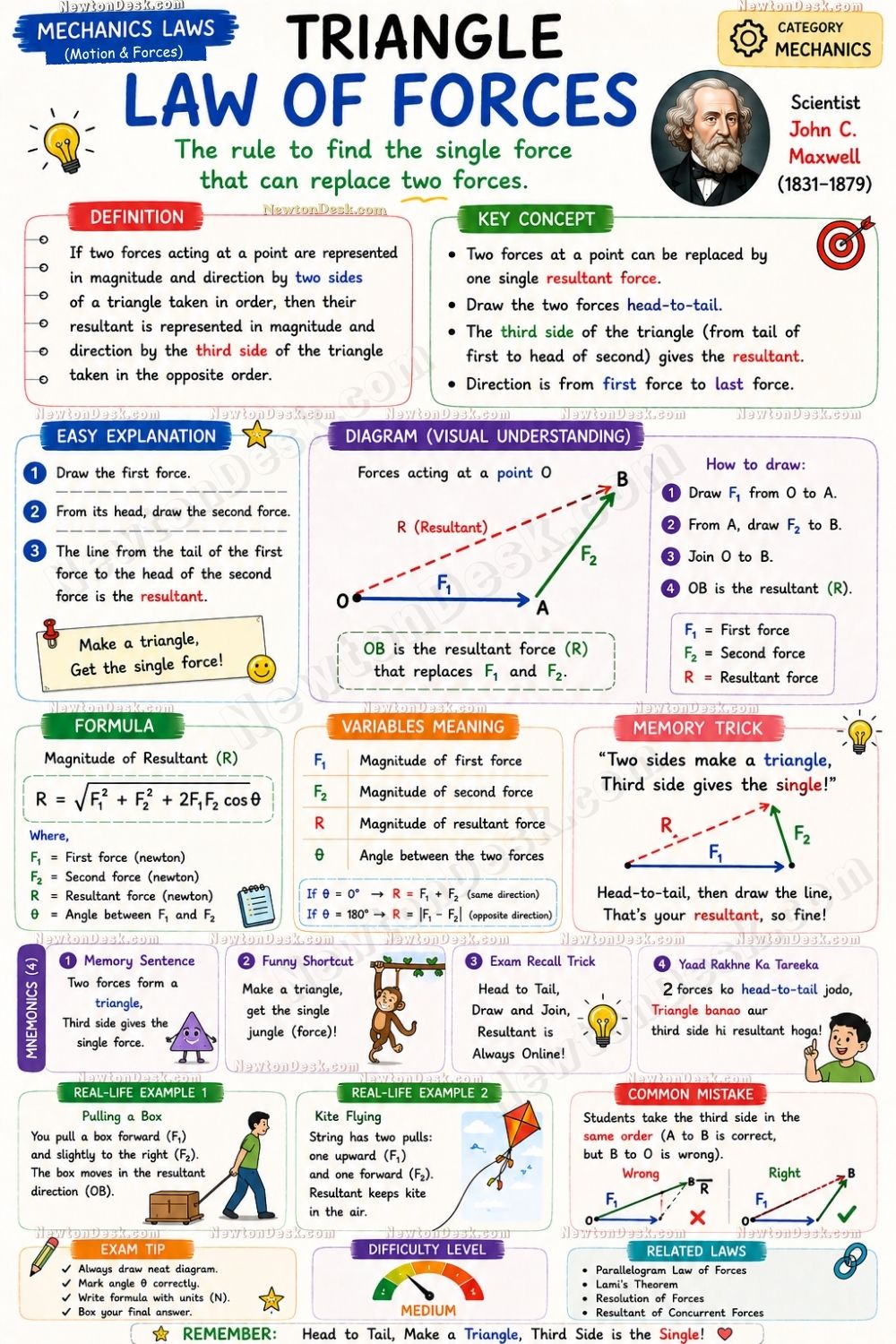
These force laws help students understand how two forces combine to form one resultant force. The visual diagrams and easy vector explanations make force addition simple for beginners.
Law of Friction
Paragraph
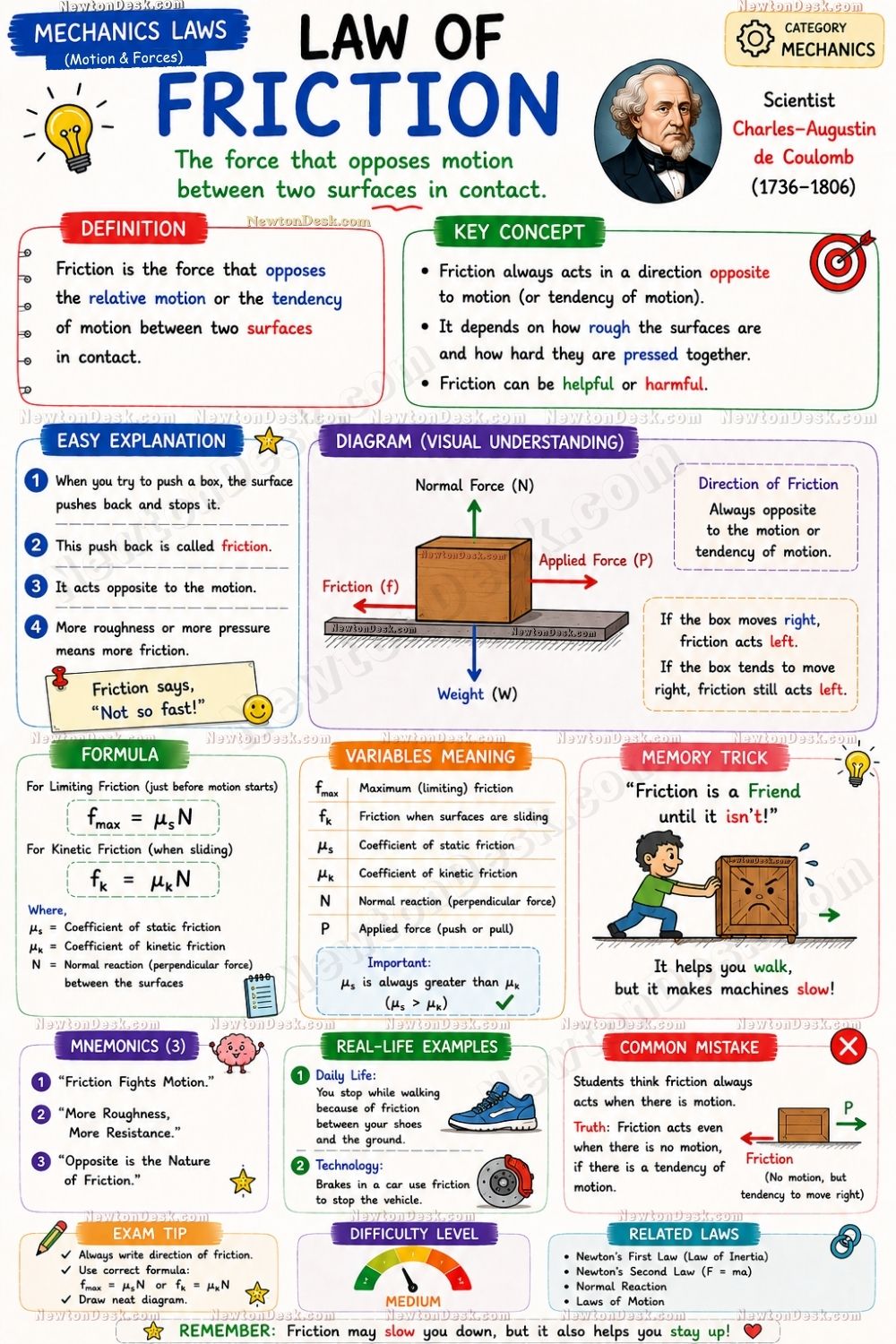
The Law of Friction explains how surfaces resist motion. Students learn about static friction, kinetic friction, formulas, and real-life applications like brakes and walking.
Centripetal Force Law
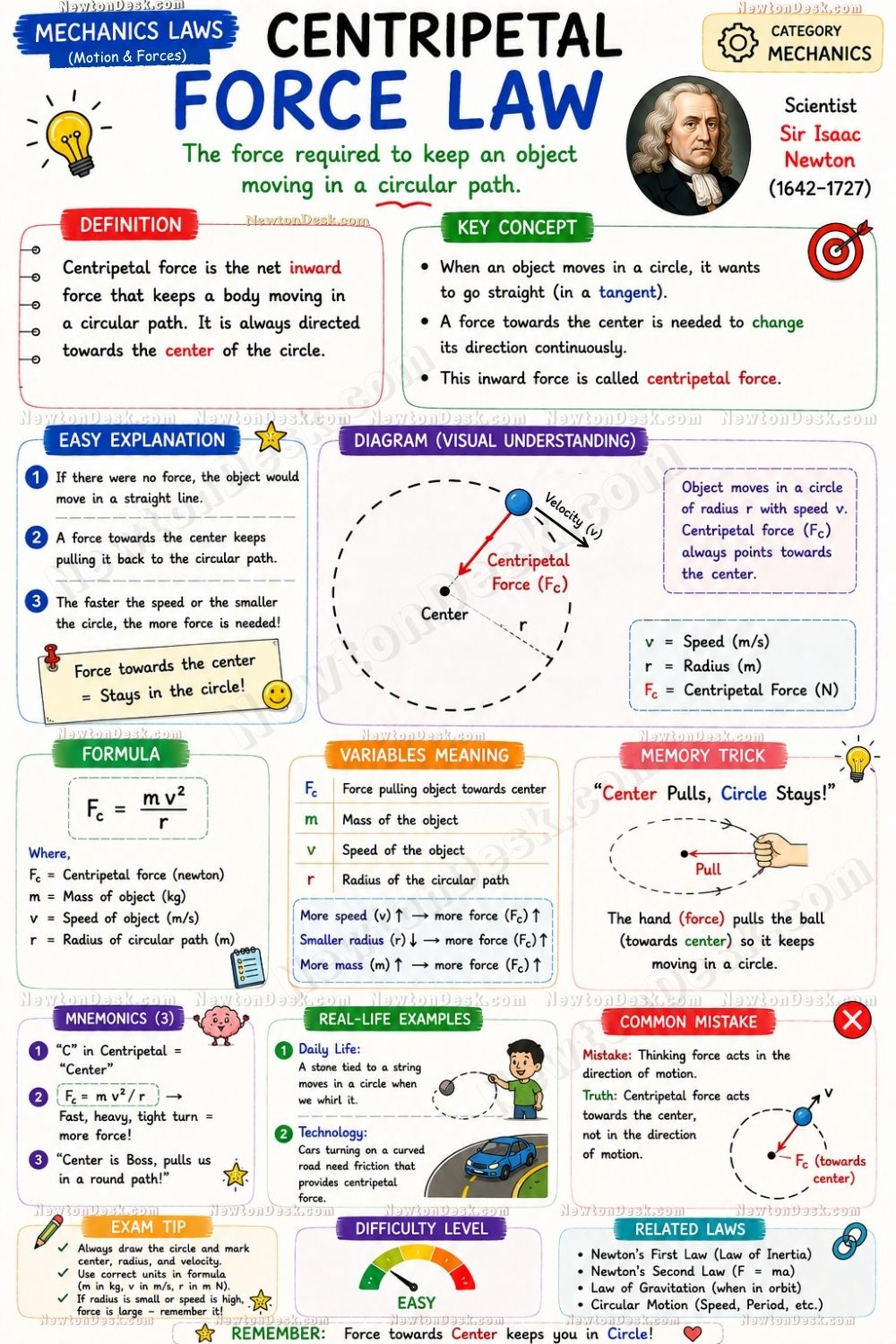
The Centripetal Force Law explains circular motion and inward force. Students can easily understand turning objects, circular paths, and force direction using simple diagrams and formulas.
Why These Physics Infographics Help Students Learn Faster
Visual learning makes physics easier to understand and remember. These Physics Infographics use colors, diagrams, formulas, and real-life examples to simplify difficult topics. Beginners can quickly revise concepts, improve memory, and prepare for exams more effectively.
Conclusion
These Mechanics Laws infographics are designed to make physics simple, visual, and beginner-friendly. From Force and Motion Laws to gravity, friction, and planetary motion, every topic is explained in an easy human language format. Students can use these notes for school learning, revision, competitive exams, and quick understanding of important physics concepts.