Electricity is one of the most important topics in physics. Students often struggle to remember formulas and laws because many concepts connect together. This learning guide explains important Electricity and Magnetism Laws using simple English, formulas, examples, and study notes.
CONTENT INDEX
What Are Electricity and Magnetism Laws?
Electricity and Magnetism Laws explain how electric charge, current, voltage, resistance, and electric fields behave. These laws help students understand circuits, electrical devices, electrostatics, and many real-life technologies.
Topics covered:
– Coulomb’s Law
– Gauss’s Law
– Ohm’s Law
– Joule’s Law of Heating
– Kirchhoff’s First Law
– Kirchhoff’s Second Law
Coulomb’s Law
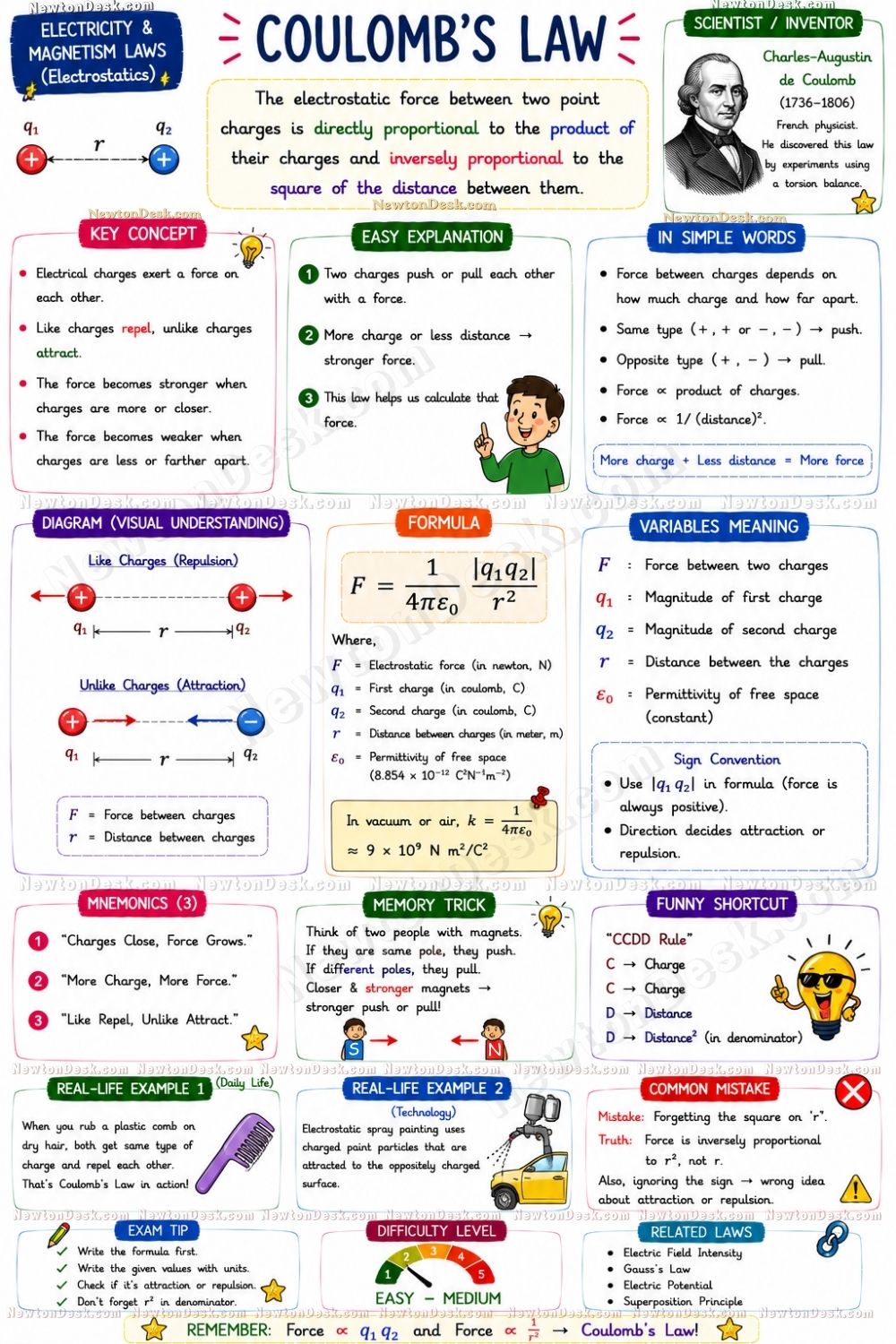
Coulomb’s Law explains force between electric charges. Same charges push away. Opposite charges attract. Force becomes stronger when charges are bigger or distance becomes smaller.
Formula concept:
Force ∝ Charge × Charge ÷ Distance²
Real example:
Rub a plastic comb on hair. Small paper pieces move toward it because electric charge creates force.
Gauss’s Law
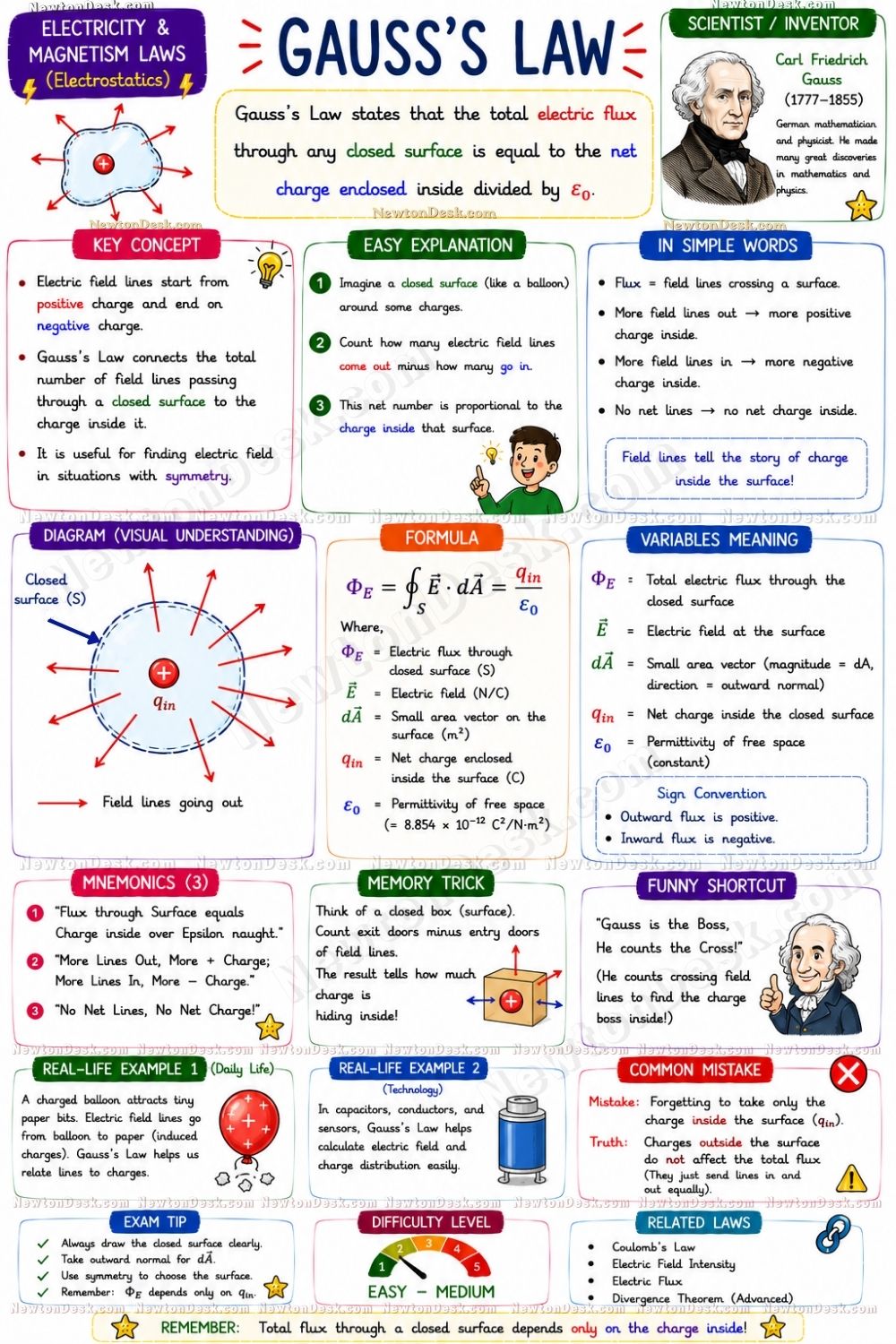
Gauss’s Law explains electric flux and enclosed charge. Electric field lines crossing a closed surface help determine how much charge exists inside.
Students use this law in electrostatics problems and electric field calculations.
Ohm’s Law
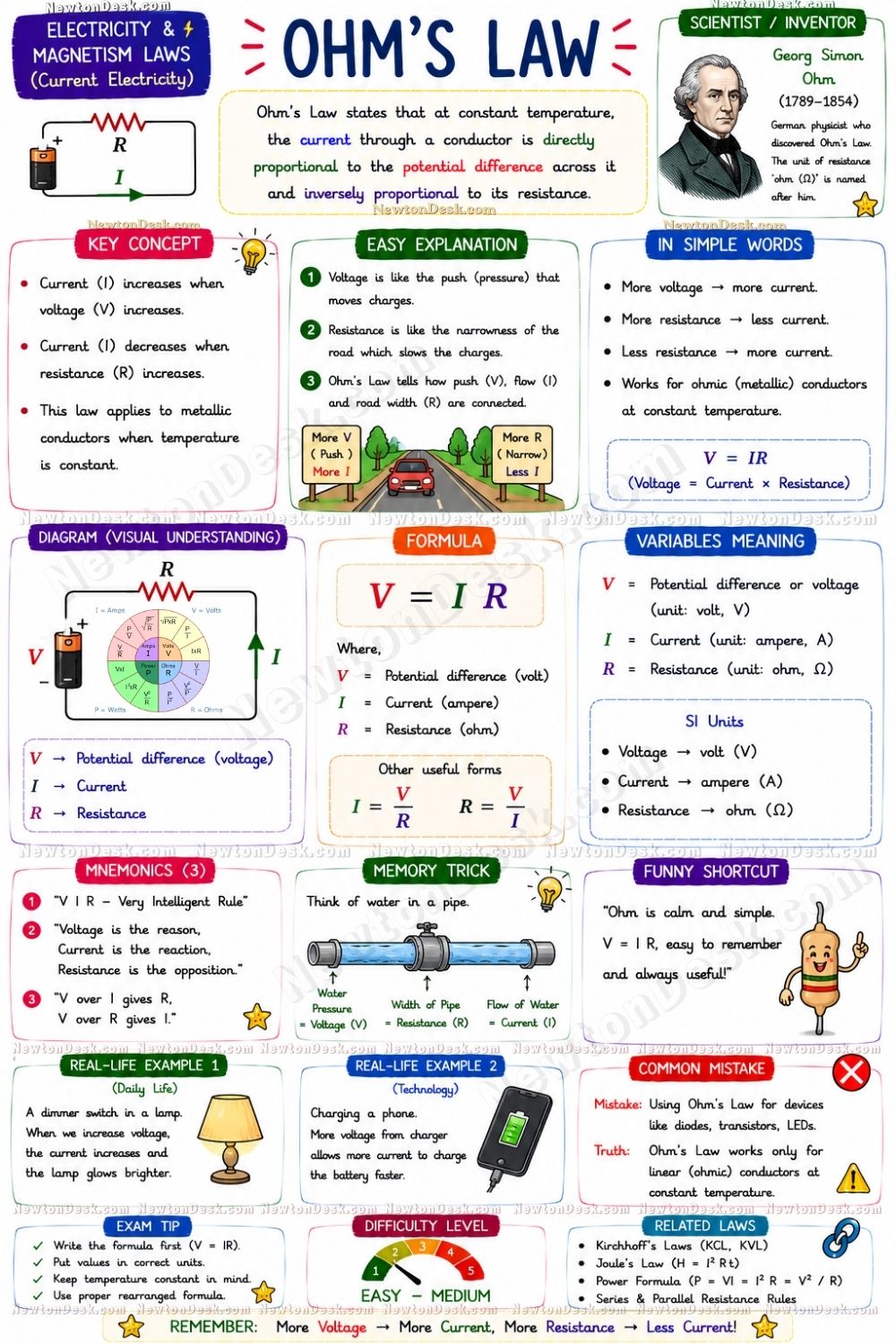
Ohm’s Law explains the connection between voltage, current, and resistance.
Formula:
V = IR
More voltage means more current. More resistance means less current.
Real example:
Phone chargers and electrical circuits use these concepts daily.
Joule’s Law of Heating
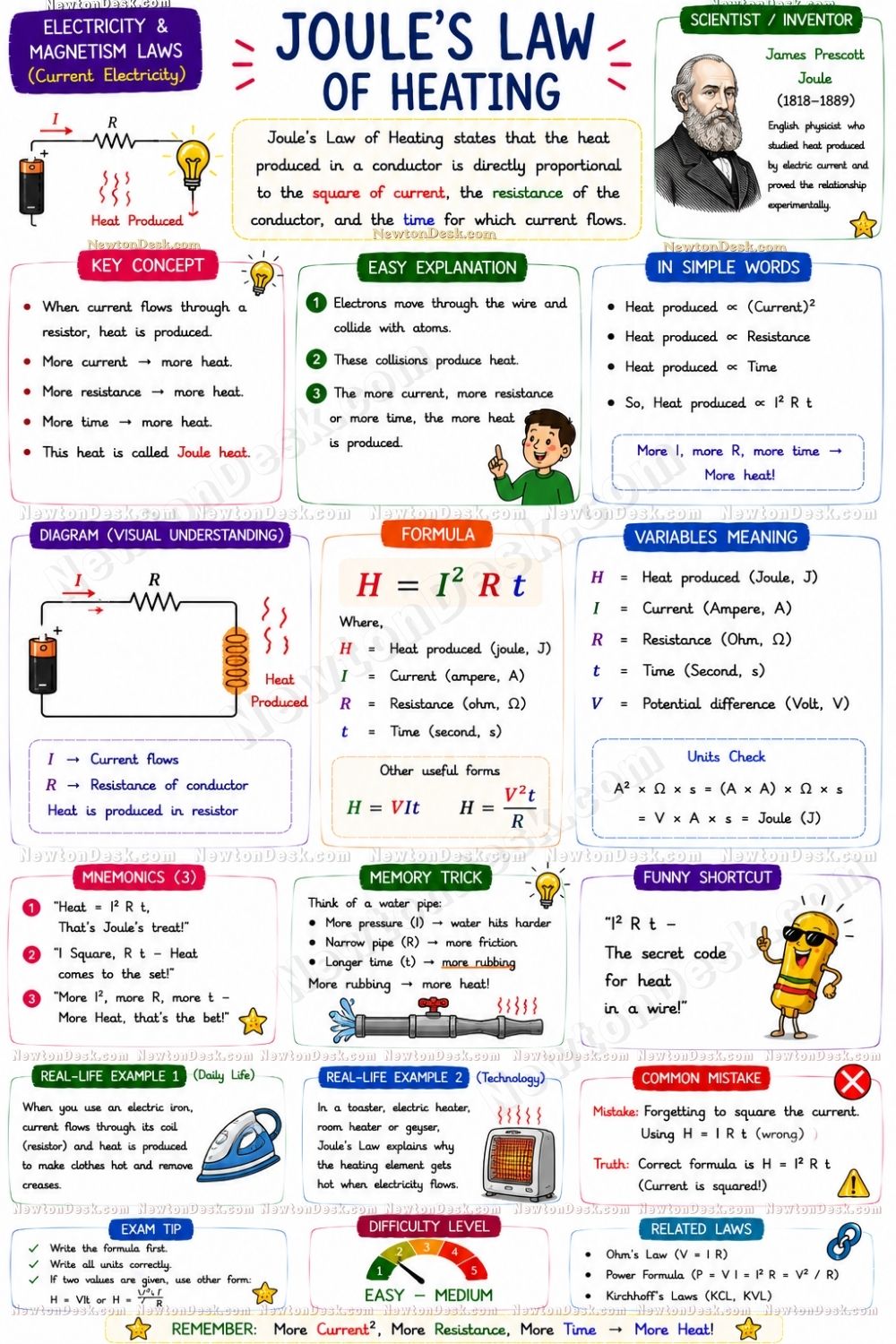
Joule’s Law of Heating explains heat generation when current flows through resistance.
More current means more heat.
Examples:
– Electric iron
– Heater
– Toaster
– Room heater
Kirchhoff’s First Law (KCL)
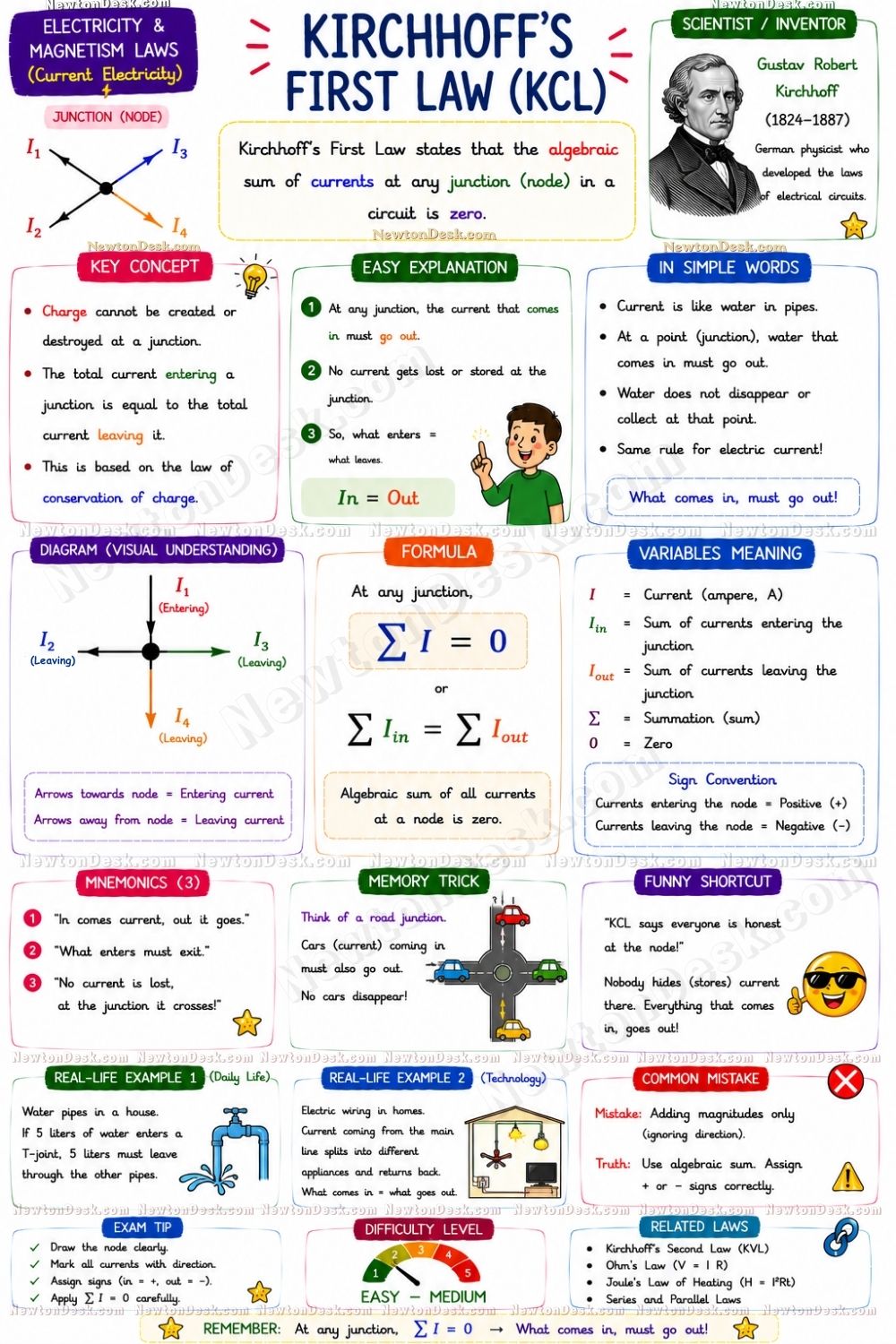
Kirchhoff’s First Law explains current conservation at circuit junctions.
Current entering = Current leaving
This rule helps students solve circuit questions easily.
Kirchhoff’s Second Law (KVL)
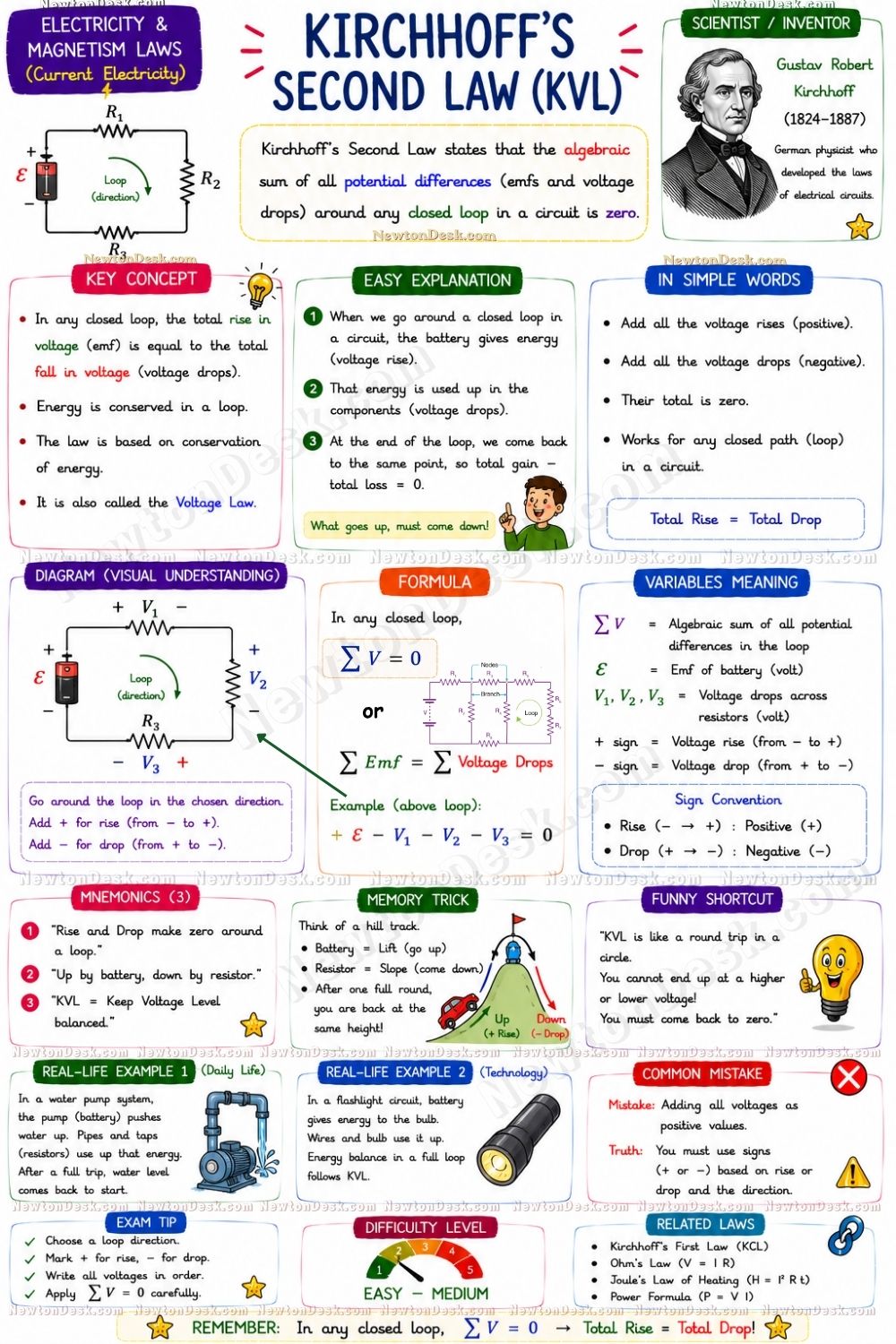
Kirchhoff’s Second Law explains voltage balance in a closed loop.
Total voltage rise = Total voltage drop
Students use this law in circuit analysis and electrical calculations.
Why Students Should Learn Electricity Laws
Learning Electricity and Magnetism Laws helps students:
– Solve physics numerical questions
– Understand circuits
– Build stronger science concepts
– Prepare for exams
– Improve problem-solving skills
Quick Revision Questions (GEO Optimization)
What is Coulomb’s Law?
Coulomb’s Law explains force between electric charges.
What does Ohm’s Law state?
Ohm’s Law states that voltage equals current multiplied by resistance.
What is Kirchhoff’s Current Law?
Current entering a node equals current leaving the node.
Why is Joule’s Law important?
Joule’s Law explains how electrical energy changes into heat energy.
What does Gauss’s Law explain?
Gauss’s Law explains electric flux and enclosed charge.
Final Revision Tip
Study formulas first. Then understand diagrams. Finally solve numerical problems. This learning order helps students remember Electricity and Magnetism Laws faster.