Understanding Magnetism and Electromagnetic Induction becomes easier when concepts are learned with diagrams and simple notes. This guide covers important laws including Faraday’s First Law, Faraday’s Second Law, Lenz’s Law, Fleming Left Hand Rule, Fleming Right Hand Rule, and Ampere Circuital Law.
Add Featured Image here.
CONTENT INDEX
What is Electromagnetic Induction?
Electromagnetic induction happens when changing magnetic fields create electric voltage. This idea is used in motors, generators, transformers, and many electrical devices we use daily.
Students learning physics laws of magnetism often find EMI difficult. Visual study notes make learning easier.
Faraday’s Laws of Electromagnetic Induction
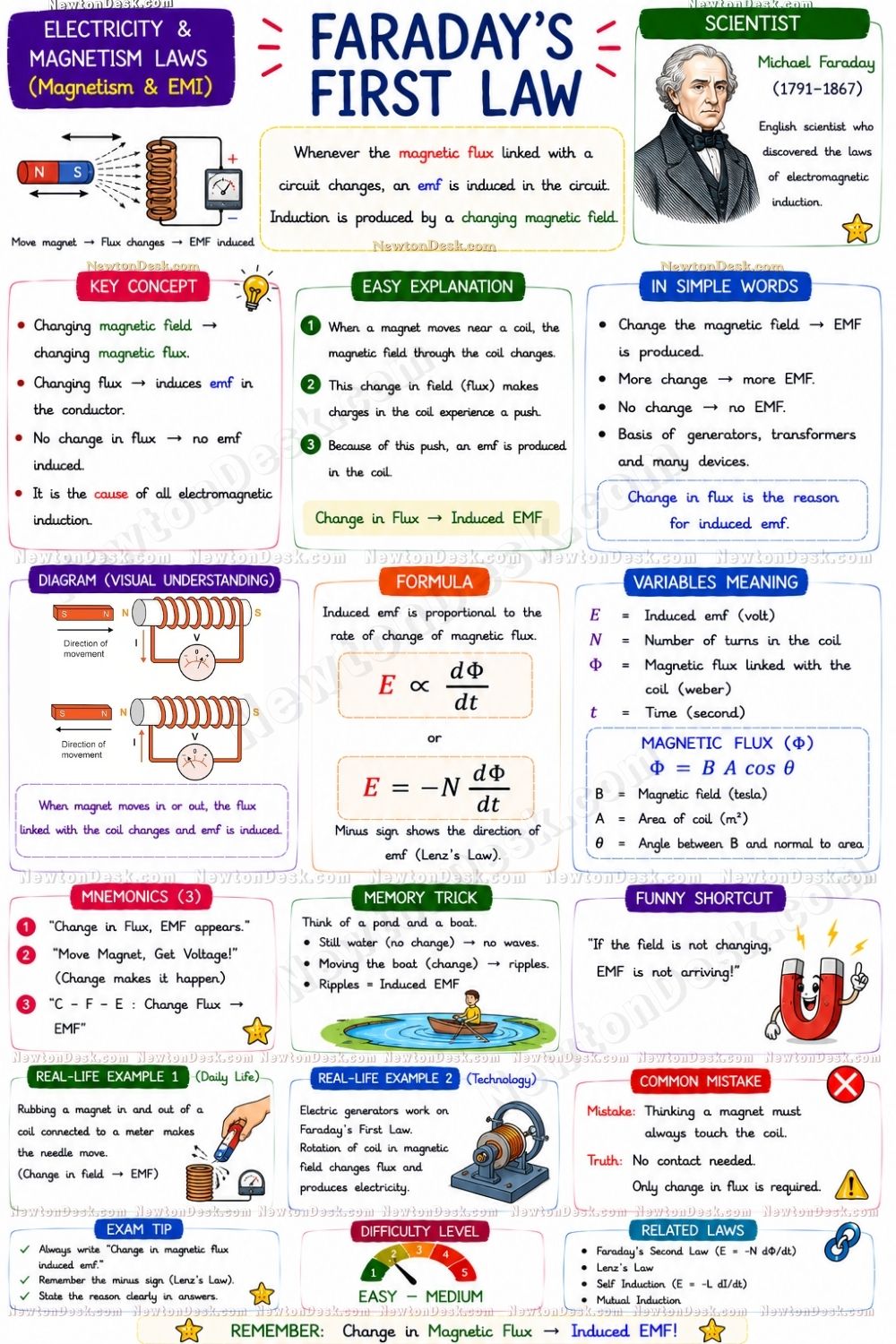
Faraday’s First Law
Explain magnetic flux change producing induced EMF.
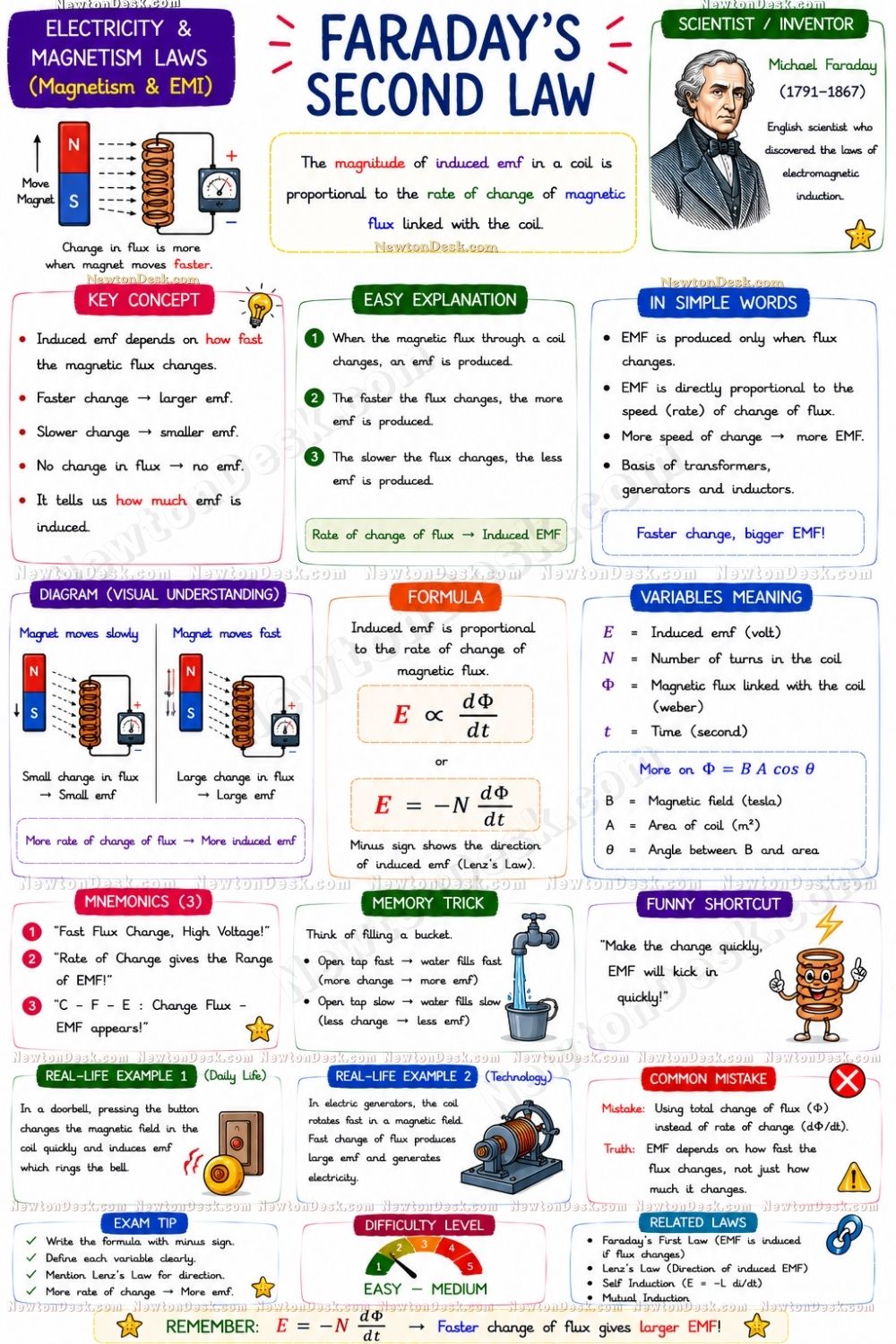
Faraday’s Second Law
Explain faster flux change means larger induced voltage.
Lenz’s Law Explained
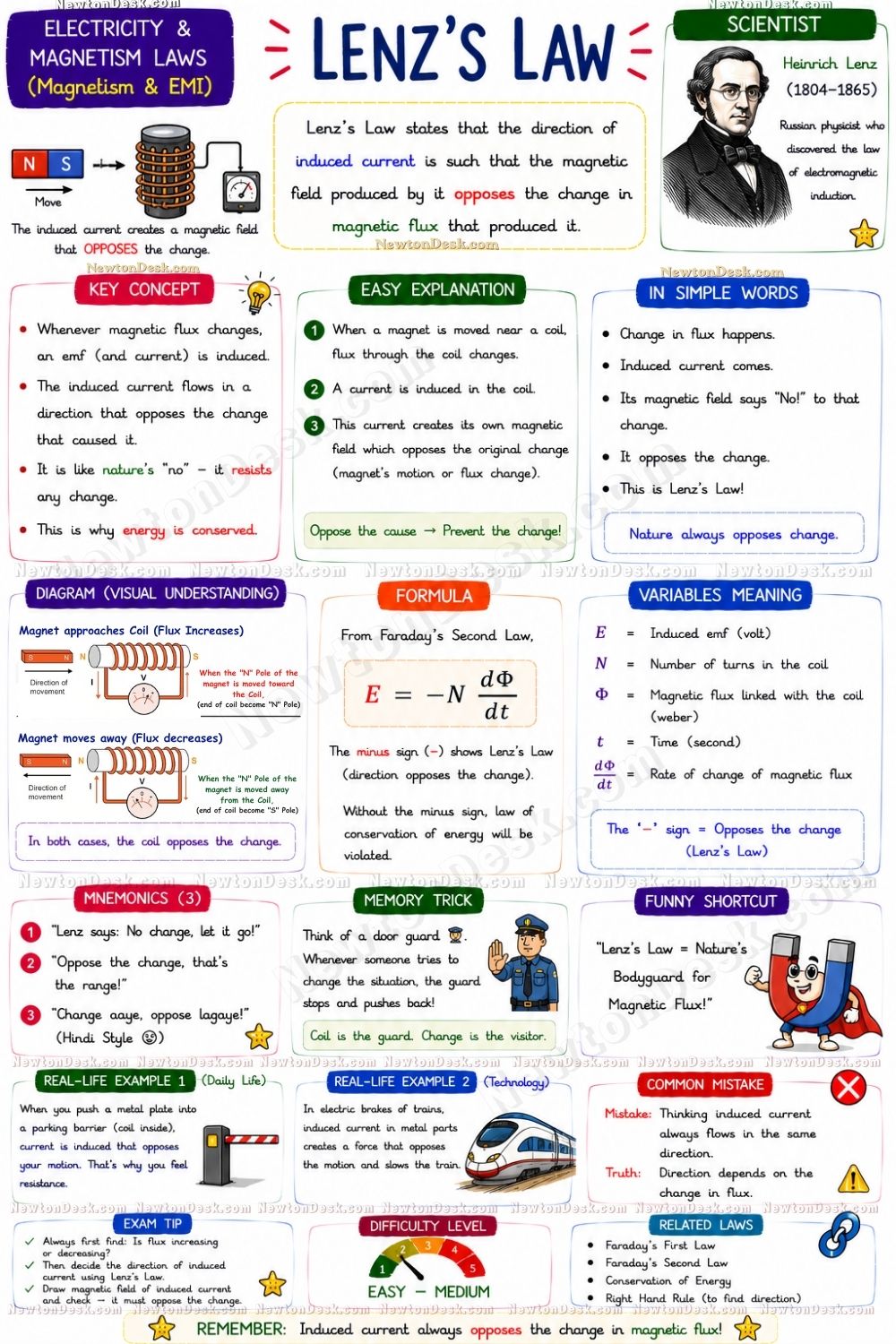
Lenz’s Law explains direction. Induced current always acts against the magnetic change that created it. This protects energy conservation principles.
Fleming Rules for Motors and Generators
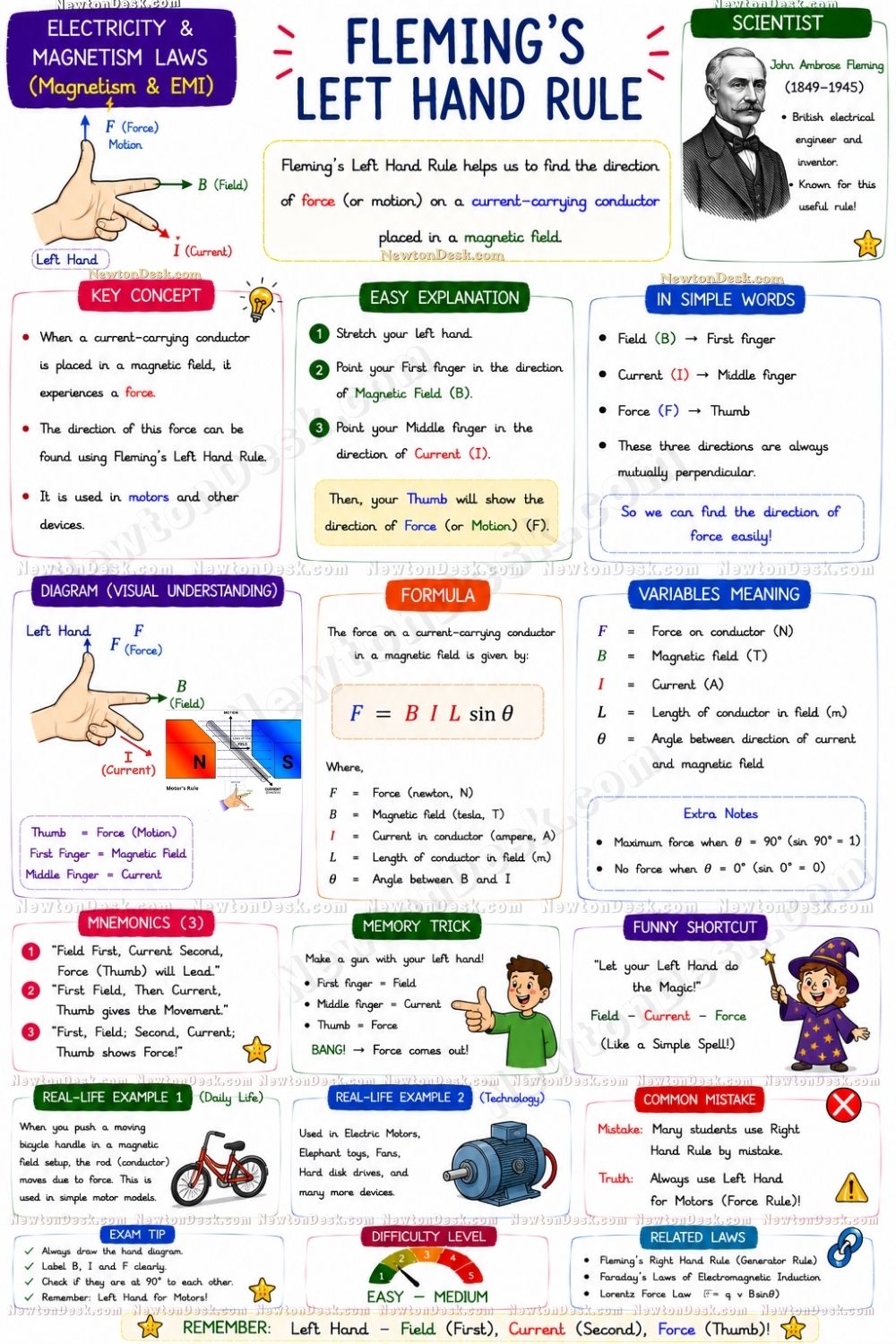
Fleming Left Hand Rule
Used for motors.
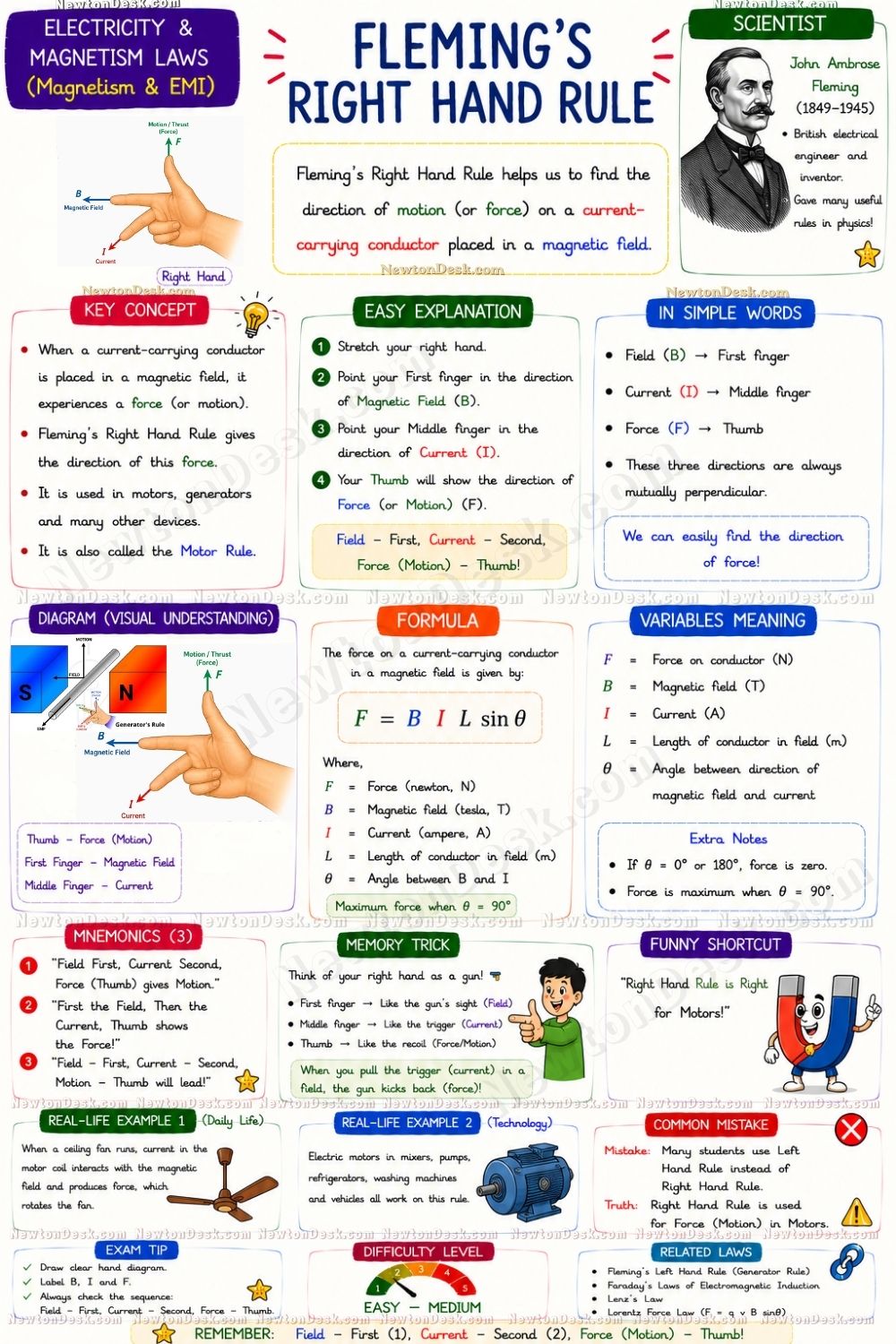
Fleming Right Hand Rule
Used for generators.
Ampere Circuital Law
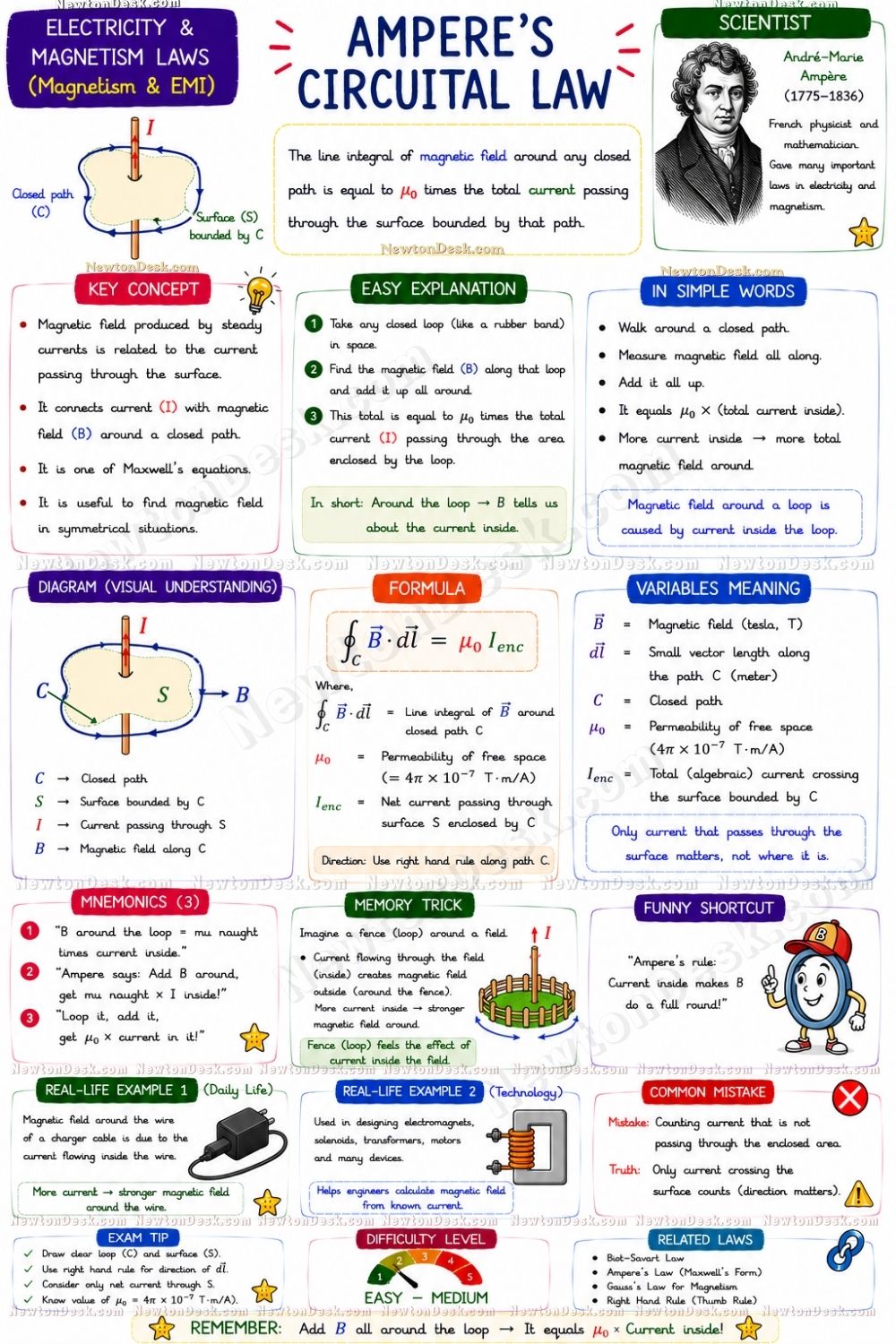
Ampere Circuital Law connects electric current and magnetic fields. It explains magnetic field strength around conductors carrying current.
Real Life Applications
Daily Examples
– Electric generators
– Transformers
– Ceiling fans
– Electric motors
– Charging systems
– Magnetic brakes
Quick Revision Summary
– Changing magnetic flux creates voltage
– Faster magnetic changes create larger EMF
– Induced current opposes change
– Fleming rules find direction
– Current creates magnetic fields
– GEO Optimization Questions (AI Search Ranking)
Q: What is Faraday’s First Law?
A: It says changing magnetic flux produces induced EMF.
Q: What is Faraday’s Second Law?
A: Induced EMF depends on how quickly magnetic flux changes.
Q: Why is Lenz’s Law important?
A: It explains induced current direction and energy conservation.
Q: What is Fleming Left Hand Rule used for?
A: It finds motion direction in electric motors.
Q: What is Fleming Right Hand Rule used for?
A: It finds current direction in generators.
Q: What is Ampere Circuital Law?
A: It connects magnetic field strength with electric current.