Learning kitchen vocabulary is one of the easiest ways to improve your daily English. We use these words every day while cooking, eating, and talking at home. In this guide, you will learn 80 kitchen items names in English with simple meanings, pronunciation, and real-life sentences. This post is perfect for beginners, students, and anyone who wants to speak English confidently in daily life.
CONTENT INDEX
Basic Kitchen Items (1–20)
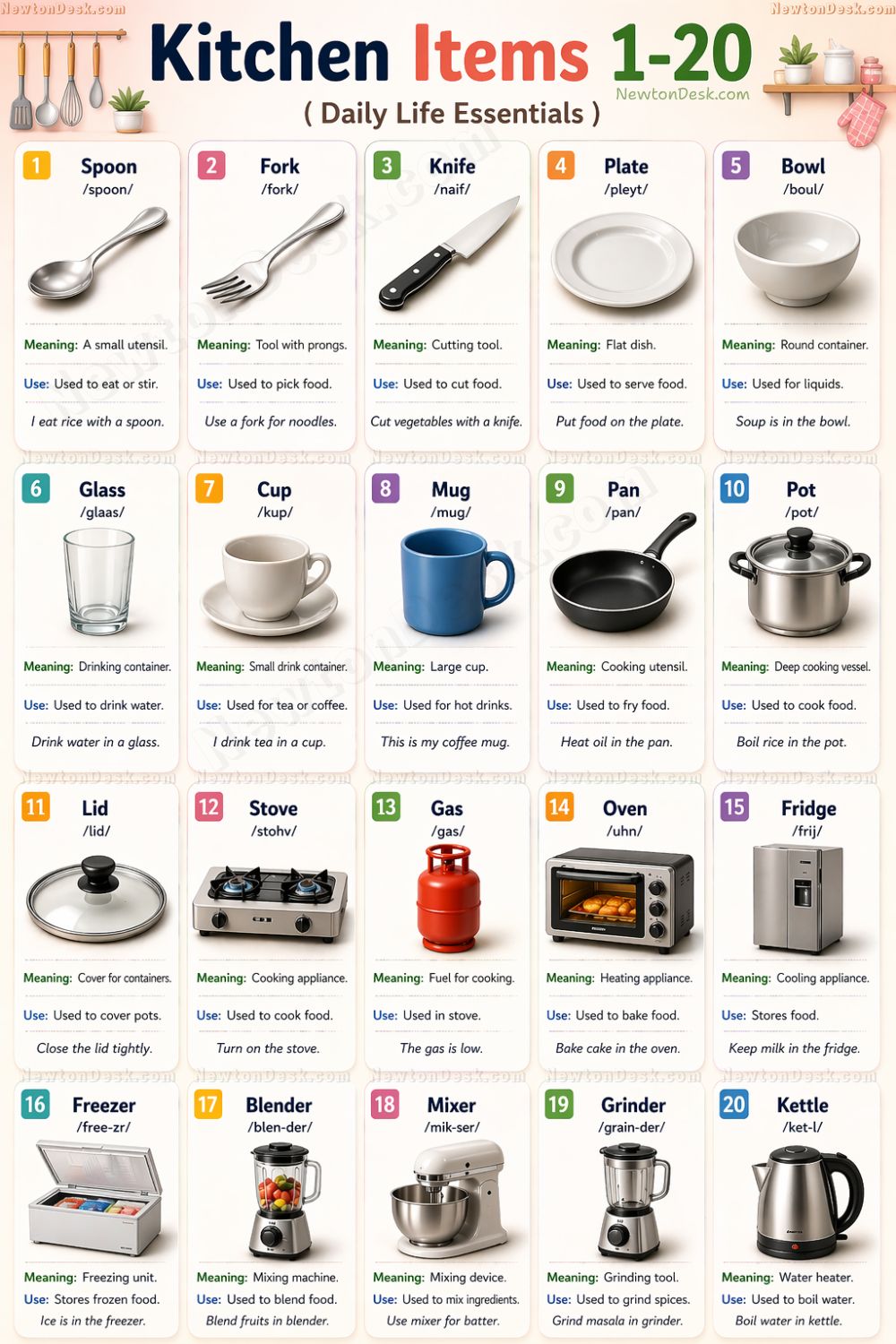
Explanation
Basic kitchen items are used every day for cooking, eating, and serving food. Just like A spoon is used for eating soup or rice, while a fork helps pick food like noodles. A knife is used to cut fruits and vegetables. A plate is used to serve food, and a bowl is used for liquids. A glass, cup, and mug are used for drinking water, tea, or coffee. A pan is used for frying, and a pot is used for cooking meals. A stove cooks food, and an oven bakes it. A fridge keeps food fresh, and a kettle is used to boil water.
These basic kitchen items are very important because they help you talk about daily activities clearly and confidently in English.
Common Kitchen Tools (21–40)
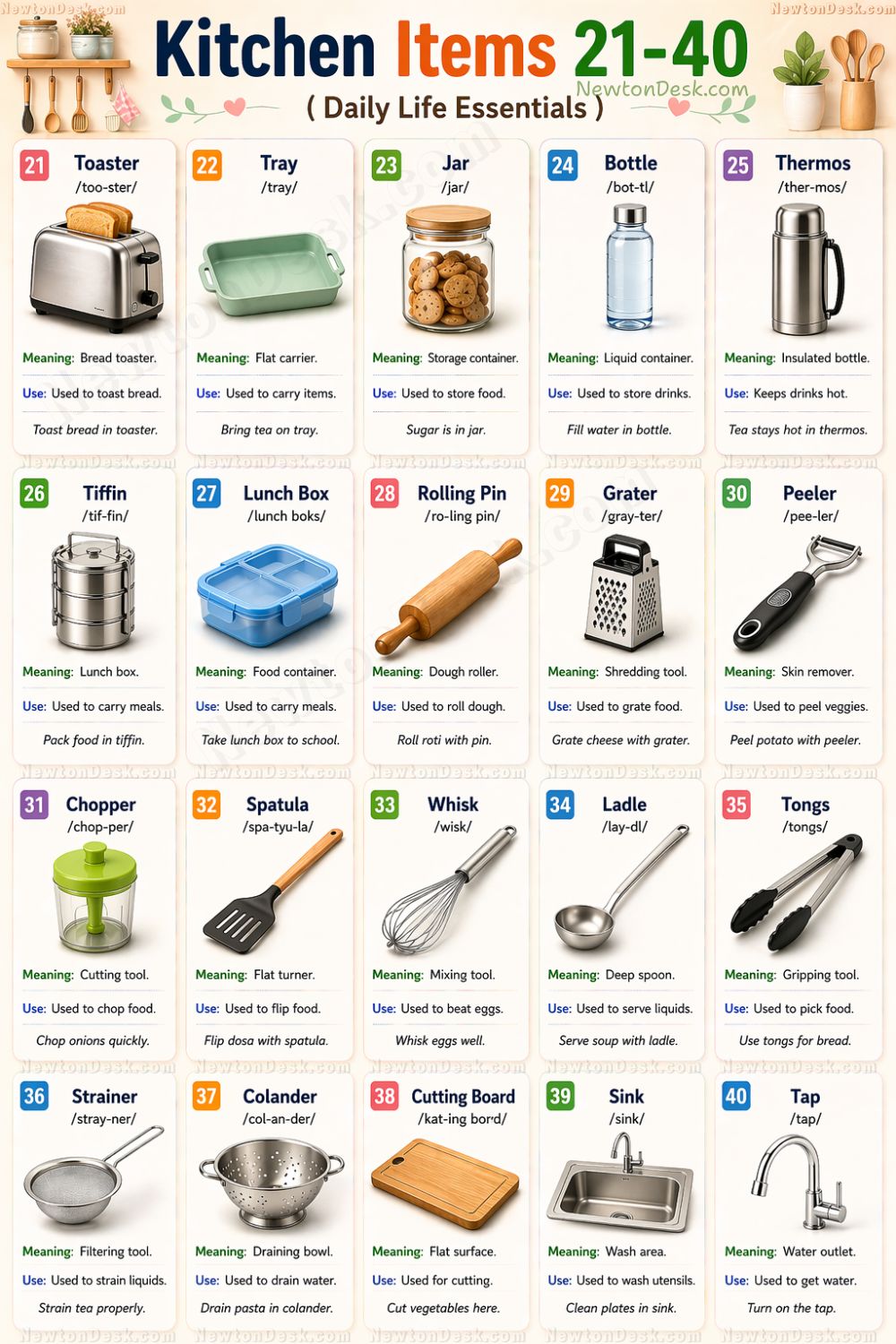
Usage in Daily Life
Common kitchen tools are used during food preparation, cooking, and storage. A toaster is used to toast bread for breakfast. A grater helps shred cheese or vegetables, while a peeler removes the skin of fruits and vegetables. A rolling pin is used to roll dough for chapati or pizza. A spatula helps flip food while cooking, and a whisk is used to mix eggs or batter. A jar and bottle are used to store food and liquids. A thermos keeps drinks hot or cold. A strainer removes water from pasta or rice. These tools make cooking faster, easier, and more organized.
Intermediate Kitchen Vocabulary (41–60)
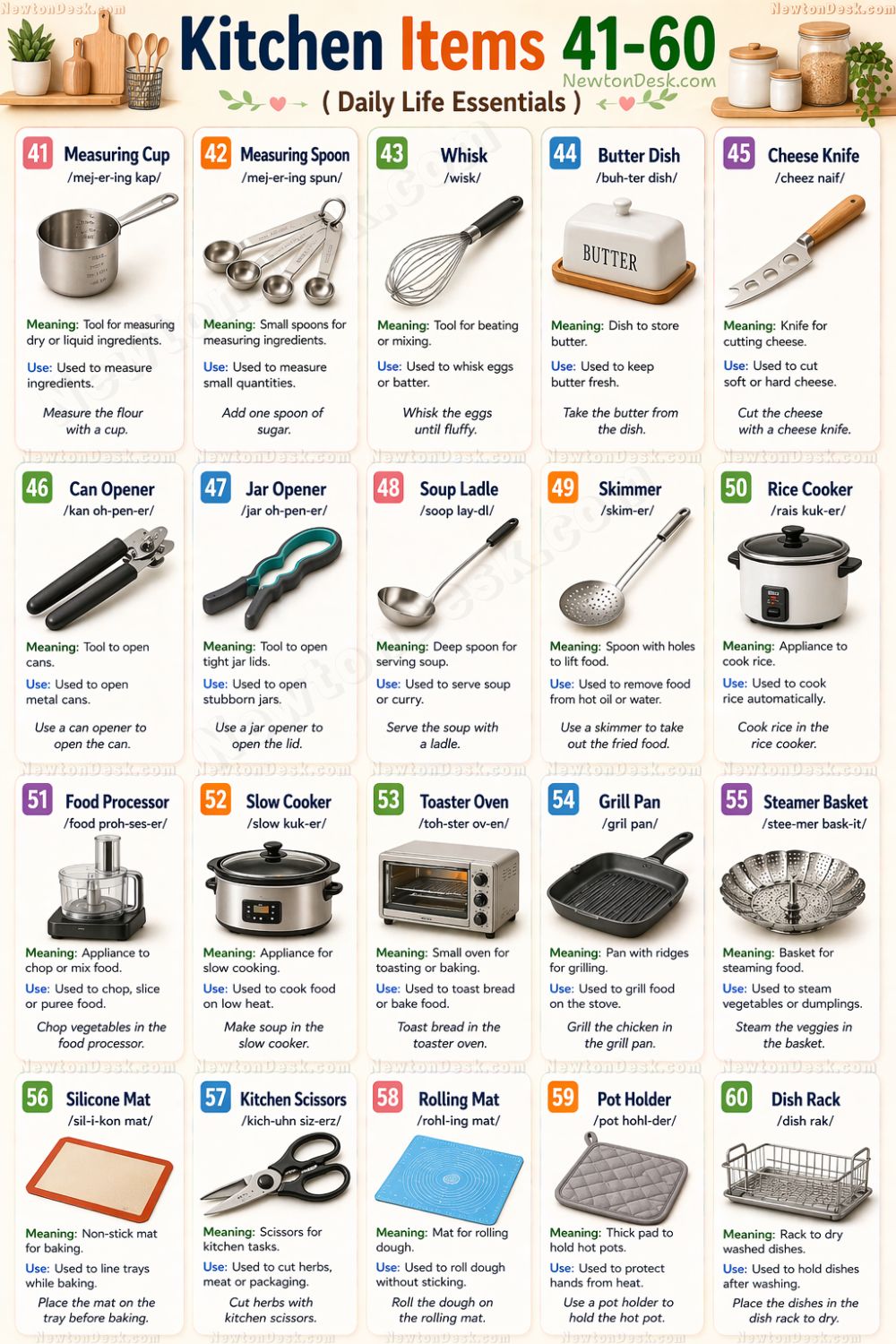
Learning Tips
To remember intermediate kitchen vocabulary faster, group similar items together. For example, keep all measuring tools like measuring cup and measuring spoon in one group. Put cooking tools like whisk, spatula, and ladle in another group. You can also group appliances like rice cooker, toaster oven, and food processor.
Learning in groups helps your brain connect words easily and improves memory. Try to practice one group at a time instead of all words together. You can also use these groups while making sentences. This method makes learning simple, faster, and more effective for daily English use.
Advanced Kitchen Items (61–80)
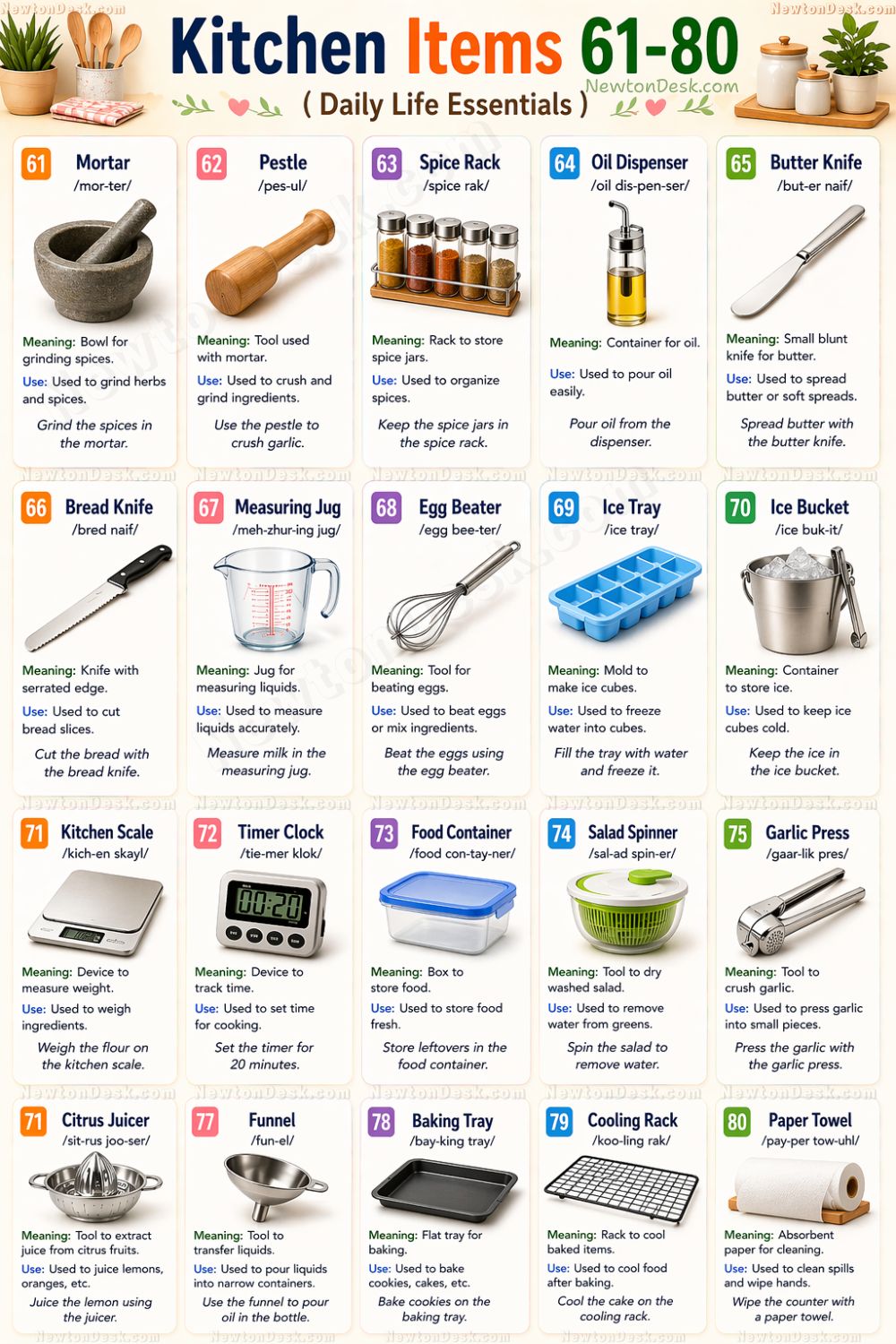
Speaking Practice
To improve your English, start making simple sentences using advanced kitchen items vocabulary. This helps you remember words and use them in real life. For example: “I use a garlic press to crush garlic” or “Keep spices in the spice rack.” Try to speak these sentences while cooking or working in the kitchen. You can also describe your actions, like “I am using a baking tray in the oven.” Practice daily with different words and repeat them aloud. Creating your own sentences builds confidence and helps you speak English more naturally and fluently.
How to Remember Kitchen Vocabulary Fast (Tips)
Use real kitchen items around you to learn faster. Look at objects and say their names in English daily. Speak while cooking, like “I am using a pan” or “Cut with a knife.” This builds natural speaking habits, and confidence and helps you think in English. Practice with flashcards to revise regularly and test your memory. Repeat words daily and try to use them in simple sentences. Consistent practice with real-life actions makes learning easy, natural, and long-lasting.
Conclusion
Practice these kitchen vocabulary words daily to improve your English faster. Use them while cooking and speaking at home. Save these infographics for quick revision anytime. Bookmark this page and share it with others who want to learn English easily.