Optics Laws help us understand how light behaves when it reflects, bends, or passes through lenses and mirrors. In this easy physics guide, you will learn important topics like Laws of Reflection, Snell’s Law, Refraction of Light, Mirror Formula, Lens Formula, and Magnification Law using simple words and visual study notes.
These notes are perfect for school students, competitive exam learners, beginners, and anyone searching for easy physics revision material online.
CONTENT INDEX
What Are Optics Laws in Physics?
In physics, Optics Laws explain the behavior of light. They show how light reflects from mirrors, bends when entering another medium, and forms images through lenses. These laws are very important in school physics, science exams, cameras, microscopes, telescopes, glasses, and optical fibers.
First Law of Reflection
Easy Explanation
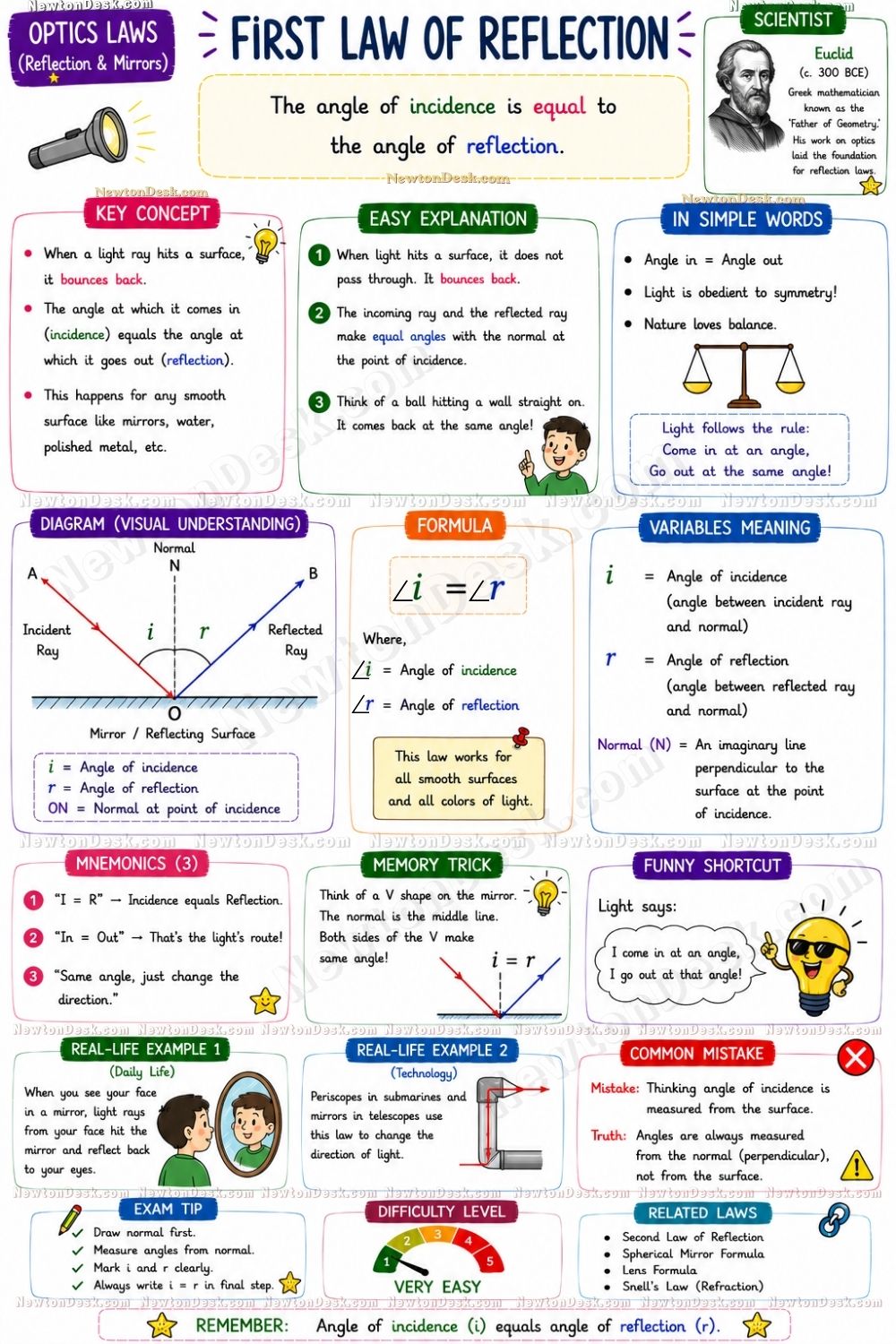
The First Law of Reflection says that the angle of incidence is equal to the angle of reflection. This means light bounces back from a surface at the same angle. Mirrors, water, and polished metals follow this law.
Quick Question and Answer
Q: What is the First Law of Reflection?
Answer: The angle of incidence is always equal to the angle of reflection.
Second Law of Reflection
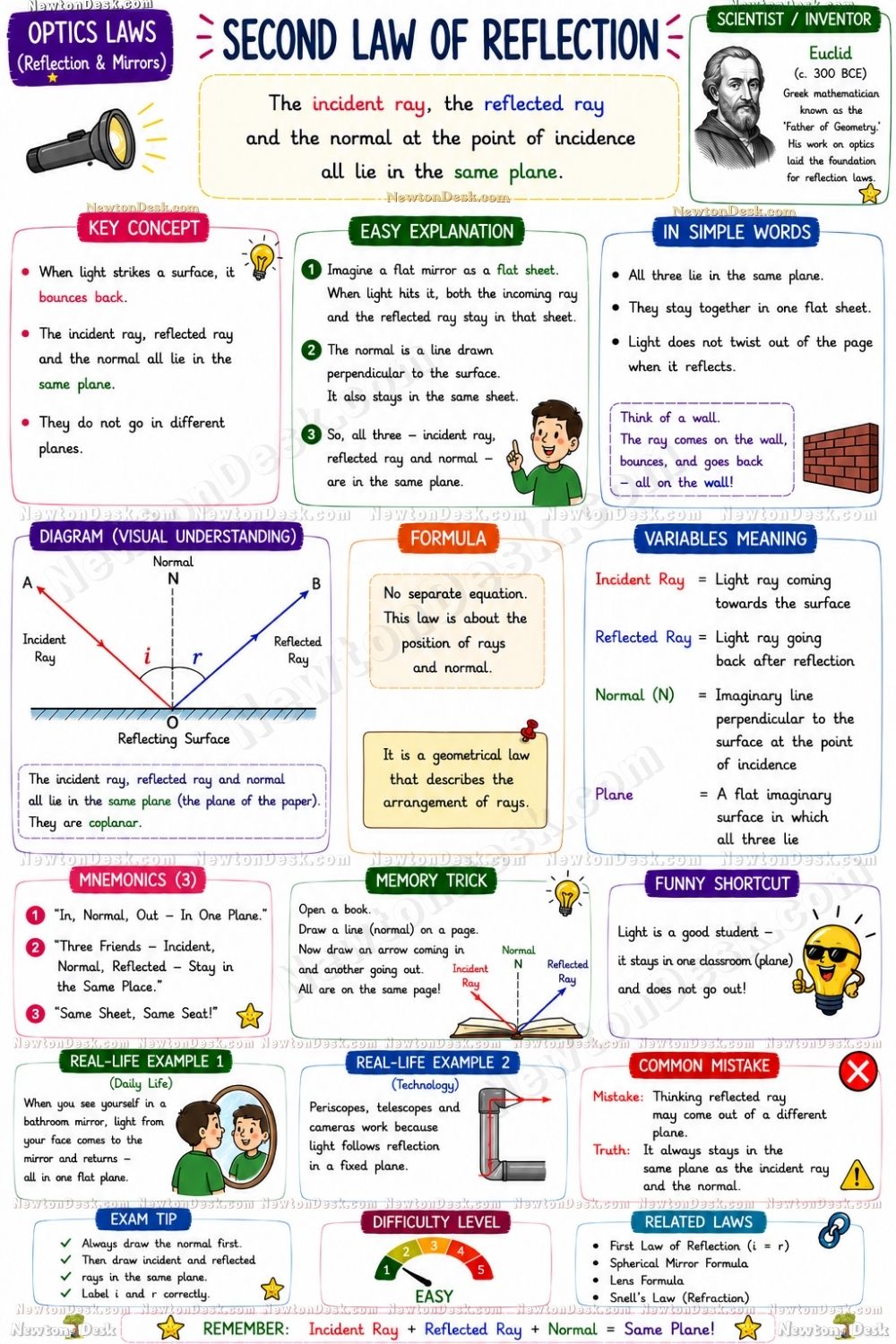
The Second Law of Reflection says that the incident ray, reflected ray, and the normal all lie in the same plane. This law helps students understand how reflected light behaves on smooth surfaces.
Beginner Query
Q: Why is the normal line important in reflection?
Answer: The normal line helps measure reflection angles correctly.
Mirror Formula in Physics
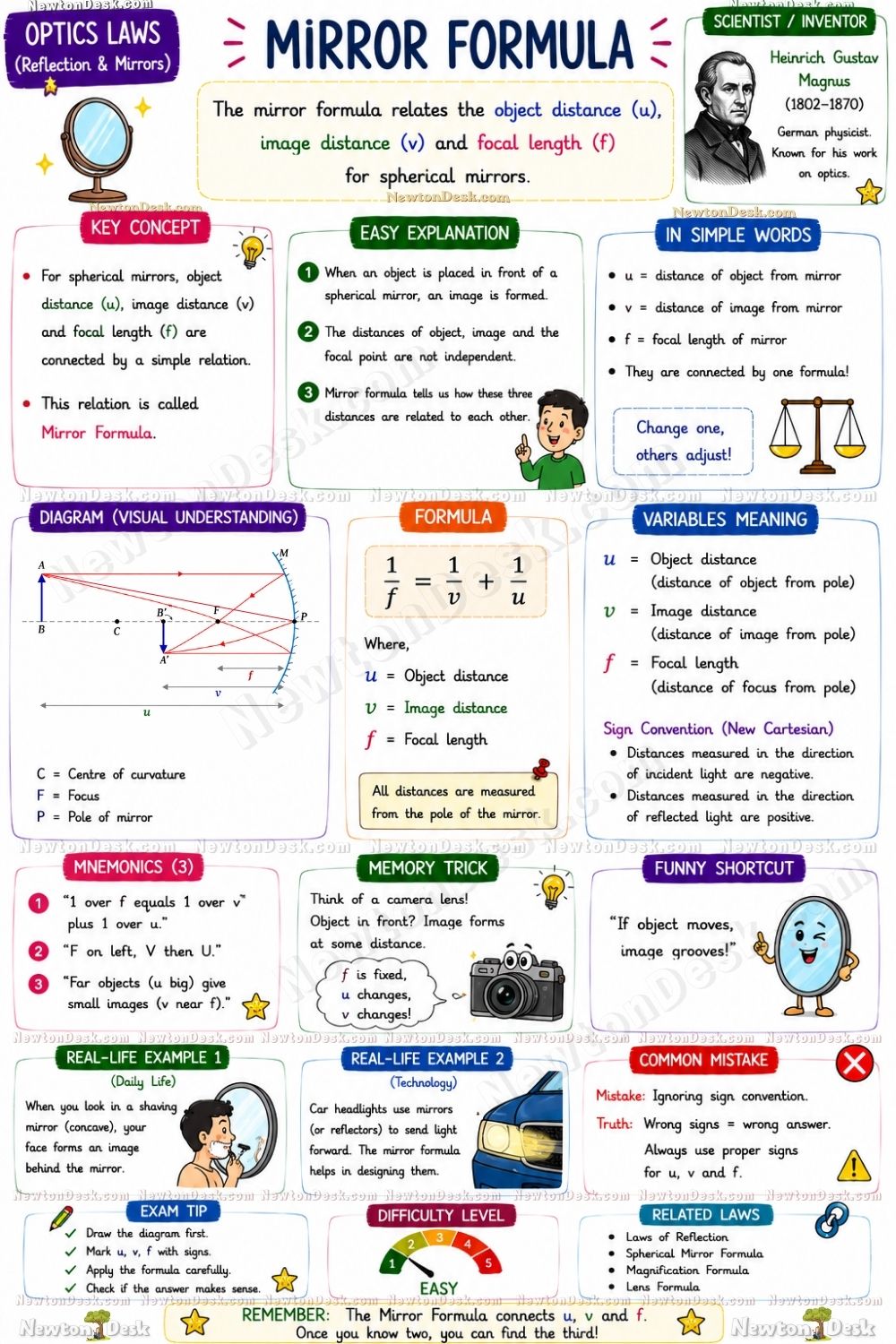
The Mirror Formula connects object distance, image distance, and focal length. It is widely used in spherical mirror problems and image formation questions.
Student Question
Q: What is the use of Mirror Formula?
Answer: It helps find image distance, object distance, or focal length in mirrors.
Snell’s Law and Refraction
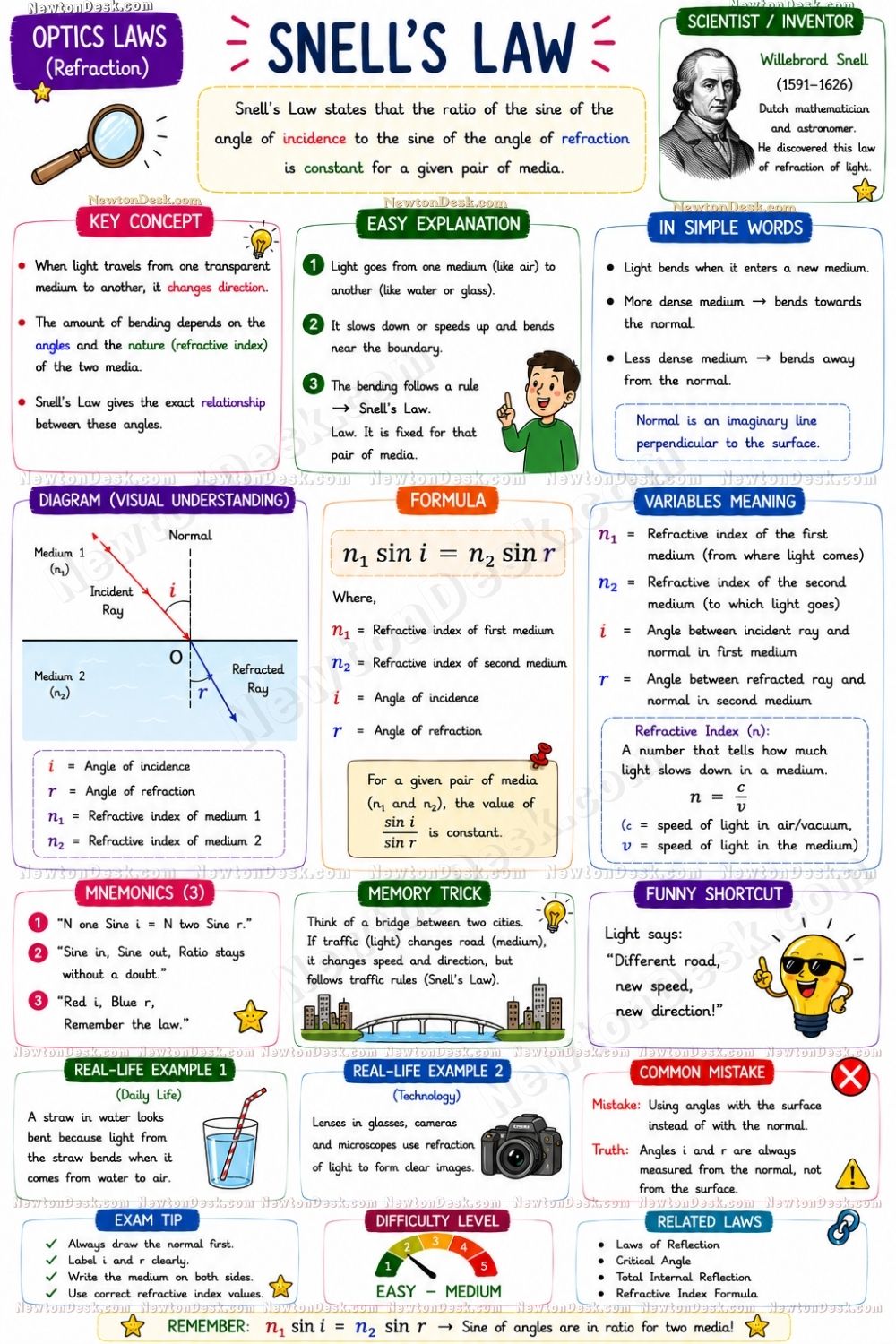
Snell’s Law explains how light bends when moving from one medium to another. Light changes speed in different media, which causes refraction.
n1 sin i = n2 sin r
Common Search Query
Q: Why does light bend in water or glass?
Answer: Light bends because its speed changes in different media.
Laws of Refraction
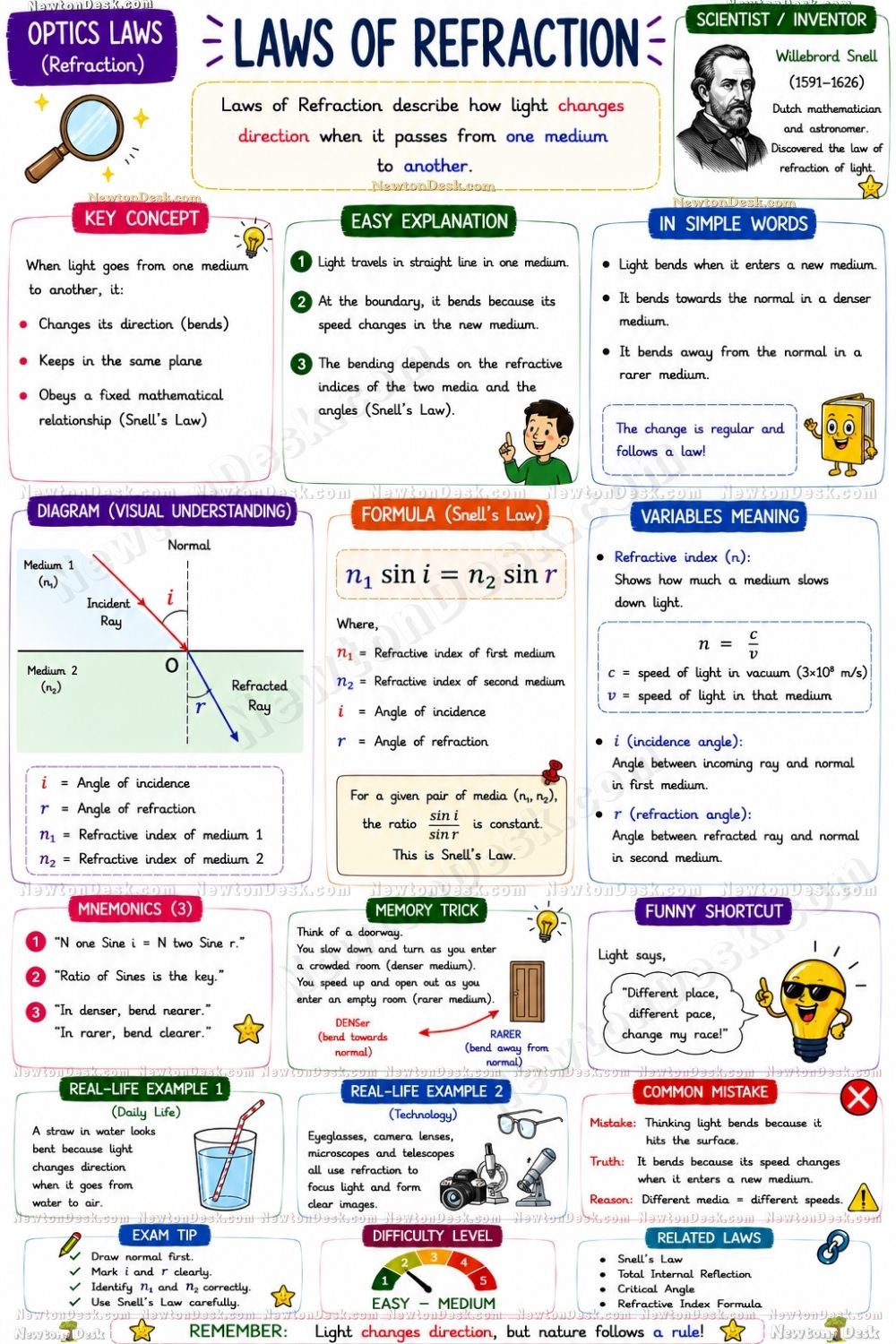
The Laws of Refraction describe the bending of light. These laws are used in eyeglasses, cameras, microscopes, and telescopes. Students can understand refraction easily through diagrams and real-life examples.
Total Internal Reflection (TIR)
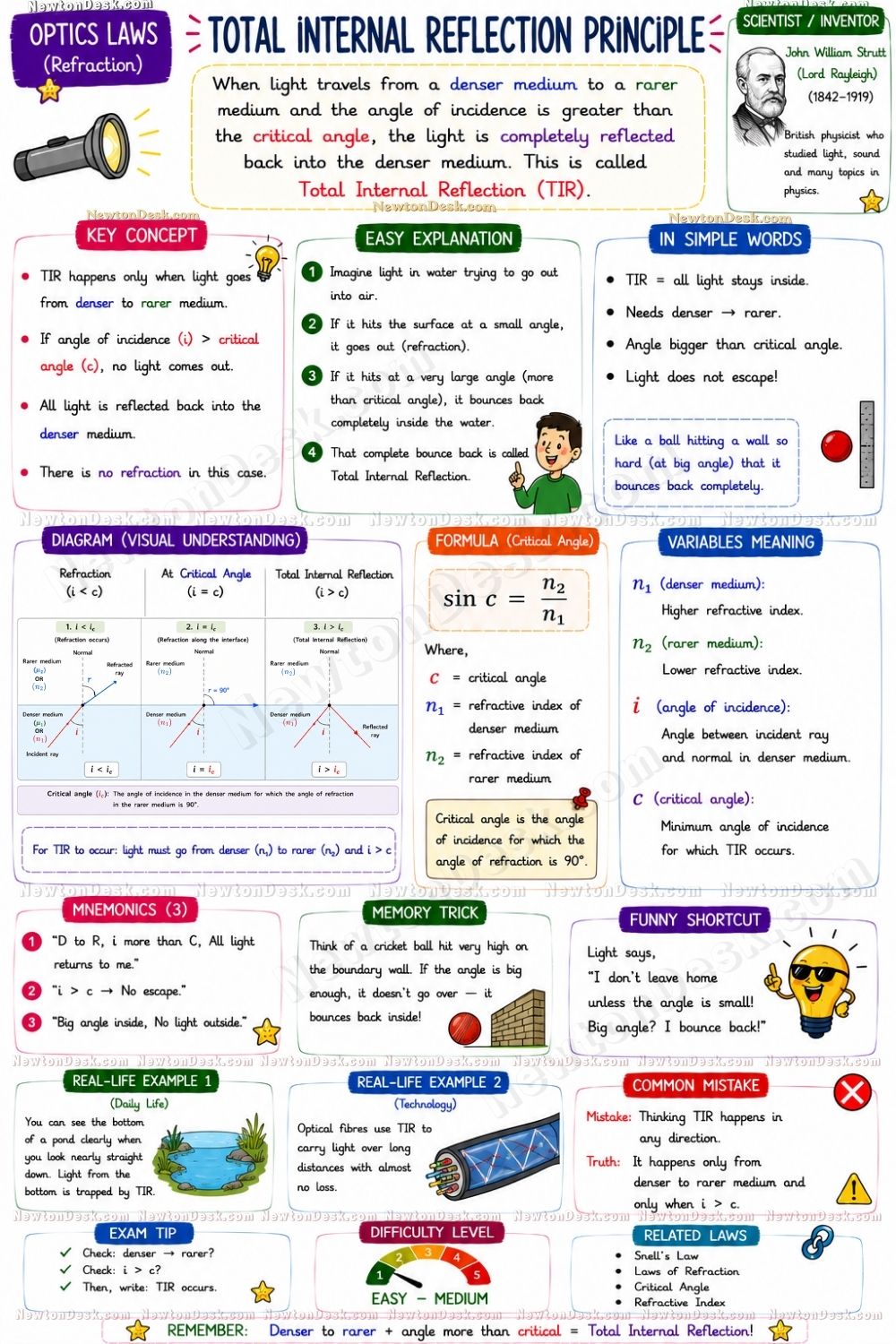
Total Internal Reflection happens when light travels from a denser medium to a rarer medium and reflects completely back inside. Optical fibers and diamonds work using this principle.
Q&A
Q: What is Total Internal Reflection used for?
Answer: It is used in optical fibers, medical instruments, and internet communication cables.
Lens Formula
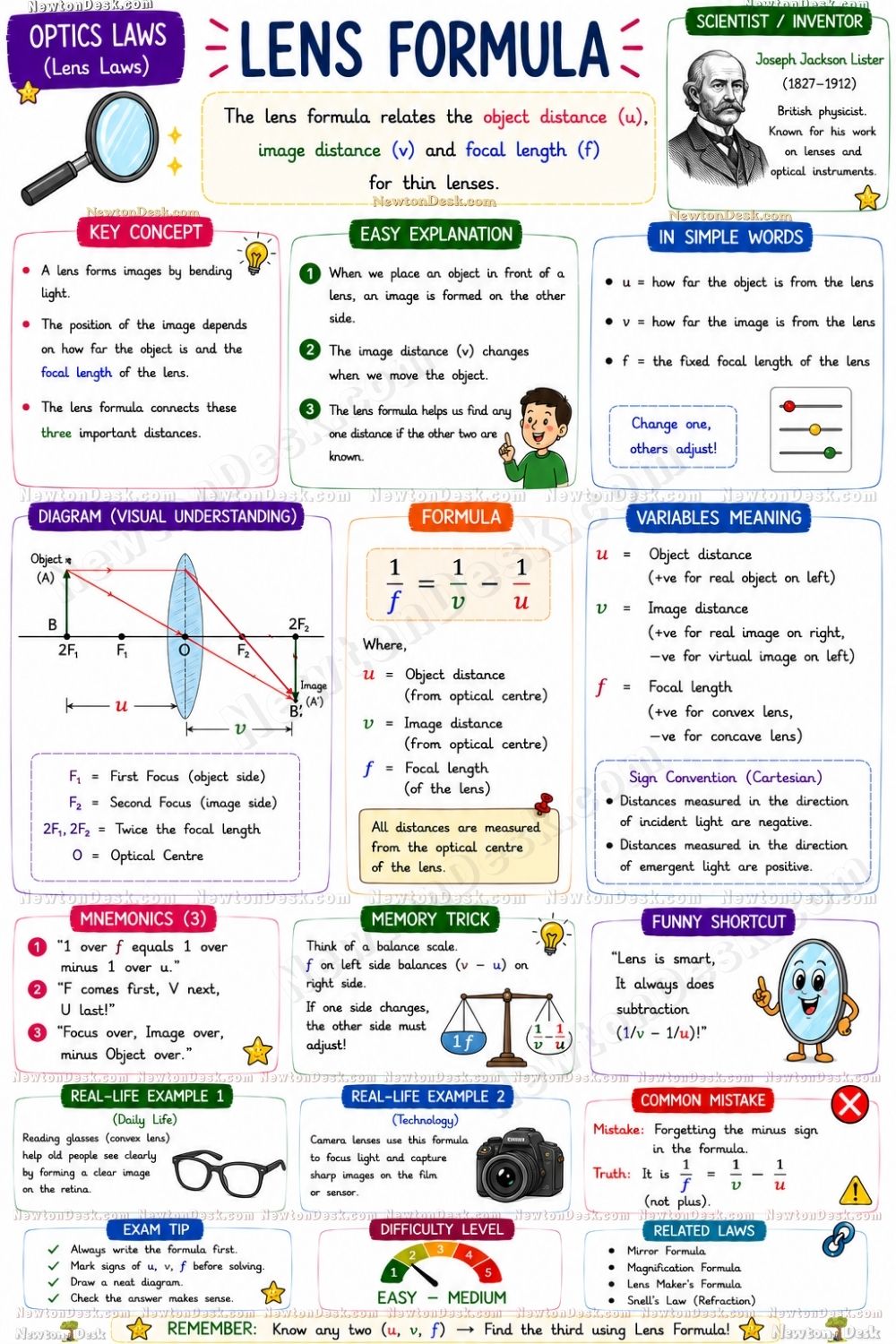
The Lens Formula helps calculate focal length, object distance, and image distance for lenses.
1/f = 1/v – 1/u
Beginner Question
Q: What devices use lenses?
Answer: Cameras, microscopes, telescopes, and eyeglasses use lenses.
Magnification Law
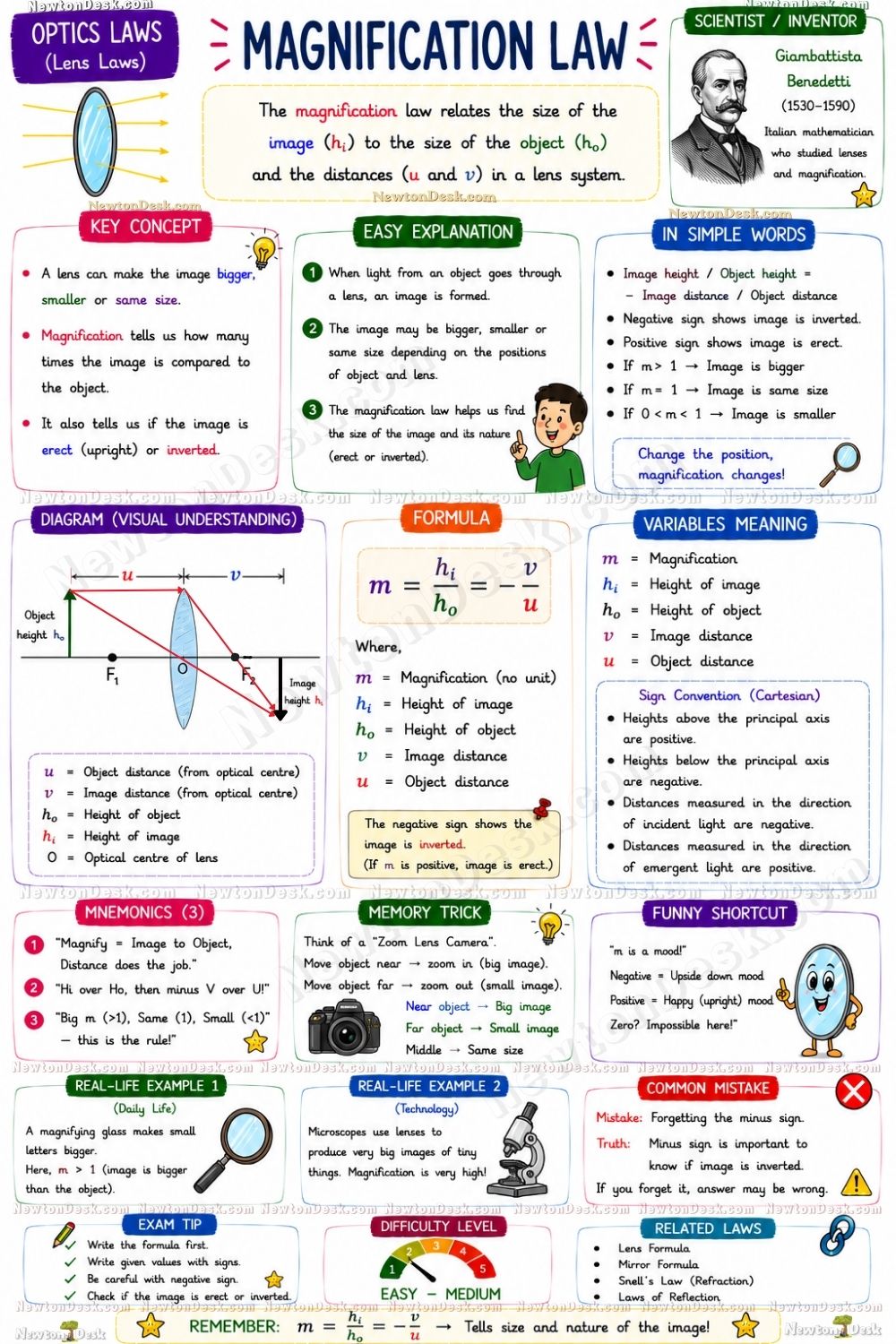
The Magnification Formula tells us whether the image is larger or smaller than the object.
m = hi/ho = v/u
Easy Query
Q: What does magnification mean in optics?
Answer: Magnification shows how much larger or smaller the image is compared to the object.
Final Revision Notes
These Optics Laws Notes are designed for fast learning and easy revision. The simple explanations, formulas, diagrams, and examples help beginners understand optics without confusion. Save these notes for exam preparation, homework help, and quick physics revision anytime.