
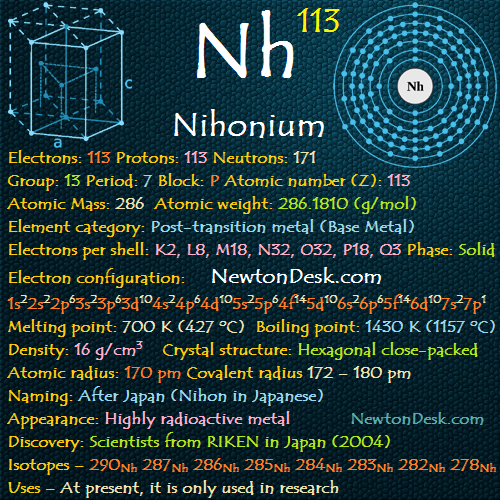
Nihonium Nh (Element 113) of periodic table
113 Nh (Nihonium) Atomic Mass – 286 Atomic weight – 286.1810 (g/mol) kAtomic number (Z) – 113 Electrons: […]
Nihonium Nh (Element 113) of periodic table Read More »
PERIODIC TABLE
Alkali Metals – The alkali metals are so reactive that they are generally found in nature combined with other elements. All of the alkali metals share similar characteristics and properties, such as their color, softness, and melting points.
Alkaline Earth Metals – Alkaline earth metals in their pure forms are generally shiny and silvery and are very reactive. They rarely occur in their pure form.
Transition metal – Transition metals are lustrous and malleable, silvery, hard, and good conductors of heat and electricity.
Post-Transition metal (Base Metal) – Post- transition metals are soft (or brittle), have poor mechanical strength, and have melting points lower than those of the transition metals. Being close to the metal-nonmetal border.
Metalloid – Metalloids have a metallic appearance, but they are too brittle and only fair conductor of electricity. They behave mostly as nonmetals. They and their compound Used in alloys, catalysts, glasses, flame retardants, biological agents, Pyrotechnics, Optical storage and optoelectronics semiconductor, and electronics.
Polyatomic Nonmetal – Polyatomic nonmetals shows more metallic character. They are solid, brittle and low conductivity , mostly semi-lustrous Semiconductors with electronegativity values.
Diatomic Nonmetal (Halogen) – They are generally highly Insulating, Highly electronegative, non-reflective gases, Semi-lustrous, and a semiconductor. All of the elements in this elite group are gases.
Noble gas – Noble gases are typically highly unreactive, It makes them very suitable in applications where reactions are not wanted.
Lanthanide – Elements found in the earth’s crust are called rare earth metals and Scientists referring to a lanthanide as a rare earth metal. They are used to make Strong magnets, Safety glasses etc..
Actinide – Some actinides are found in nature while others are man-made, They are all Radioactive.
| Group 1 | 2 | 3 | 4 | 5 | 6 | 7 | 8 | 9 | 10 | 11 | 12 | 13 | 14 | 15 | 16 | 17 | 18 | |
| Period
1 |
1 | 2 | ||||||||||||||||
| 2 | 3 | 4 | 5 | 6 | 7 | 8 | 9 | 10 | ||||||||||
| 3 | 11 | 12 | 13 | 14 | 15 | 16 | 17 | 18 | ||||||||||
| 4 | 19 | 20 | 21 | 22 | 23 | 24 | 25 | 26 | 27 | 28 | 29 | 30 | 31 | 32 | 33 | 34 | 35 | 36 |
| 5 | 37 | 38 | 39 | 40 | 41 | 42 | 43 | 44 | 45 | 46 | 47 | 48 | 49 | 50 | 51 | 52 | 53 | 54 |
| 6 | 55 | 56 | 57-71 | 72 | 73 | 74 | 75 | 76 | 77 | 78 | 79 | 80 | 81 | 82 | 83 | 84 | 85 | 86 |
| 7 | 87 | 88 | 89-103 | 104 | 105 | 106 | 107 | 108 | 109 | 110 | 111 | 112 | 113 | 114 | 115 | 116 | 117 | 118 |
| Lanthanide —-> | 57 | 58 | 59 | 60 | 61 | 62 | 63 | 64 | 65 | 66 | 67 | 68 | 69 | 70 | 71 | |||
| Actinide —-> | 89 | 90 | 91 | 92 | 93 | 94 | 95 | 96 | 97 | 98 | 99 | 100 | 101 | 102 | 103 | |||
If You are not able to See the above Full Periodic Table on your Device, than Click Here
113 Nh (Nihonium) Atomic Mass – 286 Atomic weight – 286.1810 (g/mol) kAtomic number (Z) – 113 Electrons: […]
Nihonium Nh (Element 113) of periodic table Read More »
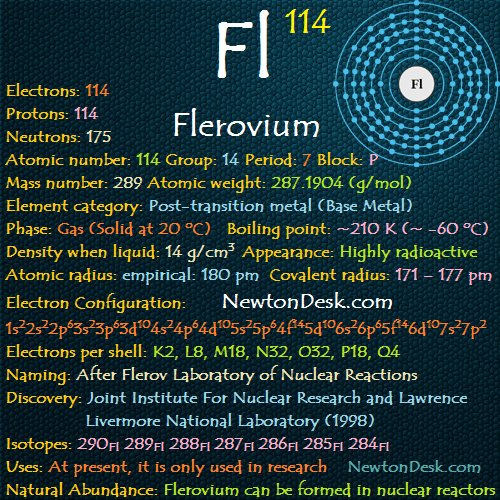
114 Fl (Flerovium) Mass number – 289 Atomic weight – 287.1904 (g/mol) Atomic number – 114 Electrons –
Flerovium Fl (Element 114) of periodic table Read More »
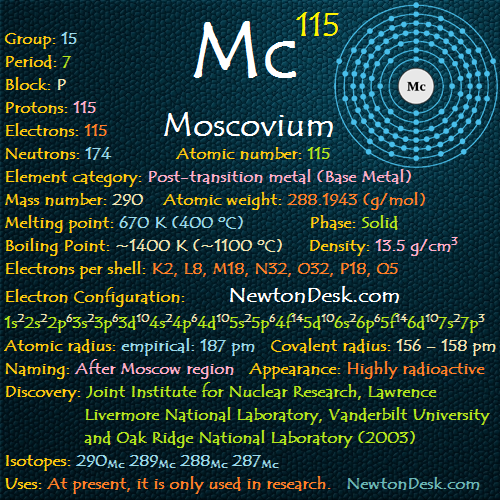
115 Mc (Moscovium) Mass number – 290 Atomic number – 115 Atomic weight – 288.1943 (g/mol) Group –
Moscovium Mc (Element 115)- All Details Read More »
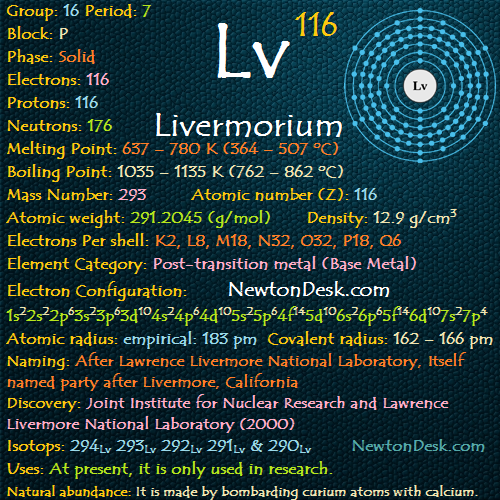
116 Lv (Livermorium) Mass Number – 293 Atomic number (Z) – 116 Electrons – 116 Protons – 116
Livermorium Lv (Element 116)- All Details Read More »
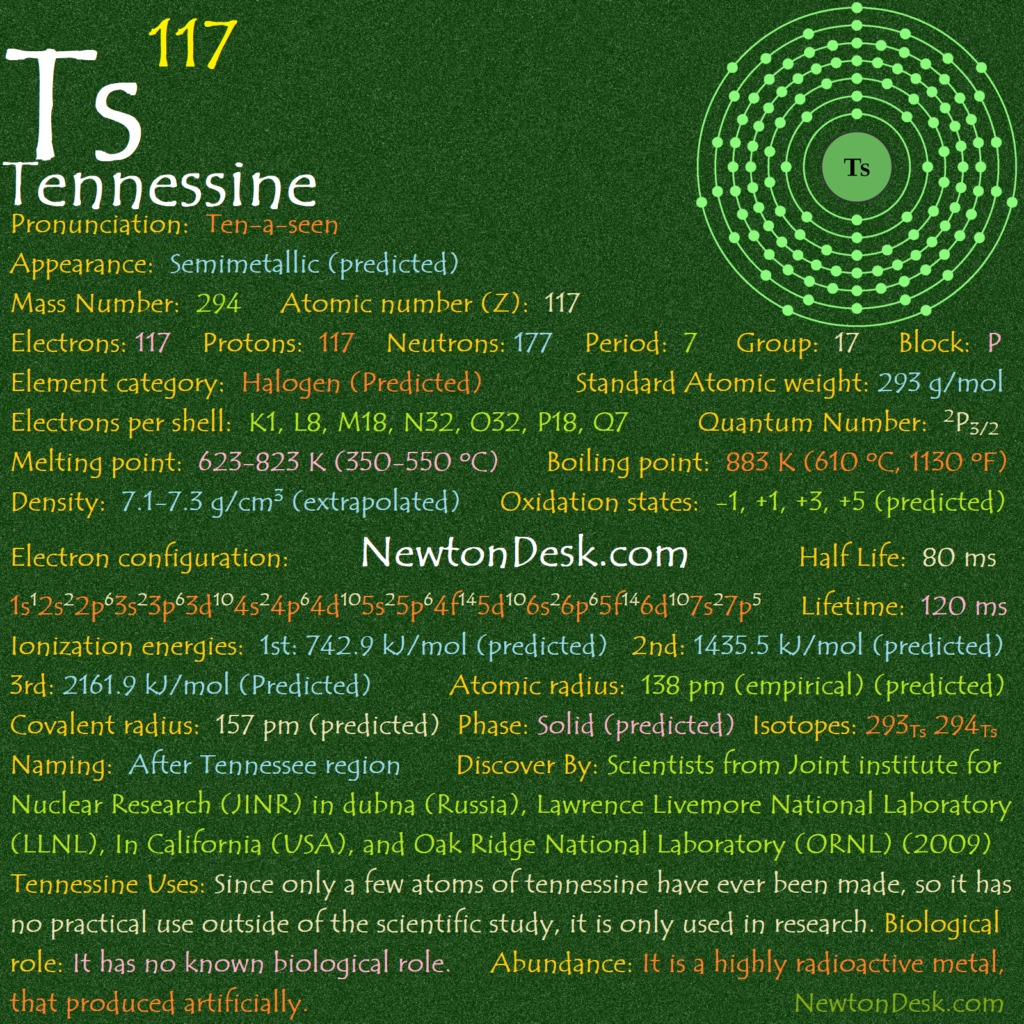
117 Ts (Tennessine Element) About Tennessine Element Tennessine is a highly radioactive metal, of which only a few
Tennessine Ts (Element 117)- All Details Read More »
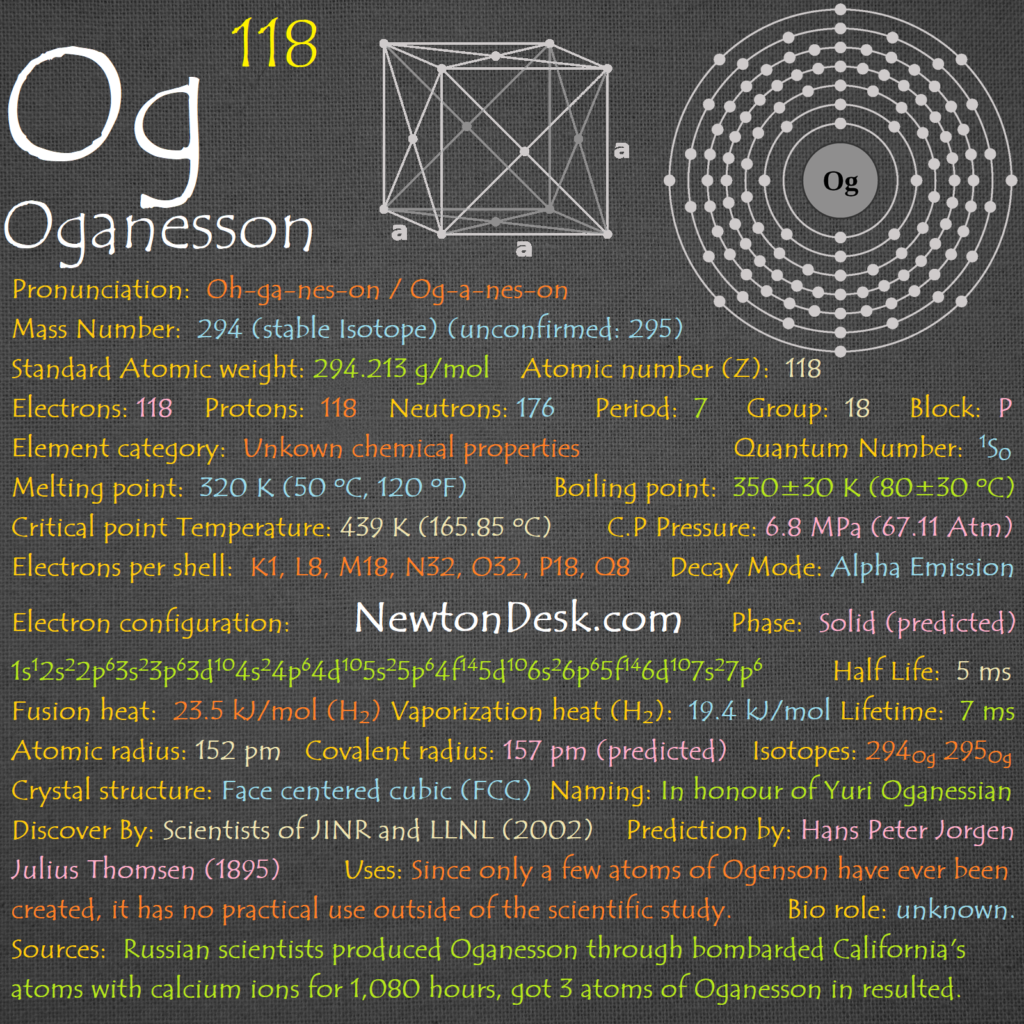
118 Og (Oganesson Element) About Oganesson Element Oganesson is a radioactive and artificially produced element of which little
Oganesson Og (Element 118) of Periodic Table Read More »